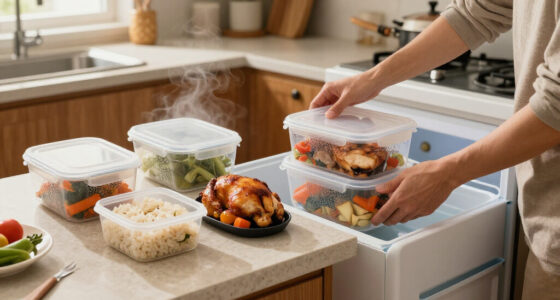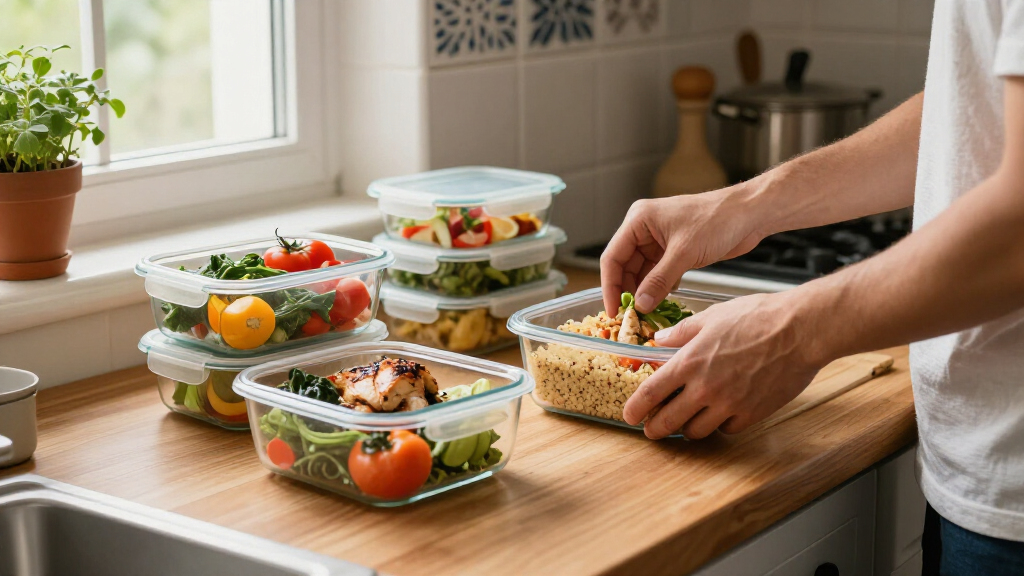
The best healthy meal prep containers make it easy to portion meals ahead of time, keep food fresh, and reheat lunch without a mess. After comparing nine popular options across materials, leak resistance, and portion design, the KOMUEE 10 Pack Glass Meal Prep Containers earned the top spot for combining oven-safe borosilicate-style glass with a price that undercuts most premium glass sets. The Rubbermaid Brilliance 2-Compartment set stands out if you want a truly leak-proof plastic option with crystal-clear lids, while the Glotoch 50-pack wins on sheer value for bulk weekly prep. The main tradeoff in this category is glass versus plastic versus plant-based disposables: glass reheats cleanly and lasts years but is heavy and breakable, plastic is light and cheap but can stain and wear, and biodegradable options suit single-use meal-prep businesses rather than daily reuse. Read on for the full breakdown of which container fits your routine, budget, and fridge space.

Get kitchen staples and gadgets delivered free with Prime
- Fast, free delivery on millions of items
- Prime Video, Amazon Music and more included
- Member-only deals all year
Key Takeaways
- Glass sets (KOMUEE and the compartmented 4-pack) dominated the rankings for long-term healthy eating because they resist stains, odors, and warping that shorten the life of plastic rivals.
- Rubbermaid Brilliance was the only plastic option with genuinely leak-proof latches, which explains its premium position over the Glotoch and Bentgo plastic picks.
- Disposable plant-based containers (cornstarch, bamboo-powder, and bagasse) make sense for batch cooking for a family or running a small meal-prep side business, but cost far more per use than any reusable pick.
- Two-compartment designs (Glotoch, Rubbermaid, and the glass 2/3-compartment set) earned higher marks for portion control than single-cavity containers, which matter most for macro tracking.
- Every container here is microwave safe, so the real differentiators turned out to be freezer durability, dishwasher survivability, and lid fit after repeated washing.



| healthy meal prep container | Capacity | Material | Microwave safe | Quantity |
|---|---|---|---|---|
| 34 oz Disposable Food Containe | 34 oz | Sugarcane pulp | Yes | 50 |
| KOMUEE 10 Pack 30 oz Glass Mea | 30 oz each | Borosilicate glass | Yes | 10 containers |
| 26oz Round Food Container Set | 26 oz | Polypropylene | Yes | 50 containers |
| Glotoch 50 Pack | 32 oz | Food-grade BPA-free plastic | Yes | 50 containers; 100 pieces including lids |
| Bentgo Prep Meal Prep Containe | 4 cups per container | PFAS- and BPA-free | Trays only | — |
| Glass Meal Prep Containers 2 a | 32 oz | Borosilicate glass | — | — |
| 100 Piece | 28 oz | 40% cornstarch-based plastic and food-grade PP | Yes, remove lid | 50 containers and 50 lids |
| Rubbermaid Brilliance Meal Pre | 2.85 cups | BPA-free plastic | — | — |
| 25 Pack | 32 oz | Bamboo-powder biobased material with food-grade PP | Yes; do not keep lids airtight | 25 containers with 25 lids |
More Details on Our Top Picks
34 oz Disposable Food Containers with Lids – Biodegradable, Microwave Safe, Pack of 50
For batch cooking that needs to travel, these 34 oz sugarcane-pulp containers offer more room than the 26 oz round polypropylene set, while avoiding conventional plastic as the main container material. Microwave and freezer compatibility lets me recommend them for packing meals ahead and reheating later, and the included lids make them handy for sharing or taking food on the go. Their strongest fit in a healthy meal prep roundup is for cooks who want portioned meals with a plant-fiber container and have a suitable composting route. The tradeoff is that they are single-use: repeated weekly prep creates waste if they cannot be composted locally. I would also choose another option for frequent long-term storage or very hot liquids, which the product data says may be unsuitable over extended periods.
Pros:- 34 oz capacity accommodates larger prepared meals.
- Sugarcane-pulp construction is described as biodegradable and compostable.
- Microwave- and freezer-safe for reheating and advance meal prep.
- Pack of 50 suits group meals and frequent events.
Cons:- Single-use construction can create substantial waste without composting access.
- Not suited to very hot liquids held for extended periods.
- May be too small for especially large meals.
Best for: Meal preppers and hosts who need generous portions for a group and can compost used containers through an available facility.
Not ideal for: People who pack lunches every workday and want durable containers to wash and reuse, or who need to store very hot liquids for long periods.
- Capacity:34 oz
- Material:Sugarcane pulp
- Quantity:50
- Microwave safe:Yes
- Freezer safe:Yes
- Biodegradable:Yes
- Lid:Included
Our verdict“Choose these for larger take-along meals when compostable single-use containers fit your routine; choose a reusable set for everyday prep.”
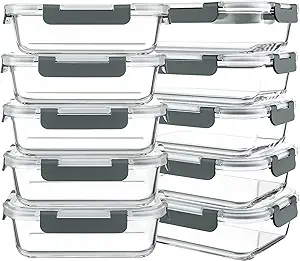
KOMUEE 10 Pack 30 oz Glass Meal Prep Containers with Lids
Borosilicate glass gives this set a practical advantage for cooks who prepare meals ahead and want to reheat them in the same container. Each 30 oz vessel works for a full meal, while the snap-lock lids with silicone seals help keep packed food fresh and reduce spill risk. Compared with the lightweight Bentgo Prep trays, these are better suited to oven cooking and reheating, and their set of 10 offers a reusable rotation for regular meal planning. The tradeoff is weight: glass is less convenient to carry in a packed bag than plastic, and the lids may need to come off for oven use or dishwasher care. I’d choose this set for home-centered prep and leftovers, but skip it if lightweight portability matters most.
Pros:- Borosilicate glass is suitable for microwave, oven, and freezer use.
- Airtight snap-lock lids with silicone seals help limit spills and keep food fresh.
- Dishwasher-safe containers simplify cleanup.
- Ten containers support a regular meal prep rotation.
Cons:- Glass is heavier and more breakable than the plastic Bentgo Prep trays.
- Lids may need to be removed before oven use and dishwasher cleaning.
- Plastic lids can break if mishandled.
Best for: Home cooks who portion full meals in advance and want reusable glass containers that can move from freezer to microwave or oven.
Not ideal for: Commuters who carry several meals daily and need lightweight containers, or anyone who wants to heat food with the lids on.
- Quantity:10 containers
- Capacity:30 oz each
- Material:Borosilicate glass
- Lid type:Airtight snap-lock with silicone seals
- Microwave safe:Yes
- Oven safe:Yes; remove lids
- Freezer safe:Yes
- Dishwasher safe:Yes; lid care may differ
Our verdict“Pick KOMUEE for reusable, oven-ready meal portions at home, and look to lighter plastic trays for meals carried every day.”
26oz Round Food Container Set, 50 Pack, Meal Prep Containers with Lids
If I were portioning lunches for a club, event, or a large batch of weekly meals, the 50-container quantity would be the main reason to choose this set. Its 26 oz round format is smaller than the 30 oz KOMUEE glass containers, which can help with controlled portions but leaves less space for substantial meals. Polypropylene is microwave-, freezer-, and dishwasher-safe according to the supplied details, giving these containers more reheating flexibility than the sugarcane-pulp set. Yet the description calls them disposable while also listing dishwasher safety, so I would treat repeated washing as uncertain rather than count on long-term reuse. The lids are sealed but may not be fully leak-proof for liquids; soups and dressings are safer packed separately. For everyday healthy prep, the waste tradeoff is significant.
Pros:- Fifty containers support high-volume portioning.
- 26 oz size can suit moderate lunches and controlled portions.
- Microwave- and freezer-safe for reheating and advance storage.
- Round shape accommodates mixed meals and leftovers.
Cons:- Disposable polypropylene creates waste if containers are not reused or recycled.
- Lids may not fully contain liquids.
- Not described as suitable for long-term storage.
Best for: Caterers, community groups, and batch cooks who need many modest portions ready for refrigeration, freezing, or reheating.
Not ideal for: People seeking a long-lasting reusable set or transporting soups and other liquid-heavy meals that need secure leak protection.
- Material:Polypropylene
- Capacity:26 oz
- Quantity:50 containers
- Top diameter:Approximately 5.85 in
- Bottom diameter:Approximately 3.9 in
- Height:Approximately 3.35 in
- Microwave safe:Yes
- Freezer safe:Yes
- Dishwasher safe:Yes
Our verdict“Choose this set for high-volume, moderate-size portions when convenience matters more than a durable reusable system.”
Glotoch 50 Pack (100-Piece) 32oz 2-Compartment Meal Prep Containers with Lids
The two-compartment 32 oz layout is the clearest reason to pick Glotoch: it keeps a main dish apart from a side, which can help preserve texture and make planned portions easier to organize. Compared with the single-compartment Bentgo Prep trays, this format suits meals where ingredients should stay separate until eating. Fifty containers also support large batches, and the stated temperature range plus microwave and dishwasher compatibility make the set useful across storage and reheating. The compromise is bulk: at 8.4 by 6 inches, these take more space than a single-piece portion tray, and some users may find the lids difficult to open. The listing describes them as reusable, but a 50-pack of plastic still calls for regular reuse to reduce waste. I’d favor them for compartmented meal plans over compact lunch packing.
Pros:- Two compartments keep meal components separate.
- 32 oz capacity allows room for a full prepared meal.
- Microwave- and dishwasher-safe for convenient reheating and cleanup.
- Temperature resistance is listed from -40°F to 270°F.
Cons:- The 8.4 by 6 inch footprint can take up substantial storage space.
- Lids may be difficult for some users to open.
- Plastic construction requires regular reuse to reduce waste.
Best for: Meal preppers who portion a main and side separately and want a large supply for repeated weekly use.
Not ideal for: People with limited refrigerator or bag space, or anyone with limited hand strength who may struggle with tight lids.
- Capacity:32 oz
- Compartments:2
- Quantity:50 containers; 100 pieces including lids
- Material:Food-grade BPA-free plastic
- Dimensions:8.4 × 6 × 1.77 in
- Temperature resistance:-40°F to 270°F
- Microwave safe:Yes
- Dishwasher safe:Yes
- Recyclable:Yes
Our verdict“Choose Glotoch for large batches of separated meals, and pick a simpler tray when storage space or easy lid access matters more.”
Bentgo Prep Meal Prep Containers with Lids, 20 Piece, PFAS & BPA-Free
Embossed measurements give Bentgo Prep a clear role for people who want repeatable portions without estimating by eye. The 4 cup capacity is larger than a small snack container, while the one-compartment tray keeps setup straightforward for meals that do not need separate sections. Compared with Glotoch’s two-compartment containers, Bentgo is better for a single portion of a mixed meal and has a simpler shape to stack; Glotoch is the stronger pick when a side should stay apart. PFAS- and BPA-free materials, plus microwave, freezer, and dishwasher compatibility, support routine prep, though the lids are best hand-washed and should not go in the microwave. These are plastic trays, so they lack the oven-ready flexibility of KOMUEE glass. I’d choose them for organized portioning and skip them for small servings or lid-included reheating.
Pros:- Embossed measurements help make portions consistent.
- PFAS- and BPA-free materials.
- Trays are microwave-, freezer-, and dishwasher-safe.
- Stackable lids help organize prepared meals.
Cons:- Lids are recommended for hand-washing and cannot be microwaved.
- Four cup capacity may be too large for small portions.
- Single-compartment design does not separate sides from mains.
Best for: People tracking meal portions who want measured, stackable trays for full-size lunches and straightforward weekly prep.
Not ideal for: Anyone packing small snacks, seeking oven-safe containers, or wanting lids that can go through the dishwasher and microwave.
- Set size:20 pieces
- Includes:10 one-compartment trays and 10 lids
- Capacity:4 cups per container
- Material:PFAS- and BPA-free
- Microwave safe:Trays only
- Freezer safe:Yes
- Dishwasher safe:Trays; hand-wash lids for best results
- Portion markings:Embossed measurements
Our verdict“Pick Bentgo Prep for repeatable, full-size portions in stackable trays, and choose a divided or glass set for separated meals or oven use.”
Glass Meal Prep Containers 2 and 3 Compartments, Leak-Proof, 32 oz, 4 Pack
Borosilicate glass and a mix of two- and three-compartment layouts make this set a strong choice for people who want to portion a full meal and reheat it in the same container. Unlike the Rubbermaid Brilliance Meal Prep Containers, which use plastic, these can go in the oven up to 450°F with the lids removed. That flexibility suits batch cooking, though the four-container count offers less quantity than the large plant-based packs in this lineup. The airtight, leak-proof lids support packed lunches, but the description notes they can be difficult to open. Glass also adds weight, and these containers are not suitable for children 12 and under. Choose them for reusable, oven-ready portions; skip them if light, easy-open lunch boxes are the priority.
Pros:- Borosilicate glass is suitable for microwave use and oven use up to 450°F without the lid
- Two- and three-compartment options help separate foods for portioned meals
- Airtight, leak-proof lids suit packed lunches and storage
- Dishwasher-safe containers simplify cleanup
Cons:- Only four containers are included, fewer than the bulk packs in this roundup
- Glass is heavier and more breakable than the plastic options
- Lids may be difficult to open and must be removed for oven use
Best for: Meal preppers who want divided glass portions that can move from refrigerator to microwave or oven
Not ideal for: Parents packing lunches for children 12 and under, or commuters who need lightweight containers with easy-open lids
- Capacity:32 oz
- Container count:4
- Compartments:2 and 3
- Material:Borosilicate glass
- Dimensions:8 x 6.5 x 2.7 inches
- Oven safe:Up to 450°F, lid off
- Microwave and dishwasher safe:Yes
- Leak-proof:Yes
Our verdict“Choose this set if you want reusable divided glass portions for reheating, and accept the weight and small set size.”
100 Piece (50 Pack) Meal Prep Containers with Lids, 28 oz Cornstarch Food Storage Containers Plant-based Lunch Box for Salad, BPA Free Plastic Take Out Containers Microwave and Freezer Safe
Fifty containers with lids make this the high-volume pick for cooks who portion many lunches at once or need containers for a household. The 28 oz size is smaller than the 32 oz Bamboo-Powder Food Containers, so this set favors moderate lunches, salads, and snacks over larger meals. Its cornstarch-based plastic and food-grade PP include 40% plant-based material, though the product data does not establish that the containers are fully biodegradable or reusable indefinitely. They can go in the microwave with lids removed and in the freezer, while dishwasher safety is unspecified. The snap-on lids are described as leak-proof, but buyers seeking sturdy, oven-ready glass should look to the borosilicate set instead. This is a practical bulk option when container count matters most.
Pros:- Includes 50 containers and 50 lids for high-volume prep
- 40% plant-based cornstarch content alongside food-grade PP
- Microwave-safe with lids removed and freezer-safe
- Stackable design helps organize a large batch
Cons:- At 28 oz, capacity is lower than the 32 oz options in this lineup
- Dishwasher safety is not specified
- Lids must be removed for microwave use
Best for: Households or meal-prep businesses portioning many moderate-size lunches, salads, and snacks
Not ideal for: Buyers who want oven-safe glass, confirmed dishwasher-safe containers, or larger 32 oz portions
- Capacity:28 oz
- Quantity:50 containers and 50 lids
- Material:40% cornstarch-based plastic and food-grade PP
- Temperature range:-4°F to 248°F
- Microwave safe:Yes, remove lid
- Freezer safe:Yes
- Dishwasher safe:Not specified
- Lid type:Snap-on, described as leak-proof
Our verdict“Pick this set for large batches of smaller meals when quantity matters more than oven use or confirmed dishwasher compatibility.”
Rubbermaid Brilliance Meal Prep Containers, 2-Compartment, 2.85 Cup, 5-Pack
These five clear, two-compartment containers suit smaller meal portions and make stored food easy to identify without opening each lid. At 2.85 cups, their capacity is much lower than the 32 oz glass and bamboo-powder options, which gives this set a compact role for lighter lunches or sides. The leakproof, airtight lids and vented microwave design add convenience: the vents help release steam during reheating, while the clear walls make fridge organization simpler. Compared with the glass set, this plastic option is lighter to carry but lacks its stated oven-safe use. The product information also cautions that very hot foods may not suit it, and plastic can stain if not cleaned properly. Choose it for tidy, modest portions rather than large, heat-intensive meals.
Pros:- Clear design makes stored contents easy to identify
- Two compartments separate a main item and side
- Leakproof, airtight lids help with storage and transport
- Vented lids support splatter-resistant microwave reheating
Cons:- 2.85-cup capacity is smaller than the 32 oz choices in this roundup
- Plastic may stain over time if not cleaned properly
- Product details caution against use with very hot foods
Best for: Office workers packing smaller lunches or sides who value clear containers and vented microwave reheating
Not ideal for: Meal preppers who need 32 oz portions, oven use, or containers suited to very hot foods
- Capacity:2.85 cups
- Container count:5
- Compartments:2
- Material:BPA-free plastic
- Lid features:Leakproof, airtight, vented
- Color:Clear/Grey
- Microwave use:Microwave-safe with vented lids
Our verdict“Choose Rubbermaid Brilliance for clear, compact divided lunches with vented microwave lids, not large meals or oven reheating.”
25 Pack (50 pcs) Reusable Meal Prep Containers, 32oz Bamboo-Powder Food Containers with Lids
Thirty-two-ounce capacity and 25 containers give this set room for full-size portions without the heft of the borosilicate glass option. The bamboo-powder biobased material, combined with food-grade PP, gives it a plant-based angle, though the supplied data does not specify the material’s exact composition or establish that it is fully biodegradable. These containers are listed as microwave, freezer, and dishwasher safe, a broad routine-use range compared with the cornstarch set, whose dishwasher status is unspecified. For microwave use, the lids should not stay airtight; that extra step matters for anyone reheating lunch at work. The top-rack dishwasher recommendation also calls for care. Pick this set for larger portions and repeated kitchen use, while buyers wanting glass or clearly stated oven use should choose another option.
Pros:- 25 containers provide a substantial supply for batch meal prep
- 32 oz capacity accommodates full-size portions
- Listed as microwave, freezer, and dishwasher safe
- Bamboo-powder biobased material with food-grade PP
Cons:- Lids should not remain airtight during microwave use
- Top-rack dishwasher use is recommended for longevity
- Oven safety is not specified
Best for: Meal preppers who want a large set of 32 oz containers with microwave, freezer, and dishwasher compatibility
Not ideal for: Buyers who need oven-safe containers, glass construction, or airtight lids left on during microwave reheating
- Capacity:32 oz
- Quantity:25 containers with 25 lids
- Material:Bamboo-powder biobased material with food-grade PP
- Dishwasher safe:Yes; top rack recommended
- Microwave safe:Yes; do not keep lids airtight
- Freezer safe:Yes
- Lids:Airtight
Our verdict“Choose this set for full-size portions and broad everyday appliance use if you can loosen the lids before microwaving.”

How We Picked
I ranked these healthy meal prep containers around four factors that actually change the day-to-day prep experience: material safety and durability (BPA-free plastic, borosilicate-style glass, or certified plant-based composites), lid performance including leak resistance and how well seals held up to dishwashers and freezer cycles, portion design such as compartments and capacity relative to a standard meal, and cost per usable container across the pack sizes. A 50-pack of disposables and a 4-pack of glass serve very different buyers, so value was judged within each intended use rather than head-to-head.
The ranking logic favors reusability and long-term food safety first, which is why the two glass sets and Rubbermaid Brilliance sit above the bulk plastic and plant-based options. Disposables earned their spots by excelling at what they are built for: hygienic one-time use, freezer stacking, and microwaving straight from the fridge. Products were also compared against each other directly on stain resistance, stackability in a standard fridge, and how forgiving each material is when reheating sauces or oily dishes.
| healthy meal prep container | Microwave safe | Dishwasher safe |
|---|---|---|
| 34 oz Disposable Food Containe | Yes | — |
| KOMUEE 10 Pack 30 oz Glass Mea | Yes | Yes; lid care may differ |
| 26oz Round Food Container Set | Yes | Yes |
| Glotoch 50 Pack | Yes | Yes |
| Bentgo Prep Meal Prep Containe | Trays only | Trays; hand-wash lids for best results |
| Glass Meal Prep Containers 2 a | — | — |
| 100 Piece | Yes, remove lid | Not specified |
| Rubbermaid Brilliance Meal Pre | — | — |
| 25 Pack | Yes; do not keep lids airtight | Yes; top rack recommended |
Factors to Consider When Choosing Healthy Meal Prep Containers
Beyond the individual picks, choosing healthy meal prep containers comes down to matching material and capacity to how you actually cook, store, and reheat. These are the factors that most often separate a purchase you love from one that gathers dust in a cabinet.Glass, Plastic, or Plant-Based: Match the Material to Your Routine
The biggest mistake buyers make is choosing material based on price alone. Glass containers reheat food evenly, never stain from tomato sauce or turmeric, and can often go in the oven, but they add real weight to a commute bag and one drop on tile ends their lifespan. Reusable plastic is the practical middle ground for gym bags and office fridges, though cheaper plastic absorbs odors and clouds after a few months of dishwashing. Plant-based disposables (cornstarch, bamboo powder, bagasse) solve a different problem entirely: they suit batch-cooking for a household, freezer storage of dozens of meals, or anyone running a small meal-prep service where washing containers is not realistic. If you prep five lunches every Sunday for yourself, glass or quality plastic wins on cost per use. If you freeze twenty meals at a time, a bulk disposable pack is the smarter buy.
Leak Resistance: Where Cheap Containers Fail First
Lid quality separates premium containers from budget packs more than any other feature, and it is usually invisible until soup ends up in your bag. Look for latched lids with silicone gaskets, like the design on the Rubbermaid Brilliance, which grip from multiple points instead of relying on a friction-fit rim. Snap-on lids common on bulk packs are fine for solid foods and freezer storage but will weep with liquids, especially when a container tilts in a backpack. Another failure point buyers overlook: lids that warp in the dishwasher, leaving a loose fit after ten washes. If your meals involve sauces, dressings on the side, or stews, treat leak-proofing as non-negotiable and expect to pay more per container for it.
Compartments and Capacity: Right-Sizing Your Portions
Capacity ratings mislead people because a 32 oz container does not mean 32 oz of food plus a lid seal; fill lines sit lower, and compartments reduce usable volume further. For a standard adult lunch with a protein, grain, and vegetable, 28 to 32 oz with two or three compartments is the sweet spot, which is why the compartmented glass set and the Glotoch 2-compartment pack scored well for portion control. Single-cavity containers offer more flexibility for soups, salads, and grain bowls but remove the visual portioning that helps with macro tracking. A common mistake is buying one large size for everything; many preppers end up happier with a mix: large single-cavity containers for dinners and smaller compartmented ones for lunches.
Freezer-to-Microwave Performance
The whole point of meal prep is the freezer-to-fridge-to-microwave pipeline, and not every container survives it. Glass handles microwave reheating best but needs a gradual thaw to avoid thermal shock; move frozen glass containers to the fridge the night before. Plastic rated freezer and microwave safe is more forgiving with temperature swings, but repeated cycles make thin plastic brittle, which is where bulk packs show their limits. Plant-based containers generally handle both freezer and microwave well for single use but should not be expected to survive a second full cycle. Check whether the lids are rated for reheating too; many are meant to be removed or loosened, and a warped lid is the most common casualty of ignoring this.
Cost Per Use: The Math Bulk Buyers Skip
A 50-pack of disposables looks cheap until you divide cost by the number of meals each container serves, which is exactly one. A quality glass or premium plastic container that lasts several years may cost more upfront but serves hundreds of meals, making it dramatically cheaper over time for daily preppers. The decision framework is simple: daily personal prep favors reusables, bulk freezing and sharing favors disposables. One more cost factor people forget: replacement lids. Brands with standardized, purchasable replacement lids protect your investment, while off-brand multipacks often leave you replacing the entire set when lids crack.
Storage Footprint and Stackability
Fridge and cabinet real estate is the silent dealbreaker in meal prep. Containers with straight walls and flat lids stack cleanly; round containers and domed lids waste shocking amounts of shelf space when you are storing ten meals at once. Square and rectangular shapes let you fit more meals per shelf, which matters whether you are stocking a family fridge or an apartment one. Nesting behavior when empty also differs widely: glass sets with tall lids can hog a cabinet, while flat-storing plastic packs slide into a drawer. Before buying any pack, count how many meals you will realistically have in the fridge at once and measure that shelf; this ten-minute check prevents the most common regret in this category.
Frequently Asked Questions
Are glass meal prep containers worth the extra cost over plastic?
For daily preppers, glass usually pays for itself within a year. Glass never stains from tomato or curry-based dishes, does not absorb odors, reheats evenly without hot spots, and often moves from freezer to oven, which plastic cannot do. The tradeoffs are weight, breakability, and a higher upfront price per container, so glass makes less sense if you carry lunch on a bike commute or meal prep for kids. If you do go glass, choose a set with snap-on plastic lids rather than all-glass lids, since the plastic lids seal better and survive drops. For a hybrid approach, many preppers keep glass at home for dinners and a quality plastic set for transport.
Can I reuse disposable plant-based meal prep containers?
Most plant-based containers, including cornstarch and bamboo-powder designs, are technically reusable a few times for cold or dry foods, but they degrade faster than you might expect. Reheating weakens the material, dishwasher heat warps the walls, and the lids lose their seal quickly, so treat gentle reuse as a bonus rather than the plan. Where they genuinely shine is freezer storage: you can freeze a month of meals, microwave one straight from thawed state, and recycle or compost the container without washing dishes. If your goal is lowering waste from daily use, a reusable glass or premium plastic set is the more sustainable choice despite disposables being plant-based.
Do compartment containers actually help with healthy eating?
Yes, and the mechanism is visual portioning rather than anything mechanical. Fixed compartments pre-commit you to a set ratio of protein, starch, and vegetables, which removes the guesswork that leads to overfilling a single large container. Two-compartment designs suit a protein-plus-sides lunch, while three compartments work better for a full dinner layout with a sauce or fruit slot. The drawback is lost flexibility: compartments make soups, salads, and bulky items like a whole chicken breast awkward. If you track macros or follow a structured eating plan, compartments earn their keep; if your meals are one-pot dishes, skip them for single-cavity containers.
How many meal prep containers do I actually need?
A good baseline for one person prepping five weekday lunches is ten containers: five in the fridge or freezer and five in the wash rotation. Add containers for every additional household member prepping, plus a buffer of two or three for leftovers and unexpected meals. Bulk 50-packs only make sense if you freeze meals for more than two people, cook for events, or sell prepared meals. One often-ignored factor is uniformity: having identical containers makes stacking and lid-matching far easier than a mismatched collection, so buying one larger set beats accumulating random singles over time.
Are plastic meal prep containers safe to microwave?
Containers explicitly labeled microwave-safe and BPA-free, like every plastic pick in this roundup, are designed for reheating, but how you use them matters. Vent or remove the lid to prevent pressure buildup and lid warping, reheat in short intervals rather than long bursts, and avoid high-fat foods at full power, since oils exceed the temperatures plastic is rated for. Replace any container that is cracked, clouded, or stained, since surface degradation is where potential chemical leaching concerns concentrate. If you frequently reheat oily or acidic dishes, that is the strongest argument for switching those meals to glass and reserving plastic for dry or freezer use.
Conclusion
The right pick here depends less on which container is objectively best and more on how you prep. For the best overall choice, the KOMUEE glass 10-pack balances healthy reheating, durability, and pack size better than anything else in the lineup. For best value, the Glotoch 2-compartment 50-pack delivers the lowest per-container cost among reusable options with portion-friendly dividers. The Rubbermaid Brilliance set is the best premium pick for anyone prioritizing leak-proof transport of saucy meals. Beginners who want a small, forgiving starter set should go with the Bentgo 20-piece kit, while the compartmented glass 4-pack serves macro trackers who want built-in portion control. For specific needs, the biodegradable 50-pack and cornstarch containers cover bulk freezing and small meal-prep businesses, and the bamboo-powder 25-pack splits the difference between disposable convenience and plant-based materials. Match the container to your routine, and healthy eating gets a lot easier to sustain.
NFL season / tailgating Picks
team gear
As an affiliate, we earn on qualifying purchases.