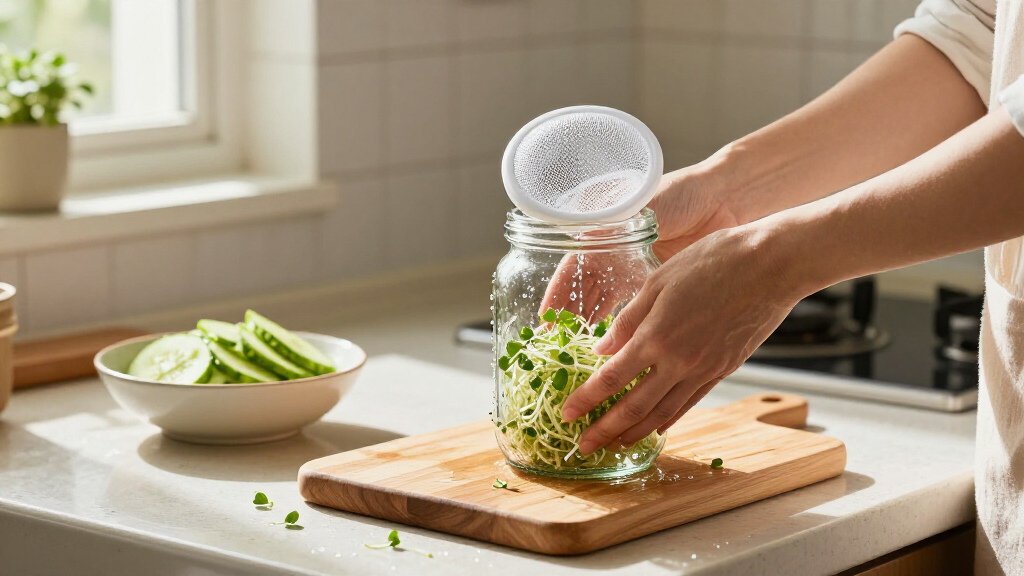

Finding the best alfalfa sprouting seeds comes down to three things: germination rate, cleanliness, and how much seed you actually need. Handy Pantry Certified Organic Alfalfa Sprouting Seed takes the top spot thanks to its certified organic status and consistently reliable sprouting performance, while Food to Live Alfalfa Seeds (5 Pounds) wins on pure value for frequent sprouters and Back to the Roots Organic Alfalfa Seeds suits beginners who want a trusted brand with beginner-friendly packaging. The main tradeoff in this category is between bulk pricing and freshness — a five-pound bag costs far less per ounce, but small packets often sprout more vigorously because they’re cycled through faster. Certification matters too: some options are USDA certified organic while others are merely labeled non-GMO. Keep reading for the full breakdown of all 15 options.

Get kitchen staples and gadgets delivered free with Prime
- Fast, free delivery on millions of items
- Prime Video, Amazon Music and more included
- Member-only deals all year
Key Takeaways
- Certified organic options (Handy Pantry, NOW Foods, Nature Jim’s) consistently offered stronger quality assurance than products labeled only ‘non-GMO’ with no certifying body behind them.
- Food to Live’s 5-pound bag delivers the lowest cost per ounce in the lineup, but only makes sense if you sprout weekly — stored seed loses germination vigor over months.
- The two Nature Jim’s entries split the field by purpose: the straight alfalfa suits purists, while the Salad Mix (broccoli, alfalfa, clover, radish) is the only blend in the roundup and better for flavor variety.
- Small-format options like Zestigreens (4 oz) and Evergreen Organics (200 g) trade value for freshness, making them smarter picks for occasional sprouters than bulk buyers.
- Several listings in this category are generic re-brands with interchangeable names; packaging claims like ‘heirloom’ or ‘organic‘ without certification logos were the clearest signal to treat them cautiously.


| alfalfa sprouting seed | Seed type |
|---|---|
| Organic Non-GMO Alfalfa Sprout | Alfalfa |
| HOME GROWN Alfalfa Sprouting a | Alfalfa (sprouting and microgreen use) |
| NOW Foods Organic Alfalfa Seed | — |
| Back to the Roots Organic Alfa | — |
| Nature Jim’s Sprouts Organic A | Alfalfa |
| Evergreen Organics Alfalfa Spr | Alfalfa |
| Handy Pantry Certified Organic | — |
| Seedboy Organic Non-GMO Alfalf | Alfalfa |
| Organic Alfalfa Sprouting Seed | — |
| Majero Organic Alfalfa Sprout | Alfalfa |
| USDA Organic Alfalfa Sprouting | — |
| Nature Jim’s Sprouts Salad Mix | — |
| Zestigreens Organic Alfalfa Se | Organic, non-GMO alfalfa |
| Organic Alfalfa Sprout Seeds | Alfalfa (Medicago sativa), heirloom |
| Food to Live Alfalfa Seeds for | — |
More Details on Our Top Picks
Organic Non-GMO Alfalfa Sprouting Seeds, 16 oz
This 16 oz pack earns the top spot because it balances certified organic seed, a fast 3–5 day harvest window, and enough volume for months of back-to-back batches. Compared with the NOW Foods 12 oz bag, you get a third more seed here, and the shorter harvest time means less daily commitment before your first crop hits a sandwich. The tradeoff is transparency: unlike Nature Jim’s, which ships printed step-by-step instructions, this bag leaves you to know (or research) the 6–8 hour soak and twice-daily rinse yourself. No stated germination rate is another small gap if you like hard numbers before committing.
Pros:- Large 16 oz supply supports many consecutive batches
- Organic and non-GMO certification
- Harvestable in as little as 3 days
- Mild flavor works in salads, wraps, and sandwiches
Cons:- Twice-daily rinsing is non-negotiable for success
- No published germination rate
- No instructions included for first-timers
Best for: Regular sprout eaters who run a new jar every week and want organic seed in bulk without overbuying
Not ideal for: True beginners who need printed instructions and a guaranteed germination figure
- Seed type:Alfalfa
- Pack size:16 oz (1 lb)
- Organic:Yes
- Non-GMO:Yes
- Sprouting time:3–5 days
- Soaking time:6–8 hours
- Rinse frequency:Twice daily
Our verdict“The strongest all-around choice for anyone who already sprouts routinely and wants organic seed at a sensible volume.”
HOME GROWN Alfalfa Sprouting and Microgreen Seeds, 16 oz
What separates this bag from the one-note options here is flexibility: the same seed works for jar sprouting and soil-grown microgreens, indoors or out. Where the Back to the Roots pound is purely a sprouting bag, this one lets you experiment with 2-inch soil trays once your jar routine gets boring. The heirloom, GMO-free lineage and resealable packaging add practical value, though the listing skews toward gardening specs — full sun, loam soil — that matter less to a windowsill jar sprouter. Germination in about five days puts it mid-pack: slower than the 3-day Organic Non-GMO pick, but dependable.
Pros:- Works for both sprouting and microgreens
- Indoor or outdoor growing supported
- Resealable bag preserves seed between batches
- Heirloom, GMO-free seed line
Cons:- Listed full-sun requirement complicates indoor-only setups
- Needs consistent watering when grown in soil
- No organic certification stated
Best for: Hobby growers who want to try both jar sprouting and microgreen trays from a single bag
Not ideal for: Apartment sprouters with no outdoor space or grow lights who will never use the soil-garden side of the seed
- Seed type:Alfalfa (sprouting and microgreen use)
- Package size:16 oz
- Usage:Indoor or outdoor
- Germination time:About 5 days
- Expected height:2 inches
- Planting period:Year round
- Soil:Loam, regular watering
- Special features:Heirloom, GMO free, resealable bag
Our verdict“The pick for growers who want one bag to cover both sprout jars and microgreen trays.”
NOW Foods Organic Alfalfa Seeds for Sprouting, 12 oz
Most bags on this list promise clean seed; this one can prove it. NPA A-rated GMP certification plus germination testing under normal home conditions means the seed was actually checked for the way you’ll grow it — a claim none of the other picks here make as explicitly. The certification stack (organic, kosher, vegan, gluten-free) also matters if dietary labels influence your pantry. The catch is quantity: at 12 oz, it’s the smallest standard bag in this batch, so a daily-sprout household will burn through it faster than the 16 oz Nature Jim’s pouch or Back to the Roots pound.
Pros:- Germination tested specifically for home sprouting conditions
- GMP-certified facility with USA-grown and packaged seed
- Extensive dietary certifications including kosher and gluten-free
- Mild sprouts suitable for raw and cooked dishes
Cons:- Smaller 12 oz pack than competing 16 oz options
- Slightly slower harvest documentation than the 3–5 day picks
- No resealable packaging mentioned
Best for: Label-conscious buyers who want certified, germination-tested seed and don’t need bulk volume
Not ideal for: High-volume sprouters who go through a pound a month and would find 12 oz too small
- Net weight:12 oz
- Use:Home sprouting
- Origin:Grown and packaged in the USA
- Certifications:Organic, Non-GMO, vegan, kosher
- Dietary:Gluten-free, soy-free, sugar-free, dairy-free
- Quality assurance:NPA A-rated GMP certification
- Germination testing:Tested under normal conditions
Our verdict“Buy it when verifiable quality and certifications matter more than raw quantity.”
Back to the Roots Organic Alfalfa Seeds, 1 Pound Non-GMO
The standout feature here isn’t the seed — it’s the 100% Guaranteed to Grow promise with replacement or refund. For a first-time sprouter, that removes the sting of a botched batch, something no other bag in this lineup offers. The routine is spelled out plainly: soak, rinse twice daily, harvest in 5–7 days. That’s slower than the 3–5 day Organic Non-GMO 16 oz pick, and the brand is newer to alfalfa specifically than NOW Foods, so the track record is thinner. Still, USDA certification, USA production, and a clear nutrient rundown make this the least risky starting point.
Pros:- Grow guarantee with replacement or refund
- USDA Certified Organic, non-GMO, made in USA
- Nutrient profile clearly documented (fiber, vitamins A, C, E, K)
- Straightforward soak-and-rinse routine
Cons:- Slower 5–7 day sprout window than several rivals
- Relatively newer product with a shorter track record
- Still requires disciplined twice-daily rinsing
Best for: Nervous first-timers who want a refund or replacement if their first batch fails
Not ideal for: Impatient sprouters who want the fastest possible 3-day turnaround on every batch
- Weight:1 pound (16 oz)
- Certification:USDA Certified Organic, Non-GMO
- Sprout time:5–7 days
- Care routine:Soak, rinse twice daily
- Sunlight:Partial sun
- Origin:Made in USA
- Guarantee:100% Guaranteed to Grow
Our verdict“The lowest-risk entry point for beginners — if the batch flops, you’re covered.”
Nature Jim’s Sprouts Organic Alfalfa Sprouting Seeds – Non-GMO, 16 oz
Where Back to the Roots protects beginners with a refund, Nature Jim’s prevents mistakes in the first place with included step-by-step instructions written for people who’ve never soaked a seed. The no-additives, no-fillers promise is a genuine differentiator at this price tier — several budget bags are silent on purity — and the resealable pouch matches what HOME GROWN offers for freshness. The honest tradeoff: sprouting still demands daily rinsing and patience, and there’s no grow guarantee backing you up if a batch goes moldy in a warm kitchen.
Pros:- Step-by-step instructions included in the package
- Organic, non-GMO, with no additives or fillers
- Resealable pouch preserves freshness between batches
- Designed for year-round indoor sprouting
Cons:- No grow guarantee unlike Back to the Roots
- Daily rinsing routine still required
- Slightly slower workflow than 3-day harvest picks
Best for: Complete novices who want printed guidance and clean, filler-free seed from a specialist sprouting brand
Not ideal for: Buyers who want a money-back guarantee if their first attempt fails — this brand doesn’t offer one
- Seed type:Alfalfa
- Package size:16 oz
- Organic:Yes
- Non-GMO:Yes
- Purity:No additives or fillers
- Storage:Resealable pouch
- Included:Step-by-step sprouting instructions
- Growing season:Year-round indoor
Our verdict“The most hand-holding-friendly bag here — instructions in the box make it the true beginner’s choice.”
Evergreen Organics Alfalfa Sprouting Seeds, 200 g
Evergreen Organics positions its seeds around culinary versatility rather than raw performance specs. The sprouts deliver a mild, nutty crunch that works in salads, sandwiches, soups, and smoothies, and the vegan, gluten-free, preservative-free labeling makes it a fit for buyers with dietary restrictions. Where it falls short compared with the Handy Pantry 8 Oz pouch is transparency: Handy Pantry discloses a 5-6 day harvest window, while Evergreen publishes no germination rate or harvest timeline, so first-timers are left guessing. The 200 g quantity also sits in an awkward middle ground — smaller than the Majero 16 oz bulk pouch, yet more than the casual sprouter testing one batch needs. This pick makes the most sense for cooks who care more about clean-label claims than growing statistics.
Pros:- Mild, nutty flavor that works across salads, sandwiches, soups, and smoothies
- Vegan, gluten-free, and free from preservatives and additives
- Straightforward soak-rinse-sprout process for home growing
Cons:- No published germination rate or nutritional quantities
- Requires daily soaking and rinsing attention with no included instructions detail
Best for: Health-conscious cooks who add sprouts to smoothies and soups and want vegan, gluten-free, additive-free seeds
Not ideal for: Data-driven growers who want published germination rates and harvest timelines before committing
- Weight:200 g
- Seed type:Alfalfa
- Dietary attributes:Vegan, gluten-free
- Additives:No preservatives or additives
- Growing method:Soak, rinse, and sprout at home
- Flavor profile:Mild, nutty, crunchy
Our verdict“Choose this if clean dietary labeling matters more to you than documented germination data.”
Handy Pantry Certified Organic Alfalfa Sprouting Seed – 8 Oz
Handy Pantry earns its place on credibility. The Oregon Tilth Certified Organic seal is stricter and more specific than the generic USDA Organic badge on options like Seedboy’s 8 oz bag, and the family-owned, USA-sourced operation has a track record in the sprouting category that newer Amazon listings can’t match. The 5-6 day harvest is on the faster end of this lineup, and the resealable pouch keeps partial bags viable between batches. The tradeoff is volume: 8 oz runs out quickly if you’re sprouting weekly, whereas the Majero 16 oz pouch doubles the supply for roughly the same effort. For buyers who prioritize proven sourcing and certification rigor over bulk value, this remains the safest bet on the list.
Pros:- Oregon Tilth Certified Organic and non-GMO verification
- Fast 5-6 day harvest window
- Resealable pouch preserves freshness between batches
- Works across sprouting jars, kits, and microgreens trays
Cons:- 8 oz package is small for frequent or high-volume sprouters
- Priced per ounce above larger bulk competitors
Best for: Buyers who want strict third-party organic certification and a long-established US family company behind their seeds
Not ideal for: High-volume sprouters who go through seeds weekly and would empty an 8 oz pouch too fast
- Size:8 oz
- Certification:Oregon Tilth Certified Organic
- GMO status:Non-GMO
- Harvest time:5-6 days
- Growing methods:Sprouting jars, kits, microgreens trays
- Origin:USA, family-owned company
- Packaging:Resealable pouch
Our verdict“This is the pick when certification pedigree and company reputation outweigh getting the most ounces per dollar.”
Seedboy Organic Non-GMO Alfalfa Sprouting Seeds
Seedboy is the most beginner-transparent option in this batch. Where Evergreen Organics omits germination details entirely, Seedboy spells out everything a newcomer needs: soak 4-6 hours, rinse twice daily, harvest in 5-7 days, with printed instructions in the bag. The dual-purpose design — the same seeds work as sprouts or microgreens — lets a new grower experiment with two techniques from one purchase, and the stated yield of about 8 quarts (32 servings) sets realistic expectations that vague listings don’t. Compared with the Starwest Botanicals 4 oz option, you get double the seed with the same organic certification. The catch: no jar is included, so budget for equipment the way you would with most competitors here.
Pros:- Beginner-friendly instructions included in the bag
- Grows as either sprouts or microgreens indoors
- USDA Certified Organic and non-GMO
- Clear yield estimate of about 8 quarts (32 servings)
Cons:- Sprouting jar sold separately
- Requires rinsing twice daily for the full grow cycle
Best for: First-time sprouters who want step-by-step instructions and a clearly stated yield before they start
Not ideal for: Buyers expecting an all-in-one kit — the sprouting jar is sold separately
- Seed type:Alfalfa
- Weight:8 oz
- Certifications:USDA Certified Organic by OTCO; non-GMO
- Time to harvest:5-7 days
- Soaking time:4-6 hours
- Rinse frequency:Twice daily
- Yield:About 8 quarts (32 servings)
- Included:Seeds and growing instructions
Our verdict“The clearest on-ramp for someone sprouting for the first time who wants instructions and expectations spelled out.”
Organic Alfalfa Sprouting Seeds (Starwest Botanicals, 4 Oz)
Starwest Botanicals fills the try-before-you-commit slot. At 4 ounces, it’s the smallest package in this lineup — half the size of Seedboy or Handy Pantry — which makes it ideal for testing whether home sprouting fits your routine before buying in bulk like the 16 oz Majero pouch. What it lacks in volume it makes up for in manufacturing rigor: the seeds are cGMP compliant and botanically identified as Medicago sativa, a level of specificity most Amazon listings skip. The tradeoffs are real: you’ll still wait the standard 5-6 days and rinse twice daily, so the effort-per-serving is higher than larger bags. This pick makes sense for skeptics and small households, not established sprouting routines.
Pros:- USDA Certified Organic with cGMP manufacturing compliance
- Botanically identified as Medicago sativa, grown in the United States
- Home sprouting instructions included
- Low-cost way to test the hobby before bulk buying
Cons:- Smallest quantity in the roundup, poor value per serving
- Twice-daily rinsing required for the full 5-6 day cycle
Best for: Cautious first-timers or single-person households who want a low-commitment trial of home sprouting
Not ideal for: Families or habitual sprouters — 4 oz disappears fast and costs more per serving
- Botanical name:Medicago sativa
- Origin:United States
- Certification:USDA Certified Organic
- Manufacturing compliance:cGMP compliant
- Quantity:4 ounces
- Time to harvest:5-6 days
- Storage:Refrigerate sprouts after harvest
Our verdict“A sensible toe-in-the-water purchase if you’re not yet sure home sprouting is for you.”
Majero Organic Alfalfa Sprout Seeds, 16 oz
Majero targets the committed sprouter with a resealable 16 oz pouch — double the seed of Handy Pantry or Seedboy at the standard organic, non-GMO grade. Its standout claim is a 95% germination rate, a figure none of the other four products in this batch publish, which translates to fewer dud seeds and more predictable batches. The 3-7 day harvest range is also the fastest floor in the group when conditions are right. One caveat gives me pause: the product description inconsistently mentions radish sprouts despite labeling the contents as alfalfa, a labeling sloppiness that buyers who care about seed purity — the same buyers who’d choose Handy Pantry’s Tilth certification — may want to weigh. Still, for volume and germination confidence, it leads this batch.
Pros:- 16 oz resealable pouch supports multiple back-to-back batches
- Published 95% germination rate, unique in this batch
- Harvest possible in as few as 3 days
- USDA Organic, non-GMO, heirloom seed designation
Cons:- Description inconsistently references radish sprouts despite alfalfa labeling
- Daily rinsing required throughout the sprouting cycle
Best for: Regular sprouters who want the most organic seed per purchase and a published germination rate
Not ideal for: Buyers who demand flawless labeling accuracy — the description’s radish mention creates doubt about seed purity
- Weight:16 oz
- Seed type:Alfalfa
- Organic certification:USDA Organic
- GMO status:Non-GMO
- Germination rate:95%
- Harvest time:3 to 7 days
- Seed designation:Heirloom
- Packaging:Resealable pouch
Our verdict“The strongest bulk pick for frequent sprouters, provided the labeling inconsistency doesn’t bother you.”
USDA Organic Alfalfa Sprouting Seeds – 1 Pound, Non-GMO, for Sprouting & Microgreens
This TradeKing option stands out for CCOF-certified organic verification and an exceptionally high germination rate, which matters most when you’re spreading seed densely across a microgreen tray where one dead patch ruins the whole harvest. At a full pound, it offers more volume than Zestigreens’ 4 oz pouch and enough for multiple tray cycles without the commitment of Food to Live’s 5-pound bulk bag. The roughly 5-day sprout window is a touch slower than Food to Live’s 3-4 days, so impatient jar sprouters may prefer that alternative.
The tradeoff here is patience and technique: like every raw sprouting seed, it demands daily rinsing discipline, and there’s no explicit pathogen-testing claim like Sereniseed provides. For tray growers who value organic certification above all, this pick makes the most sense.
Pros:- USDA Organic certified (CCOF) and non-GMO
- Exceptionally high germination rate for dense tray growing
- Versatile across trays, jars, and countertop sprouters
- Sprouts rich in fiber, vitamin C, and vitamin K
Cons:- Slower 5-day sprout window compared with 3-4 day options
- No stated pathogen testing unlike Sereniseed
Best for: Microgreen tray growers who want certified organic seed in a manageable mid-size quantity
Not ideal for: Beginners wanting the fastest possible harvest — the 5-day sprout time is slower than several alternatives
- Brand:TradeKing
- Weight:1 Pound
- Certification:USDA Organic (CCOF)
- GMO Status:Non-GMO
- Sprout Time:About 5 days
- Growing Methods:Microgreen trays, sprouting jars, countertop sprouters
- Key Nutrients:Fiber, vitamin C, vitamin K, minerals
Our verdict“A reliable organic workhorse for tray growers who prioritize certification and germination consistency over speed.”
Nature Jim’s Sprouts Salad Mix – Broccoli, Alfalfa, Clover, Radish, 1 lb
Sprouting only alfalfa gets monotonous, and this blend solves that by mixing broccoli, alfalfa, clover, and radish into a single 1 lb batch. The radish adds a peppery bite that plain alfalfa — like TradeKing’s single-variety pound — simply can’t deliver, while the broccoli brings sulforaphane compounds to the nutritional table. Nature Jim’s has been in the organic sprouting business since 1955, which lends credibility that newer brands like Zestigreens can’t match.
The honest tradeoff: this is a blend rather than pure alfalfa, so if your goal is classic mild alfalfa flavor, pure options like Sereniseed’s 16 oz pack serve you better. The mix also carries the usual raw-sprout contamination risk if handled carelessly, and all four seed types still need daily rinsing.
Pros:- Four-seed blend adds peppery and cruciferous flavor dimensions
- Certified organic and non-GMO
- Fast 5-day sprouting suitable for all skill levels
- Long-standing brand history dating to 1955
Cons:- Not pure alfalfa, so flavor differs from classic sprouts
- Raw sprout blends carry contamination risk without careful handling
- Requires daily rinsing and attention
Best for: Sprout enthusiasts bored of plain alfalfa who want layered flavor and a broader nutrient profile
Not ideal for: Pure alfalfa purists and picky eaters who want the mild, grassy classic flavor only
- Brand:Nature Jim’s Sprouts
- Weight:1 lb
- Seed Types:Broccoli, Alfalfa, Clover, Radish
- Certification:Organic, Non-GMO
- Sprout Time:As little as 5 days
- Brand History:Organic sprouting seeds since 1955
Our verdict“The right choice when you want a livelier, more nutritious sprout mix instead of straight alfalfa.”
Zestigreens Organic Alfalfa Seeds for Sprouting & Microgreens (4oz)
Not everyone needs a pound of seed, and Zestigreens’ 4 oz pouch is the low-commitment entry point of this lineup. Compared with Sereniseed’s 16 oz pack or Food to Live’s 5-pound bag, this size suits someone testing whether sprouting fits their routine — if you abandon the hobby, you’ve wasted far less. The seeds are USA-grown, organic, and non-GMO with a high germination rate and a quick 3-5 day sprout window, beating TradeKing’s 5 days.
The obvious drawback is cost efficiency: buying small means paying more per ounce over time, and frequent sprouters will burn through 4 oz quickly. As a newer brand, Zestigreens also lacks the track record of Nature Jim’s or Handy Pantry. This option makes the most sense as a first purchase, not a pantry staple.
Pros:- Compact 4 oz size perfect for trial runs
- Sprouts ready in just 3-5 days
- 100% organic, non-GMO, USA-grown seed
- Works with jar, tray, or sprouter methods
Cons:- Small package size is poor value for habitual sprouters
- Newer brand without an established reputation
Best for: First-time sprouters who want to try the hobby without committing to a bulk bag
Not ideal for: Regular sprouters — the 4 oz size runs out fast and costs more per ounce than larger packs
- Brand:Zestigreens
- Size:4 oz
- Seed Type:Organic, non-GMO alfalfa
- Origin:USA
- Sprouting Time:3-5 days
- Key Nutrients:Vitamins A, C, K, calcium, magnesium, iron
Our verdict“A smart starter pouch for curious beginners, but upgrade to a larger pack once you’re hooked.”
Organic Alfalfa Sprout Seeds (16 oz) – Non-GMO Heirloom Seeds for Sprouting and Microgreens
Raw sprouts carry inherent food-safety concerns, and Sereniseed addresses them more directly than anyone else here with pathogen testing and germination verification before packing, plus climate-controlled storage for freshness. Compared with TradeKing’s pound — similar in size and organic status — this pick adds heirloom, open-pollinated genetics and Oregon Tilth certification, which appeals to seed savers and safety-conscious buyers alike.
The tradeoffs are practical rather than qualitative. A 16 oz bulk pack overwhelms small households; a couple harvesting weekly won’t finish it at peak viability, and Zestigreens’ 4 oz pouch is the smarter small-household choice. It also assumes you already own sprouting gear and know the rinse-and-drain rhythm, since results depend on proper technique rather than a beginner kit.
Pros:- Pathogen-tested and germination-verified before packing
- Certified organic by Oregon Tilth, non-GMO heirloom
- Climate-controlled storage preserves freshness
- Sprouts rich in folate, vitamins C and K, calcium, magnesium
Cons:- 16 oz is more than small households can use while fresh
- Assumes existing equipment and sprouting technique
Best for: Food-safety-conscious sprouters and heirloom seed enthusiasts who want tested, traceable seed
Not ideal for: Small households or absolute beginners without sprouting equipment or technique
- Brand:Sereniseed
- Size:16 oz
- Seed Type:Alfalfa (Medicago sativa), heirloom
- Certification:Certified Organic by Oregon Tilth
- GMO Status:Non-GMO, open pollinated, heirloom
- Origin:USA-sourced
- Safety Testing:Pathogen and germination tested
Our verdict“The pick for buyers who put lab-tested safety and heirloom quality ahead of convenience.”
Food to Live Alfalfa Seeds for Sprouting, 5 Pounds
For households that sprout weekly, five pounds of seed changes the economics entirely — nobody else in this lineup comes close on volume, with Sereniseed and TradeKing offering just a pound each. Food to Live backs that quantity with a fast 3-4 day germination, the quickest window here, and a simple Mason-jar rinse-and-drain routine that keeps the process nearly foolproof. The seed is also vegan and kosher certified, a dietary breadth most competitors don’t advertise.
The flip side of bulk is perishability: these seeds are heat-sensitive and must be eaten fresh, so five pounds only makes sense if your household consumption is genuinely high. You’ll also commit to daily rinsing and draining for every batch, and casual sprouters would be far better served by Zestigreens’ 4 oz trial size.
Pros:- Largest quantity in the roundup for the best per-ounce value
- Fastest sprout time at 3-4 days
- Vegan and kosher certified
- Low-calorie sprouts (~30 per serving) rich in vitamins K, C, and B
Cons:- Enormous quantity risks spoilage for low-volume users
- Heat-sensitive seeds with a short fresh window
- Requires daily rinsing and draining
Best for: High-volume sprouting households and families that consume sprouts weekly
Not ideal for: Occasional sprouters — 5 pounds of heat-sensitive seed will lose viability before it’s used
- Brand:Food to Live
- Weight:5 pounds
- Germination Time:3-4 days
- Dietary Attributes:Vegan, Kosher
- Calories per Serving:About 30
- Key Nutrients:Vitamins K, C, B vitamins, iron, copper, antioxidants
- Recommended Method:Mason jar rinse-and-drain
Our verdict“The volume play for serious sprouting households — everyone else should buy smaller.”

How We Picked
I evaluated each product against the factors that actually determine sprouting success. Germination reliability came first — a seed lot that sprouts unevenly wastes days of rinsing and invites mold. Third-party organic certification ranked higher than unofficial ‘non-GMO’ labels, because sprouts are eaten raw just days after germinating and seed cleanliness matters more here than in garden planting. Cost per ounce was normalized across package sizes, since alfalfa seed yields roughly eight to ten times its weight in sprouts and quantity swings value dramatically.
Beyond the seed itself, I weighed supplier transparency and freshness indicators, including whether the brand publishes testing information, packs in resealable bags, and rotates stock quickly. Versatility for microgreens versus jar sprouting separated the middle of the pack from the top, and blends were judged on how well alfalfa complemented the other varieties rather than on alfalfa alone. These criteria explain the ordering: certified, well-documented seeds rank above equivalent uncertified ones, and bulk value only wins when freshness doesn’t suffer.
| alfalfa sprouting seed | Seed type |
|---|---|
| Organic Non-GMO Alfalfa Sprout | Alfalfa |
| HOME GROWN Alfalfa Sprouting a | Alfalfa (sprouting and microgreen use) |
| NOW Foods Organic Alfalfa Seed | — |
| Back to the Roots Organic Alfa | — |
| Nature Jim’s Sprouts Organic A | Alfalfa |
| Evergreen Organics Alfalfa Spr | Alfalfa |
| Handy Pantry Certified Organic | — |
| Seedboy Organic Non-GMO Alfalf | Alfalfa |
| Organic Alfalfa Sprouting Seed | — |
| Majero Organic Alfalfa Sprout | Alfalfa |
| USDA Organic Alfalfa Sprouting | — |
| Nature Jim’s Sprouts Salad Mix | — |
| Zestigreens Organic Alfalfa Se | Organic, non-GMO alfalfa |
| Organic Alfalfa Sprout Seeds | Alfalfa (Medicago sativa), heirloom |
| Food to Live Alfalfa Seeds for | — |
Factors to Consider When Choosing Best Alfalfa Sprouting Seeds
Beyond the individual products, a few category-wide realities shape whether any alfalfa seed you buy will actually produce clean, crunchy sprouts. These are the factors I’d weigh before clicking buy on any packet.Certified Organic vs. ‘Non-GMO’ Labels
The gap between these two claims is bigger than most buyers realize. USDA certified organic means the seed was grown under audited standards with restrictions on synthetic pesticides and handling chemicals — meaningful for a crop you eat raw within a week of germinating. ‘Non-GMO’ by itself only tells you the seed isn’t genetically engineered, which is nearly universal for alfalfa anyway; it says nothing about how the crop was grown or how the seed was cleaned. Some sellers also print the word ‘organic’ on packaging without a certifying logo, which is a gray zone worth avoiding. A common mistake is treating these labels as equivalent and buying whichever is cheaper by a dollar. My rule: no certification logo, no premium expectation. This distinction drove much of the ranking above, and it’s the single easiest quality filter you can apply yourself.
Package Size and Freshness Tradeoffs
Alfalfa seed is one of the cheapest sprouting crops per serving, but only if you buy a size that matches your actual consumption. A tablespoon of dry seed produces roughly a quart of sprouts, so a one-pound bag generates an enormous amount of food — far more than a solo sprouter will use before germination rates decline. Seed viability fades noticeably within six to twelve months of opening, especially in humid kitchens, even though dry seed is shelf-stable longer. Bulk buyers should store seed in airtight containers away from light and warmth. Occasional sprouters are almost always better served by 4-to-8-ounce packages that stay fresh until the last spoonful. The five-pound option in this lineup is excellent value, but it’s a commitment, not a starter size.
Sprouting vs. Microgreen Use
Not every alfalfa seed performs equally well in both formats. Jar and tray sprouting favors seed that germinates fast and uniformly within four to six days, while microgreen growing rewards varieties that stand upright, shed seed hulls cleanly, and produce dense canopies on soil or mats. Some brands explicitly test and market their seed for both uses; others are optimized for one. If you plan to grow microgreens, look for wording on the label and avoid generic seed with no stated use. Blends — like the broccoli-alfalfa-clover-radish mix in this roundup — behave differently again, since each component germinates on a slightly different schedule. Growing a blend as microgreens can produce uneven harvests, so beginners should run blends in jars first. Matching seed to method avoids the most common disappointment: patchy trays and mold-prone gaps.
Seed Cleanliness and Mold Risk
Sprout growing has a food-safety dimension most guides gloss over. Because sprouts are grown in warm, moist conditions — the same conditions bacteria love — the starting cleanliness of your seed is your first line of defense. Reputable suppliers handle seed for sprouting differently than garden seed, which may be treated or field-dusted. Look for language about pathogen testing or sprouting-grade handling on the brand’s materials, and always rinse seed thoroughly before soaking regardless of source. In your own kitchen, drainage matters as much as the seed: stagnant water in the bottom of a tray or jar causes more mold than any seed defect. If a batch smells sour or produces slimy sprouts at any point, discard it rather than salvaging. Buying from established sprouting-focused brands reduces, but never eliminates, this risk.
Brand Track Record vs. Generic Re-Brands
This category is flooded with interchangeable listings — identical stock photos, vague brand names, and near-identical titles. The product names in any roundup of alfalfa seeds can shift as sellers come and go, so judging the seller’s history and consistency matters more than memorizing names. Established sprouting brands maintain consistent germination rates because they control sourcing and turnover, while dropshipped re-brands may sell seed that sat in a warehouse for a year. Signs of a serious supplier include lot information, germination claims, certification logos, and responsive customer service if a batch underperforms. This is also why the ranking above favors recognized names at similar prices. If two options look identical and one costs meaningfully less, ask why before assuming you found a bargain.
When to Pay More (and When Not To)
Alfalfa seed is cheap enough that premium pricing rarely buys dramatically better seed — but a few situations justify spending extra. Pay more when you’re buying for young children, elderly family members, or immunocompromised households, where tested, certified seed offers meaningful peace of mind. Pay more for small-format freshness if you sprout less than weekly. Don’t pay more for buzzwords like ‘heirloom’ on alfalfa; unlike tomatoes or peppers, alfalfa sprouting seed isn’t selected for varietal flavor nuance, so heritage branding adds little practical value. Likewise, skip premiums for decorative packaging or bundled sprouting lids unless you genuinely need the kit. The smart money goes to certification, freshness, and supplier reliability — nothing else in this category moves the needle.
Frequently Asked Questions
How much alfalfa seed do I need to buy as a beginner?
Start small — 4 to 8 ounces is plenty for a first-time sprouter, since one tablespoon of dry seed yields roughly a full quart of sprouts. Even a modest packet will keep you in fresh sprouts for weeks if you grow in small successive batches. The mistake beginners make is buying a pound or more because the per-ounce price looks better, then watching germination rates slide before the bag is half gone. Once you know your household’s actual consumption — most people settle into two or three tablespoon-sized batches per week — you can size up confidently. That’s why I placed smaller options like the Zestigreens 4-ounce pack high for newcomers despite the higher unit cost.
Why did my alfalfa sprouts turn out slimy or moldy — is it the seed?
Sometimes, but usually the problem is technique rather than the seed itself. Sprouts need rinsing two to three times daily and complete drainage between rinses; water pooling at the bottom of a jar or tray creates the anaerobic conditions where slime and mold thrive. Warm kitchen temperatures above about 75°F accelerate the problem, so a cooler counter spot helps in summer. That said, seed can be the culprit — poorly cleaned or old seed carries higher microbial loads and lower vigor, which is why certified sprouting-grade brands ranked higher in this comparison. If a batch smells off or feels slimy after a rinse, discard it entirely rather than trying to rescue it. One bad batch tells you little; two in a row from the same seed points at the seed.
Can I use the same alfalfa seeds for both jar sprouting and microgreens?
Mostly yes, but performance varies. Alfalfa germinates readily enough that nearly any fresh lot will grow in a jar, which is the more forgiving method. Microgreen growing is the stricter test: it rewards seed that stands upright, sheds hulls cleanly, and produces a dense, even canopy on soil or hemp mats. Brands that explicitly label their seed for both uses have typically been evaluated for both, while generic seed is a gamble on the tray. Expect slightly different timelines too — jar sprouts are ready in five to seven days, microgreens closer to eight to twelve. If microgreens are your main goal, favor the options in this lineup that mention both formats on the label rather than assuming universal performance.
Is a sprout blend like broccoli-alfalfa-clover-radish better than plain alfalfa?
It depends on what you want from your harvest. Blends deliver more complex flavor and a broader nutrient mix, with radish adding a peppery kick and broccoli contributing sulforaphane precursors that plain alfalfa lacks. The tradeoff is scheduling: each component germinates and matures at a slightly different pace, so you’re harvesting a compromise rather than each crop at its peak. Blends also cost more per ounce than straight alfalfa, which is already the cheapest sprout in most lineups. My suggestion is to keep both on hand — plain alfalfa for everyday sandwiches and salads, a blend when you want something more interesting. If you only grow one, plain alfalfa’s simplicity and reliability make it the better single purchase.
How long do alfalfa sprouting seeds keep, and how should I store them?
Dry alfalfa seed is shelf-stable, but germination quality is a slow fade, not a cliff. Expect strong germination for about a year from purchase, with gradual decline after that — two-year-old seed may still sprout, but patchier and slower, which invites mold through uneven growth. Store seed in an airtight container, away from light, heat, and humidity; the kitchen windowsill is the worst spot in the house. The refrigerator works well if the container is truly sealed, since condensation is the enemy. Buy quantities you’ll finish within a year, which is the logic behind my size-based rankings throughout this guide. Dating the bag when you open it takes five seconds and removes the guesswork later.
Conclusion
The right choice depends on how you sprout and how often. For best overall, Handy Pantry Certified Organic Alfalfa Sprouting Seed balances certified quality, reliable germination, and a sensible 8-ounce size that stays fresh. Best value goes to Food to Live’s 5-pound bag — unbeatable per-ounce pricing for committed daily sprouters, provided you store it properly and will genuinely use it within a year. Best for beginners is Back to the Roots Organic Alfalfa Seeds, a trusted brand with approachable packaging and a low-commitment one-pound size.
For specific needs: NOW Foods Organic suits shoppers who want a recognized natural-foods brand at a moderate size, Nature Jim’s Salad Mix is the pick for flavor variety and blend lovers, and Zestigreens’ 4-ounce pack fits occasional sprouters who value freshness over bulk savings. Whatever you choose, buy the size you’ll actually finish, prioritize certification over buzzwords, and keep your rinsing discipline sharp — the seed is only half the equation.
NFL season / tailgating Picks
team gear
As an affiliate, we earn on qualifying purchases.