TL;DR

Get kitchen staples and gadgets delivered free with Prime
- Fast, free delivery on millions of items
- Prime Video, Amazon Music and more included
- Member-only deals all year
The Kitchn food writer Melissa Gaman describes coating seasoned chicken breasts with a small amount of buttermilk before searing them. Her method uses buttermilk as a thin coating, not a long marinade, and finishes the chicken in a 400°F oven until it reaches 165°F internally.
The Kitchn food writer Melissa Gaman has described a quick way to use leftover buttermilk when cooking chicken: toss seasoned chicken breasts with a small amount before searing, then finish them in the oven. Gaman reports that the approach produced browned, juicy chicken; it is a cooking tip based on her experience, not a reported test comparing methods.
Gaman says she tried the method while preparing dinner and had nearly run out of oil for coating the chicken. She added buttermilk to distribute spices and cover the meat, then cooked it in a hot skillet. In her account, the chicken browned well and stayed juicy. The article does not provide a side-by-side comparison or measurements of moisture, browning, or tenderness.
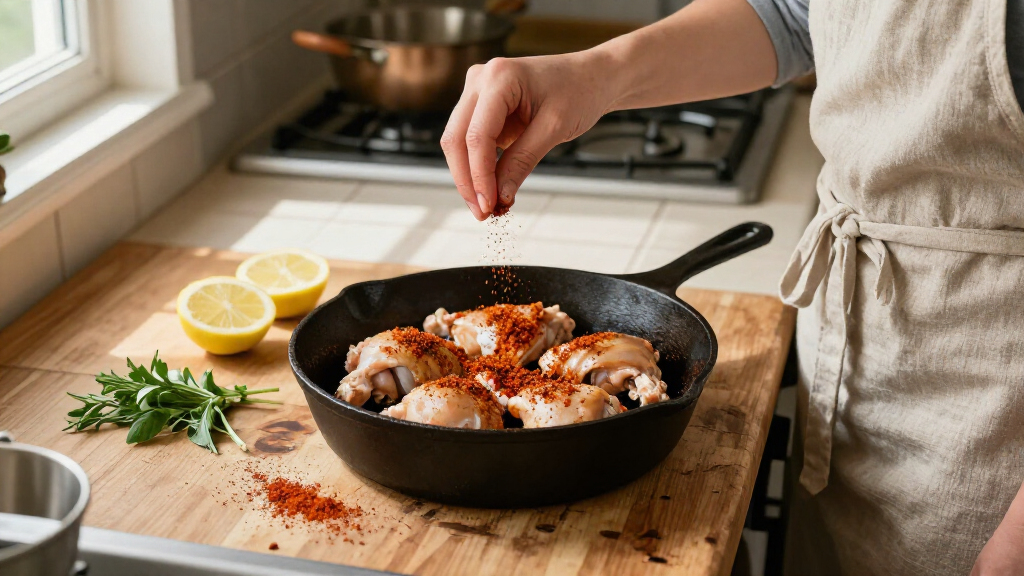
The recipe calls for 1½ pounds of boneless, skinless chicken breasts, seasoned with kosher salt, pepper and dry spices. Gaman’s preferred mix is garlic powder, paprika and dried oregano. She adds 2 tablespoons of shaken buttermilk and tosses the chicken until lightly coated, with little or no liquid left pooling in the bowl.
For cooking, the recipe heats 2 tablespoons of olive oil in a large, oven-proof skillet over medium heat. The chicken is seared for 8 to 10 minutes total, flipped halfway, then transferred in the skillet to a 400°F oven for another 10 to 15 minutes. The stated endpoint is 165°F in the thickest part of the chicken. Cooking time can vary by piece size and equipment, so the temperature check—not the clock alone—sets the endpoint.
A Small Coating, Not a Marinade
The technique offers a practical use for leftover buttermilk while changing how a cook prepares chicken just before it reaches the pan. Gaman’s method takes only a light coating and does not require advance marinating, which may suit cooks who want to season and cook chicken in the same meal-preparation window.
Gaman explains that buttermilk contains some fat and natural sugars, including lactose. She says the coating helps create a barrier at the surface, while sugars brown during cooking. The source presents this as the reason she believes the method works; it does not establish that buttermilk will reliably make every chicken breast juicier or more browned. The practical takeaway is narrower: use a little, avoid excess liquid, and cook to a safe internal temperature.
The approach also matters for kitchen planning. Buttermilk is often sold in larger containers than a single recipe requires, and Gaman says she commonly has some left after making biscuits. Her suggestion turns that surplus into a seasoning aid rather than requiring a dedicated marinade recipe.
Products Worth Considering

Cuisinart Air Fryer Toaster Oven TOA-70NAS, 1800W, 8-in-1 with Air Fry, Convection, Broil & Grill, 0.6 Cu Ft, Stainless Steel

Ninja Flip Toaster Oven & Air Fryer, 8-in-1, Stainless Steel, SP151

Ninja French Door Premier Air Fry Oven, 10-in-1, 20.3 Qt, Stainless Steel, FO101
As an affiliate, we earn on qualifying purchases.
How Gaman Came to the Method
Gaman’s article begins with a household problem: her biscuit recipe uses one cup of buttermilk, while the product is typically sold by the quart. She says she had been looking for easy ways to use the remainder and did not want to put it in the freezer, where she might forget it.
Buttermilk is also used in marinades. The article notes that its acidity can affect proteins during a longer resting period and that its thick texture helps it cling to meat and carry flavor. Gaman’s dinner experiment was different: she used buttermilk immediately before cooking, rather than leaving the chicken submerged or resting it for an extended period. She says the cooked chicken did not have a strong buttermilk taste.
The recipe allows either whole-milk or low-fat cultured buttermilk. Gaman says low-fat is often what she finds at her store; whole-milk buttermilk is thicker and richer, and may require a little more to coat the chicken evenly. She cautions that the quantity should remain small: excess coating can drip into hot oil and splatter.
“I grabbed some buttermilk and added just enough to disperse the spices and coat the chicken before searing it.”
— Melissa Gaman, The Kitchn food writer
What the Recipe Does Not Establish
The article is a first-person cooking report, and it does not say that Gaman tested the technique against chicken coated with oil alone or against a buttermilk marinade. Claims about improved juiciness and browning are her observations from cooking, not quantified results or a guarantee for other kitchens.
It also does not specify the chicken breasts’ exact thickness, the amount of salt or spices, or a precise searing temperature. Those details can affect cooking time and the final result. The source gives a temperature target of 165°F at the thickest part, but does not provide a separate food-storage or leftover-handling procedure.
How to Try the Technique
Readers can follow the published method by seasoning dry chicken breasts, tossing them with about two tablespoons of buttermilk, and shaking off any excess before searing. Keep the pieces spaced in the skillet, turn them once, and move the oven-proof pan to a 400°F oven to finish. Check the thickest portion with a food thermometer and remove the chicken when it reaches 165°F.
Gaman suggests changing the dry spices to suit the meal, while keeping the buttermilk amount modest. The source does not announce further testing, a product launch or another scheduled development; the next step for cooks is simply to try the recipe and judge the result in their own kitchens.
Key Questions
How much buttermilk does the method use?
For 1½ pounds of chicken breasts, Gaman uses 2 tablespoons, enough to distribute the seasoning and lightly coat the meat. She advises against letting excess liquid pool.
Does the chicken need to marinate?
No. Gaman adds the buttermilk immediately before searing. Her article distinguishes this quick coating from a longer buttermilk marinade.
What temperature should the chicken reach?
The recipe says to cook the thickest part to 165°F. Use a food thermometer to check; cooking times can vary with the size and thickness of the pieces.
Can low-fat buttermilk be used?
Yes. Gaman says both low-fat and whole-milk cultured buttermilk work. Whole-milk buttermilk is thicker, and she says a little more may be needed for an even coating.
Source: thekitchn.com