
TL;DR

Get kitchen staples and gadgets delivered free with Prime
- Fast, free delivery on millions of items
- Prime Video, Amazon Music and more included
- Member-only deals all year
La Cucina Italiana has revisited a passatelli-in-broth recipe published in the magazine’s first issue in 1929. The dish uses breadcrumbs, Parmigiano Reggiano, eggs, nutmeg and lemon; its dough is pressed through a passatelli tool or a large-holed potato ricer and cooked briefly in broth.
La Cucina Italiana is revisiting a recipe for passatelli in broth that founder Delia Pavoni Notari included among the classic soups in the magazine’s first issue, published in 1929. The Emilia-Romagna dish is made by pressing a firm mixture of breadcrumbs, grated Parmigiano Reggiano and eggs into short strands, then cooking them in broth for a few minutes.
The recipe calls for breadcrumbs, grated Parmigiano Reggiano PDO, eggs, nutmeg, lemon, salt and pepper, along with vegetable broth for cooking. The ingredient list does not include flour. The dough is mixed until firm and left to rest before shaping, according to La Cucina Italiana’s recipe report.
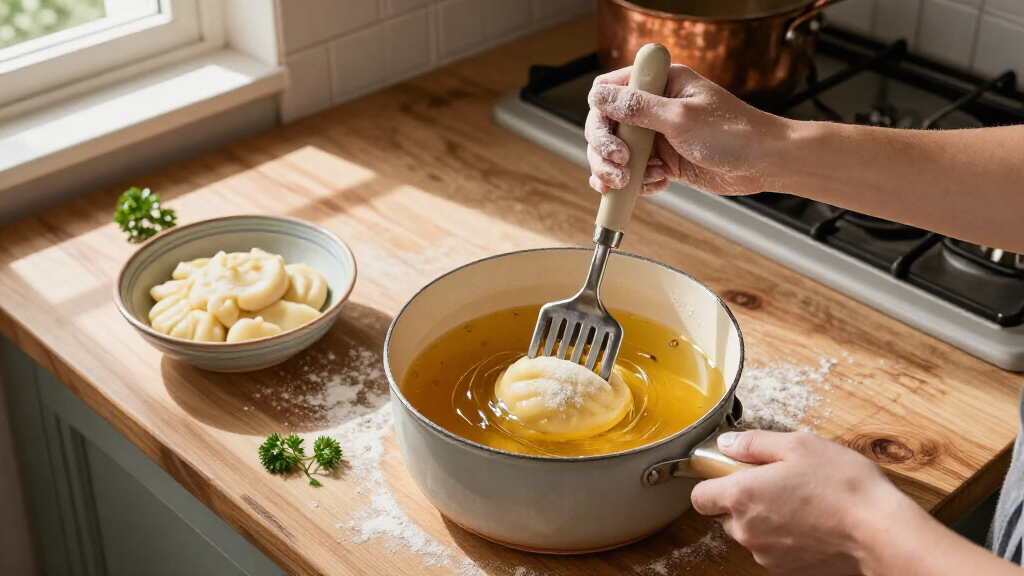
To form the passatelli, the dough is pushed through a special passatelli tool or a potato ricer fitted with large holes. The strands go directly into the broth and cook for just a few minutes. The magazine suggests serving them with additional Parmesan and pepper.
La Cucina Italiana presents the recipe as a traditional soup associated with Emilia-Romagna. Its report connects the dish to the region’s household cooking and to Bologna’s Doctor Balanzone, a character from commedia dell’arte whom the article describes as a symbol of the city. The recipe itself is attributed to Pavoni Notari, the magazine’s founder.
A 1929 Recipe Returns to View
The feature gives readers a direct link to La Cucina Italiana’s first issue and to a recipe the magazine classifies among its classic soups. Its value as news is primarily culinary and historical: it documents how the publication presented a regional Italian dish at its launch, while making the instructions accessible to present-day cooks.
The recipe also shows how a small number of ingredients and a particular shaping method define the dish. Breadcrumbs and cheese form the base, while a passatelli press or large-holed ricer creates the strands. Cooking them in broth for only a few minutes is part of the method described by the magazine, not a claim about a newly introduced technique.
Products Worth Considering

Traeger Woodridge Pro Wood Pellet Grill and Smoker, 970 sq. in., WiFIRE

KitchenAid Classic Series 4.5 Quart Tilt-Head Stand Mixer K45SS, Onyx Black

Le Creuset Enameled Cast Iron Round Dutch Oven, 5.5 Qt, Flame
As an affiliate, we earn on qualifying purchases.
Passatelli and Their Regional Roots
Passatelli are associated with Emilia-Romagna, and their name refers to dough being passed through a perforated tool to form the pasta. La Cucina Italiana’s report describes the dish as part of a tradition of home cooking in Romagna and uses the term azdore for the women who managed household cooking there.
The 1929 recipe is presented alongside a character from Italian theater: Doctor Balanzone, the learned and talkative figure in commedia dell’arte associated with Bologna. That framing gives the soup a regional cultural reference, but the source does not claim the character invented or historically defined the recipe.
La Cucina Italiana also points readers to other versions, including a recipe associated with chef Massimo Bottura’s grandmother, seafood passatelli, passatelli in fish broth and chickpea passatelli with clam and tarragon broth. These are suggestions for related dishes, rather than changes to the ingredients in the 1929 recipe.
Details Beyond the Recipe
The source identifies the recipe as one published in the magazine’s first issue in 1929, but does not provide the original issue page, a facsimile, or further archival documentation in the supplied report. It also does not specify exact ingredient quantities, broth volume, resting time, or a precise cooking time beyond “a few minutes.” Those details should not be inferred from the summary.
The report recommends vegetable broth but does not say whether other broths appeared in the original version. It also does not provide nutrition information or discuss adaptations for dietary needs. The listed ingredients include eggs and milk-derived Parmigiano Reggiano; the report does not offer allergy substitutions.
Cooking the Passatelli at Home
La Cucina Italiana directs readers to the full recipe for the quantities and complete instructions. Following the method described in its report, cooks mix the ingredients into a firm dough, let it rest, press it through a suitable tool and cook the strands briefly in broth. The magazine recommends finishing the soup with Parmesan and pepper.
The source gives no announcement of a new edition, event or further publication schedule. Its related recipes offer alternative versions for readers who want to compare the traditional broth preparation with seafood, fish-broth or chickpea variations.
Key Questions
What is passatelli in broth?
It is a soup associated with Emilia-Romagna. The passatelli are strands made from a firm mixture of breadcrumbs, Parmigiano Reggiano and eggs, pressed through a perforated tool and cooked in broth.
Does the recipe use flour?
No. La Cucina Italiana’s ingredient list names breadcrumbs, cheese, eggs, nutmeg, lemon, broth, salt and pepper, and explicitly says flour is not needed.
How are the passatelli shaped?
The rested dough is pushed through a passatelli tool or a potato ricer with large holes, according to the magazine’s report.
How long do passatelli cook?
The report says to cook them in broth for just a few minutes. It does not provide a more exact cooking time in the supplied material.
When did the recipe first appear in La Cucina Italiana?
The magazine says founder Delia Pavoni Notari included it among the classic soups in the publication’s first issue in 1929.
Source: lacucinaitaliana.it