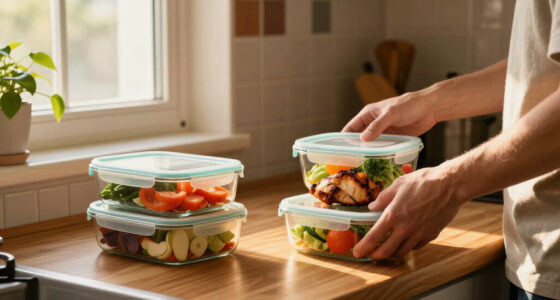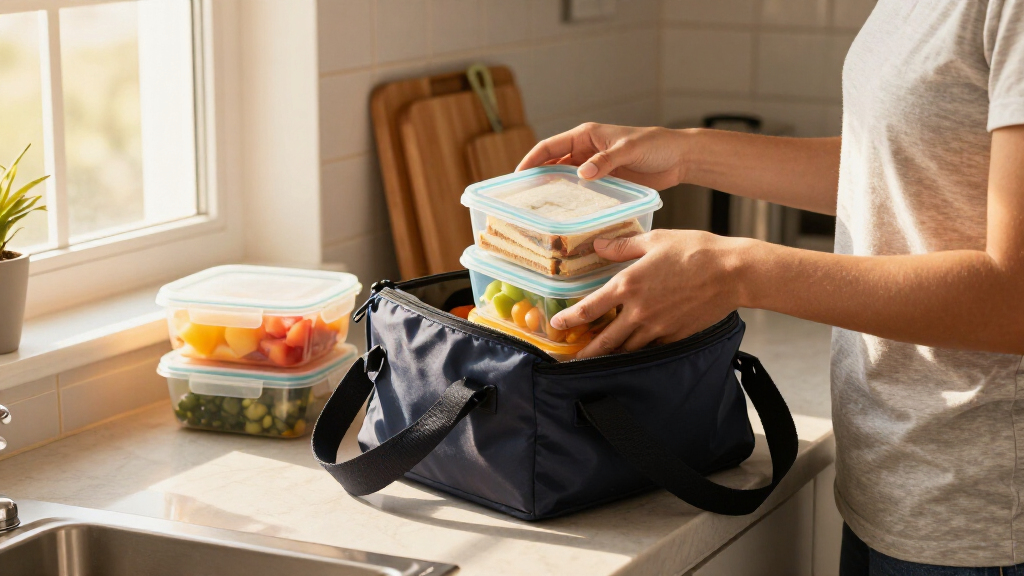

For meal prep containers for school, I rank the Bentgo Prep 60-Piece Mixed Kit as the best overall because its one-, two-, and three-compartment trays can handle changing menus and different appetites. The Bentgo Prep 3-Compartment Set is the stronger everyday choice for balanced lunches, while the five-compartment Bento Box 4-Pack suits students who prefer snack-style meals. The main tradeoffs are compartment flexibility, portion size, backpack space, lid management, and how much food separation a student actually needs. Large sets offer a longer rotation but demand more cabinet space, while highly divided boxes can make sandwiches and full-size entrées harder to pack. Continue reading for the full breakdown and buyer-specific recommendations.

Get kitchen staples and gadgets delivered free with Prime
- Fast, free delivery on millions of items
- Prime Video, Amazon Music and more included
- Member-only deals all year
Key Takeaways
- The Bentgo 60-piece mixed kit ranks first because its three tray layouts adapt to more school menus, though storing and matching the extra lids takes more work.
- A three-compartment tray is the best middle ground for most students; the standard Bentgo set offers the function, while the Glitter Garden version mainly adds visual personality.
- The stated piece count can be misleading: a 20-piece kit generally pairs 10 bases with 10 lids, so usable container count matters more than the headline number.
- The four- and five-compartment boxes are better for snack-style lunches and selective eaters, but their smaller sections leave less room for sandwiches, wraps, and larger entrées.
- The two-compartment and open-layout Bentgo sets suit simpler reheatable meals, yet they provide less separation than the three-compartment options and need extra cups for sauces or small snacks.
| Bentgo Prep Meal Prep Kit, 60 Piece Set |  | Best Overall | Set size: 60 pieces | Compartment options: 1, 2, and 3 compartments | Material: BPA- and PFAS-free plastic | VIEW LATEST PRICE | See Our Full Breakdown |
| Bentgo Prep 3-Compartment Meal Prep Containers with Lids, 20 Piece Set |  | Best Value Pick | Total pieces: 20 | Containers: 10 | Lids: 10 | VIEW LATEST PRICE | See Our Full Breakdown |
| Bentgo Prep 3-Compartment Meal Prep Containers, Glitter Garden Edition |  | Best Design | Edition: Glitter Garden | Total pieces: 20 | Containers: 10 | VIEW LATEST PRICE | See Our Full Breakdown |
| Bento Box 5-Pack, 4-Compartment Wheat Straw Lunch Boxes |  | Best for Snack-Heavy Lunches | Pack size: 5 boxes | Compartments: 4 per box | Box material: BPA-free wheat straw | VIEW LATEST PRICE | See Our Full Breakdown |
| TOUWMX Bento Box for Kids, 4 Pack |  | Best Compact Pick | Pack size: 4 containers | Compartments: 3 per box | Material: Wheat straw and food-grade polypropylene | VIEW LATEST PRICE | See Our Full Breakdown |
| Bento Box 4-Pack 5-Compartment Meal Prep Containers |  | Best for Snack-Style School Lunches | Number of Containers: 4 | Compartments per Container: 5 | Material: BPA-free plastic | VIEW LATEST PRICE | See Our Full Breakdown |
| Bentgo Prep 2-Compartment Meal Prep Containers with Lids |  | Best Everyday School Pick | Set Size: 20 pieces | Compartments per Container: 2 | Capacity: 3 cups | VIEW LATEST PRICE | See Our Full Breakdown |
| Bentgo Prep Meal Prep Containers with Lids, 20 Piece |  | Best for Bigger Appetites | Set Size: 20 pieces | Number of Containers: 10 | Number of Lids: 10 | VIEW LATEST PRICE | See Our Full Breakdown |
| meal prep containers for school | Material | Dishwasher safe | Microwave safe | Freezer safe |
|---|---|---|---|---|
| Bentgo Prep Meal Prep Kit | BPA- and PFAS-free plastic | Yes | Yes, with lid vented | Yes |
| Bentgo Prep 3-Compartment Meal | BPA- and PFAS-free plastic | — | — | — |
| Bentgo Prep 3-Compartment Meal | PFAS- and BPA-free plastic | — | — | — |
| Bento Box 5-Pack | — | Top rack | Yes | Yes |
| TOUWMX Bento Box for Kids | Wheat straw and food-grade polypropylene | — | — | — |
| Bento Box 4-Pack 5-Compartment | BPA-free plastic | — | — | — |
| Bentgo Prep 2-Compartment Meal | PFAS- and BPA-free | Yes; hand-washing lids is recommended | Trays only | Yes |
| Bentgo Prep Meal Prep Containe | PFAS- and BPA-free | Yes; hand-washing lids is recommended | Trays only | Yes |
More Details on Our Top Picks
Bentgo Prep Meal Prep Kit, 60 Piece Set
I rank the Bentgo Prep 60-Piece Kit first because its mix of one-, two-, and three-compartment trays handles the widest range of school lunches. A single compartment suits pasta or sandwiches, while divided trays keep fruit, snacks, and mains separated. That flexible compartment selection makes it more adaptable than the Bentgo Prep 3-Compartment set, which locks every meal into the same layout. Embossed portion guidance can also simplify batch preparation for several school days. The tradeoff is storage: this large set requires more cupboard room than the five-pack wheat-straw boxes. Although the trays are dishwasher safe, hand washing can extend their life, and the lids must be loosened before microwaving. I favor it for households that value variety and volume over compact storage.
Pros:- Three compartment formats accommodate mains, sandwiches, snacks, and sides
- Large 60-piece assortment supports batch preparation and family use
- Embossed portion guidance makes meal planning easier
- Trays work in the microwave, freezer, and dishwasher
Cons:- The large assortment takes up more storage space than smaller sets
- Hand washing is recommended to extend the product life
- Lids must be opened slightly to vent steam during microwaving
Best for: Families preparing several different school lunches each week and needing multiple compartment layouts
Not ideal for: Households with limited cabinet space or buyers wanting containers that require no special microwave handling
- Set size:60 pieces
- Compartment options:1, 2, and 3 compartments
- Material:BPA- and PFAS-free plastic
- Dishwasher safe:Yes
- Microwave safe:Yes, with lid vented
- Freezer safe:Yes
Our verdict“This is my first choice for families who want one adaptable set for varied school lunches and multi-day preparation.”
Bentgo Prep 3-Compartment Meal Prep Containers with Lids, 20 Piece Set
The Bentgo Prep 3-Compartment Set is my value pick for students who need a full weekday rotation without paying for multiple tray formats. Ten four-cup containers provide more weekly capacity than the TOUWMX four-pack, while three fixed sections make it easy to separate a main dish from two sides. Compared with the larger Bentgo Prep 60-Piece Kit, this set is simpler to organize and store, but it cannot adapt as readily to undivided meals or lunches needing four or five sections. Only the trays belong in the microwave, and hand washing the lids adds work after school. The four-cup size may also occupy substantial backpack space for younger pupils. I see it as a practical quantity-for-price choice for older students with consistent lunch routines.
Pros:- Ten containers cover two five-day school weeks
- Four-cup capacity accommodates a substantial student lunch
- Three sections keep a main dish and two sides organized
- Trays are microwave, freezer, and dishwasher safe
Cons:- The fixed three-section layout offers less flexibility than a mixed-format set
- Lids should be hand-washed for the best longevity
- Microwave use is limited to the trays
Best for: Middle-school and high-school students who bring balanced three-part lunches throughout the week
Not ideal for: Younger children with small backpacks or families that frequently pack soups and single-dish meals
- Total pieces:20
- Containers:10
- Lids:10
- Capacity:4 cups per container
- Compartments:3 per container
- Material:BPA- and PFAS-free plastic
- Appliance compatibility:Freezer and dishwasher safe; trays are microwave safe
Our verdict“I recommend this set to older students who want plenty of consistent three-section containers at a sensible scale.”
Bentgo Prep 3-Compartment Meal Prep Containers, Glitter Garden Edition
I chose the Bentgo Prep Glitter Garden Edition for students who want lunch containers that are easier to recognize among plain classroom or cafeteria gear. Functionally, it closely matches the standard Bentgo Prep 3-Compartment set: ten four-cup trays divide lunch into a main and two sides, and the trays can move from freezer to microwave. Its bright glitter-themed appearance is the deciding difference, not added capacity or layout flexibility. That makes this version more personal, but less broadly appealing, and every tray still has the same three-section arrangement. The custom-fit lids should be hand-washed and cannot accompany the trays into the microwave. Compared with the mixed-layout Bentgo 60-Piece Kit, it sacrifices versatility for visual character. I would pick it when distinctive school-lunch styling matters as much as organized portions.
Pros:- Distinctive glitter styling helps the set stand apart from plain containers
- Ten four-cup containers provide ample weekday rotation
- Three compartments separate mains and sides
- PFAS- and BPA-free trays support freezer, microwave, and dishwasher use
Cons:- The glitter design may not suit every student’s taste
- Every container uses the same three-compartment layout
- Lids require hand washing and are not microwave safe
Best for: Style-conscious students who want a recognizable container set for three-part lunches
Not ideal for: Buyers who prefer neutral designs or need different compartment layouts for changing menus
- Edition:Glitter Garden
- Total pieces:20
- Containers:10
- Capacity:4 cups per container
- Compartments:3 per container
- Material:PFAS- and BPA-free plastic
- Lids:Custom-fit lids included
- Appliance compatibility:Freezer and dishwasher safe; trays are microwave safe
Our verdict“This is my style-led pick for students who want organized portions in containers that are easy to recognize.”
Bento Box 5-Pack, 4-Compartment Wheat Straw Lunch Boxes
The 4-Compartment Wheat Straw Bento Box 5-Pack gives snack-focused school lunches more structure than either Bentgo three-compartment set. Four sections let a student carry smaller servings of fruit, vegetables, crackers, and a main without mixing them, while five boxes cover a standard school week. I also favor the lightweight, stackable build for families preparing lunches in batches. Its limitations matter, though: the boxes are not fully leak-proof, so yogurt, soup, and juicy foods could create a mess in a backpack. Some students may also find the lids hard to open without help. Compared with the TOUWMX four-pack, this set adds one container and one compartment per box, but provides a less reassuring seal. My ranking places it below the Bentgo sets because spill protection is weaker.
Pros:- Four compartments support varied snack-style lunches
- Five boxes provide one container for each school day
- Lightweight, stackable construction saves storage space
- Wheat-straw bases are microwave, freezer, and top-rack dishwasher safe
Cons:- The boxes are not completely leak-proof and should not hold liquids
- Lids may be difficult for some children to open
- Five boxes provide less batch-prep capacity than the ten-container Bentgo sets
Best for: Families packing dry, snack-style lunches with four separate foods for each school day
Not ideal for: Students carrying soups, sauces, yogurt, or other foods that could leak inside a backpack
- Pack size:5 boxes
- Compartments:4 per box
- Box material:BPA-free wheat straw
- Lid material:Food-grade polypropylene
- Microwave safe:Yes
- Freezer safe:Yes
- Dishwasher safe:Top rack
Our verdict“I would choose this five-pack for dry, varied school lunches where four food sections matter more than liquid containment.”
TOUWMX Bento Box for Kids, 4 Pack
I place the TOUWMX Bento Box 4-Pack in the compact slot because each 6.1-inch-square box is easier to fit into a child’s lunch bag than many high-capacity meal-prep trays. Three sections offer enough separation for a modest main and two sides, and the colorful wheat-straw design feels better matched to younger students than the plainer Bentgo Prep 3-Compartment set. Its strong-sealing lid helps contain ordinary solid foods, but the manufacturer still excludes liquids, so the leakproof description should not be read as soup-ready. Four boxes also fall one short of a five-day school week, unlike the five-pack four-compartment set. Larger appetites may outgrow the compact portions, and hand washing the lids prevents deformation. I recommend it for smaller lunches and smaller bags, not maximum capacity.
Pros:- Compact square dimensions fit smaller school lunch bags
- Three compartments separate a main dish and two sides
- Strong-sealing lids help contain solid foods
- Colorful, stackable wheat-straw boxes suit younger students
Cons:- Four containers do not cover a full five-day week without reuse
- The compact size may be inadequate for larger appetites
- Lids need hand washing and the boxes are not suitable for liquids
Best for: Elementary-school students carrying modest three-part lunches in compact lunch bags
Not ideal for: Older students with large appetites or anyone packing soups, dressings, and other free-flowing liquids
- Pack size:4 containers
- Compartments:3 per box
- Material:Wheat straw and food-grade polypropylene
- Dimensions:6.1 x 6.1 x 2.2 inches
- Minimum temperature:-4°F (-20°C)
- Maximum temperature:248°F (120°C)
- Storage design:Stackable
- Appliance compatibility:Microwave, freezer, and dishwasher safe
Our verdict“This is my compact choice for younger students who need small, colorful containers for solid three-part lunches.”
Bento Box 4-Pack 5-Compartment Meal Prep Containers
I rank the Bento Box 4-Pack as the strongest choice for students who prefer several small foods instead of one large main. Its five fixed compartments can separate fruit, crackers, vegetables, dips, and bite-size portions, offering more variety than the Bentgo Prep 2-Compartment Meal Prep Containers. Four stackable boxes also take up relatively little cabinet space. The tradeoff is reduced flexibility: larger sandwiches or full-size entrées may not fit neatly, and four containers do not cover a five-day school week without washing one early. More concerning, the product data does not confirm airtight or leak-resistant seals, microwave compatibility, or dishwasher safety. I would reserve this set for mostly dry, cold lunches rather than soups, saucy meals, or reheated leftovers.
Pros:- Five compartments provide the most separation among these three picks
- Four individual boxes support advance preparation of several school lunches
- Stackable construction reduces cabinet and refrigerator space
- BPA-free plastic is suitable for food contact
Cons:- No airtight or leak-resistant seal is stated
- Microwave and dishwasher compatibility are not specified
- Four containers fall short of a full five-day school week
Best for: Students who take cold, snack-style lunches with several small foods that need separate compartments
Not ideal for: Students packing saucy meals, large sandwiches, or reheatable leftovers because seal and appliance compatibility are not specified
- Number of Containers:4
- Compartments per Container:5
- Material:BPA-free plastic
- Design:Stackable
- Primary Uses:Meal prep and snack storage
- User Group:Adults and children
- Use Locations:School, work, and travel
Our verdict“I recommend this set for varied cold lunches, but I would skip it when leak resistance or reheating is a priority.”
Bentgo Prep 2-Compartment Meal Prep Containers with Lids
The Bentgo Prep 2-Compartment set earns my everyday-school role because its 3-cup size balances portion space with straightforward packing. Two sections make sense for a main dish and one side, while embossed measurements help parents or older students divide servings consistently. Compared with the Bento Box 4-Pack, it sacrifices snack separation but supplies a much larger 20-piece set and confirmed freezer, microwave, and dishwasher compatibility. That makes batch cooking and weekday reheating easier. The limitations sit mainly with the lids: Bentgo recommends hand-washing them for best results, and they must be removed before microwaving. The 3-cup capacity may also feel restrictive for older students with bigger appetites. I place it ahead of more specialized divided boxes for routine lunches, though not for five-item snack spreads.
Pros:- Two compartments create a practical main-and-side layout
- Three-cup capacity supports controlled school-lunch portions
- Embossed measurements make repeatable portioning easier
- Trays are microwave, freezer, and dishwasher safe
Cons:- Lids should be hand-washed for best results
- Lids cannot remain attached during microwave heating
- Three-cup capacity may be too small for larger school lunches
Best for: Parents and students who batch-pack a main dish with one side and want freezer-to-microwave convenience
Not ideal for: Older students with large appetites or snack grazers who need more than two separated sections
- Set Size:20 pieces
- Compartments per Container:2
- Capacity:3 cups
- Material:PFAS- and BPA-free
- Dishwasher Safe:Yes; hand-washing lids is recommended
- Microwave Safe:Trays only
- Freezer Safe:Yes
Our verdict“I would choose this set for dependable weekday meal prep when two compartments and moderate portions are enough.”
Bentgo Prep Meal Prep Containers with Lids, 20 Piece
I give the Bentgo Prep 4-Cup set the bigger-appetite role because each container holds one cup more than the Bentgo Prep 2-Compartment Meal Prep Containers. That extra room suits older students packing substantial leftovers, pasta, grain bowls, or a larger main meal. The ten containers and ten clear lids also support organized batch preparation, while embossed measurements help keep portions visible. Against the Bentgo Prep Meal Prep Kit, 60 Piece Set, however, this set offers less format variety and fewer total pieces. Its convenience has limits too: the lids are better hand-washed and cannot go into the microwave with the trays. The supplied data also makes no leak-proof claim, which weakens its case for liquid-heavy lunches carried in backpacks. I favor it for high-capacity, reheatable meals, not buyers seeking multiple compartment layouts.
Pros:- Four-cup capacity accommodates larger school lunches
- Ten containers and ten lids support multi-day batch preparation
- Embossed measurements assist with portion planning
- Trays are suitable for microwave, freezer, and dishwasher use
Cons:- Lids require hand-washing for best longevity
- Only the trays are microwave safe
- No leak-proof claim is provided for backpack transport
Best for: Older students and active teenagers who bring generous reheatable meals and prepare several lunches at once
Not ideal for: Students carrying soups or buyers wanting several compartment configurations because leak resistance is unstated and the set has one listed format
- Set Size:20 pieces
- Number of Containers:10
- Number of Lids:10
- Capacity:4 cups
- Material:PFAS- and BPA-free
- Dishwasher Safe:Yes; hand-washing lids is recommended
- Microwave Safe:Trays only
- Freezer Safe:Yes
Our verdict“I recommend this set for students needing roomy reheatable lunches, provided they do not rely on a leak-proof seal.”

How We Picked
I compared these containers using school-day versatility, usable capacity, compartment layout, stated material properties, cleaning demands, and the number of complete base-and-lid pairs. I placed extra weight on whether a set can handle realistic lunches rather than merely holding many small foods. Backpack fit, storage burden, portion flexibility, and compatibility with reheating or freezing also shaped the order. Because manufacturer safety labels do not prove leak resistance, I treated lid design and transport limitations separately from microwave, freezer, and dishwasher claims. I also looked at whether a higher price or larger set produced a meaningful benefit for students.
The Bentgo mixed-layout kit leads because it covers the widest range of menus and ages, followed by the standard three-compartment set for its practical everyday format. The Glitter Garden edition sits behind it because the decorative finish changes style more than lunch-packing ability. Smaller four- and five-compartment boxes earn narrower roles for snack lunches, compact portions, and younger students. Two-compartment and open-layout trays rank lower for general school use because they require more add-on containers when foods need separation. This order favors adaptability first, routine usability second, and specialized layouts third, while still identifying a clear buyer for every option.
| meal prep containers for school | Material | Dishwasher safe | Microwave safe |
|---|---|---|---|
| Bentgo Prep Meal Prep Kit | BPA- and PFAS-free plastic | Yes | Yes, with lid vented |
| Bentgo Prep 3-Compartment Meal | BPA- and PFAS-free plastic | — | — |
| Bentgo Prep 3-Compartment Meal | PFAS- and BPA-free plastic | — | — |
| Bento Box 5-Pack | — | Top rack | Yes |
| TOUWMX Bento Box for Kids | Wheat straw and food-grade polypropylene | — | — |
| Bento Box 4-Pack 5-Compartment | BPA-free plastic | — | — |
| Bentgo Prep 2-Compartment Meal | PFAS- and BPA-free | Yes; hand-washing lids is recommended | Trays only |
| Bentgo Prep Meal Prep Containe | PFAS- and BPA-free | Yes; hand-washing lids is recommended | Trays only |
Factors to Consider When Choosing Meal Prep Containers For School
I would choose school meal-prep containers by matching the layout to the student’s actual menu, carrying habits, and access to refrigeration or a microwave. More compartments are not automatically better, and a large piece count does not always mean more complete containers. The right purchase balances portion flexibility, reliable transport, and manageable cleanup across a full school week.
Count Complete Containers, Not Listed Pieces
Product listings commonly count every base and lid as a separate piece, so a 20-piece set usually represents 10 complete containers. I compare usable base-and-lid pairs before judging value. Five school lunches require fewer containers than many households expect, especially when dishes are washed during the week. Ten complete containers provide a comfortable rotation for one student, while larger sets make more sense for siblings or weekend batch cooking. A 60-piece mixed kit adds flexibility, but it also creates more lids to sort and store. I would buy the smallest set that supports the household’s real washing schedule rather than letting the headline number drive the choice.
Match the Compartment Layout to Real Lunches
Compartment count shapes which foods fit far more than it affects overall convenience. An open tray works well for pasta, rice bowls, casseroles, and full sandwiches, while two sections keep an entrée apart from a side. Three compartments offer the most useful balance for a main item, fruit or vegetables, and a snack. Four- and five-section boxes favor crackers, sliced produce, cheese, and other small portions, but those dividers can block larger foods. I would map a normal week of lunches before choosing a fixed layout. If the menu changes often, several tray configurations are more useful than buying one highly specialized shape in bulk.
Check Backpack Fit and Portion Depth
Capacity labels do not reveal whether a container will sit flat inside a student’s lunch bag. I would compare the external dimensions with the usable floor space of the bag, especially when an ice pack and drink must fit beside it. Wide meal-prep trays can hold an adult-size lunch yet feel awkward in a narrow backpack. Depth matters as well: shallow sections suit sliced food, while deeper bays handle rice, pasta, and bulky fruit more comfortably. Younger students may benefit from smaller boxes they can carry and open independently, even if those boxes will be outgrown sooner. A slightly smaller container that travels flat is usually more practical than a roomy tray that must be carried sideways.
Treat Leak Resistance as a Separate Requirement
A microwave-safe or dishwasher-safe label says nothing about how a lid handles liquid during a bus ride. Many lightweight meal-prep trays use press-on lids rather than locking, gasketed closures, making them better for sandwiches, fruit, rice, and other low-liquid foods. I would not pack soup, thin dressing, or yogurt in this style unless the manufacturer specifically supports that use. Small sealed cups can keep dips and sauces away from the main lid. An upright insulated bag also reduces movement, but it cannot make a loose closure watertight. For liquid-heavy lunches, I would pair these trays with a separate screw-top or locking vessel.
Plan for Reheating, Freezing, and Cleaning
Convenience labels still require careful use. I would follow the manufacturer’s directions on whether the lid must be removed or vented before reheating, since trapped steam can distort lightweight plastic. Top-rack dishwasher placement may reduce exposure to stronger heat, while hand-washing can extend the usable life of thin lids. Tomato sauces, turmeric, and oily foods may stain clear or pale plastic even when the container remains functional. Frozen meals need some empty space because food expands, and sudden movement from freezer temperatures to high heat can stress materials. A simple shape with few corners is easier to clean than several tiny compartments. Families that frequently lose lids may also gain more from an inexpensive matching set than from a small number of costly boxes.
Know When Paying More Makes Sense
A higher price is worthwhile when it solves a recurring problem rather than adding decoration alone. The mixed Bentgo kit earns its place through multiple compartment layouts, which can serve siblings with different appetites or support menus that change from day to day. A styled edition makes sense for a student who is more likely to identify, carry, and return a distinctive container. It offers little functional advantage over the matching plain version, however, so I would treat that purchase as a design preference. Highly divided boxes can also be worth paying for when snack lunches are the household norm, but they are poor value if large entrées rarely fit. I would spend more on the layout used most often, then use inexpensive accessory cups for occasional needs.
Frequently Asked Questions
Are Bentgo Prep Containers Leakproof Enough for a School Backpack?
I would not assume that lightweight Bentgo Prep trays are fully leakproof unless the exact listing makes that claim. Their press-on lids are better matched to solid or low-moisture foods than soups, runny sauces, or loose yogurt. For pasta sauce or juicy fruit, I would keep the container upright inside an insulated bag and avoid overfilling it. Thin dressings and dips belong in a separate sealed cup. This approach protects books and electronics without giving up the convenience of batch-prepped trays.
How Many Meal Prep Containers Does One Student Need?
For one student, I find that five to 10 complete containers cover most routines. Five are enough when every container returns home and dishes are washed weekly, while 10 allow for forgotten lunches, leftovers, and a second batch in the freezer. Families with multiple students may benefit from the larger mixed kit, but the storage demand rises quickly. I would count available cabinet space and complete base-and-lid pairs before buying. A manageable set that stays organized is more useful than a large pile of unmatched pieces.
Are Three or Five Compartments Better for School Lunches?
Three compartments suit the widest range of school lunches because they leave enough space for a main item while separating two sides. Five compartments work better for snack-style meals built from crackers, fruit, vegetables, cheese, and small treats. The extra dividers can help selective eaters see foods separately, but they reduce space for sandwiches, wraps, and leftovers. I would choose five sections only when the student’s usual menu genuinely uses them. For changing appetites or mixed menus, three sections are the safer everyday format.
Should I Buy Microwave-Safe Containers if the School Has No Student Microwave?
Microwave compatibility still has value when meals are reheated at home before school or when the containers also store family leftovers. It should not outweigh backpack fit, lid security, and cold-food usability if students cannot reheat lunch on campus. An insulated food jar is often a better match for meals that must remain hot until lunchtime. I would choose the container around the school’s actual routine rather than a feature that may never be used. In that setting, freezer and dishwasher compatibility may deliver more day-to-day value.
Are Wheat-Straw Bento Boxes Better Than Standard Plastic Trays?
Wheat-straw composite boxes may offer a lighter feel and a softer, less utilitarian appearance, but the material label alone does not make them more durable or more resistant to leaks. I would compare closure design, wall thickness, care instructions, and replacement cost before focusing on the plant-fiber content. Standard plastic meal-prep trays often provide more matching containers per set and can be easier to replace. Wheat-straw boxes may appeal to students who want a compact bento format, while conventional trays better suit large batch-prep routines. The better choice depends on layout and daily handling, not the material name by itself.
Conclusion
My best overall pick is the Bentgo Prep 60-Piece Mixed Kit because its one-, two-, and three-compartment trays accommodate the broadest range of school lunches, though it requires the most storage. For everyday balanced meals, the standard Bentgo Prep 3-Compartment Set is the simpler choice. My best value pick is the five-pack four-compartment bento set for families wanting a lower-commitment school-week rotation, while the Glitter Garden Bentgo set is the best premium-style choice when appearance matters more than added function. For beginners, I favor the Bentgo 20-Piece open-layout set because it places fewer restrictions on entrées and leftovers. The TOUWMX four-pack is better suited to younger students and smaller portions, while the five-compartment four-pack is my specialist pick for snack-style lunches. Students who routinely pack one entrée and one side should choose the Bentgo two-compartment set. The standard three-compartment Bentgo remains preferable to the Glitter Garden edition for buyers who want the same practical layout without paying for decoration. I would choose by the lunch packed most often: mixed layouts for flexibility, three sections for balance, and four or five sections for small separate foods.
Fall Picks
fall essentials
As an affiliate, we earn on qualifying purchases.