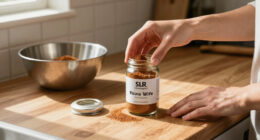
Healthy meal prep food scales help portion ingredients consistently, but some also estimate nutrition through an app while others focus on straightforward weighing. My best overall pick is the Smart Food Scale with Nutritional Calculator and 24-Nutrient App, which pairs weighing with detailed nutrition tracking. The Cosori Smart Nutrition Food Scale is another standout for app-based logging, while the Amazon Basics Digital Kitchen Scale suits people who want simple measurements without extra software. The main tradeoffs are app convenience versus setup and upkeep, plus weighing capacity versus fine precision. Read on for the full breakdown and guidance on matching a scale to your meal-prep habits.

Get kitchen staples and gadgets delivered free with Prime
- Fast, free delivery on millions of items
- Prime Video, Amazon Music and more included
- Member-only deals all year
Key Takeaways
- The 24-nutrient app model leads this lineup for people who want nutrition information alongside ingredient weights, rather than a scale that only records grams and ounces.
- Smart scales differ in how much they ask of you. App-linked picks such as the amazon.com/dp/B0F1N26FT3?tag=quickhealthyfood-20&ascsubtag=dc-1298377″ target=”_blank” rel=”nofollow sponsored noopener”>Cosori and WARMKEY TFT model add tracking features, while basic digital models avoid phone setup and food-database decisions.
- Capacity and precision serve different jobs. The 33 lb GGQ and 22 lb Greater Goods models allow heavier weighing, while 0.1 g BOMATA precision is better suited to small quantities.
- Most listed smart models share the 11 lb or 5 kg range. That capacity is ample for common meal-prep portions, but buyers handling large bowls or batch ingredients may prefer a higher-capacity option.
- Simple scales can be the better fit for consistent portioning. They avoid relying on nutrition databases, which can vary from the exact brand, recipe, or preparation method used.
| Smart Food Scale with Nutritional Calculator and 24-Nutrient App |  | Best for Detailed Nutrition Tracking | Maximum capacity: 11 lb (5,000 g) | Minimum weight: 2 g | Readout accuracy: 1 g | VIEW LATEST PRICE | See Our Full Breakdown |
| GGQ Digital Kitchen Food Scale, 33 lb, Rechargeable, Black |  | Best for Large-Batch Meal Prep | Maximum capacity: 33 lb (15 kg) | Measurement range: 3 g to 15 kg | Graduation: 1 g | VIEW LATEST PRICE | See Our Full Breakdown |
| Ultrean Digital Kitchen Food Scale, 11 lb Capacity | 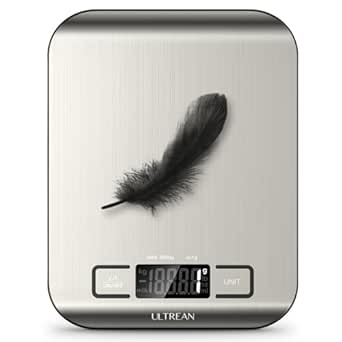 | Best for Straightforward Portioning | Model: UL-KS01 | Maximum capacity: 11 lb | Readout accuracy: 1 g | VIEW LATEST PRICE | See Our Full Breakdown |
| BOMATA Large Kitchen Scale, 11 lb, 0.1 g Precision |  | Best for Fine-Measurement Prep | Model: B613-3U | Platform size: 7.2 × 7.2 inches | Weight capacity: 11 lb (5 kg) | VIEW LATEST PRICE | See Our Full Breakdown |
| WARMKEY Smart Nutrition Food Scale with App, 1 g Precision, 5 kg Capacity |  | Best for Simple App-Based Logging | Maximum capacity: 5 kg (11 lb) | Readout accuracy: 1 g | Display: LED | VIEW LATEST PRICE | See Our Full Breakdown |
| KUAIVO Food Kitchen Scale with Nutrition Tracking |  | Best for Simple Nutrition Logging | Maximum capacity: 5,000 g (11 lb) | Readout accuracy: 1 g | Measurement units: g, ml water, ml milk, oz, lb:oz | VIEW LATEST PRICE | See Our Full Breakdown |
| Greater Goods Digital Kitchen and Baking Scale, 22 lb Capacity |  | Best for High-Capacity Batch Prep | Maximum capacity: 22 lb (10 kg) | Readout accuracy: 1 g | Measurement units: g, ml, fl oz, oz, lb, lb:oz | VIEW LATEST PRICE | See Our Full Breakdown |
| Ultrean Smart Food Kitchen Scale with Nutritional Tracking App |  | Best for Large Portions and App Tools | Maximum capacity: 33 lb (15 kg) | Precision: 1 g increments | Measurement units: g, kg, oz, lb:oz, fl oz, ml, milk | VIEW LATEST PRICE | See Our Full Breakdown |
| KitchenTour Smart Food Scale with Nutrition Calculator, 11 lb Capacity, 1 g Precision |  | Best for Clear On-Scale Readings | Maximum capacity: 5,000 g (11 lb) | Readout accuracy: 1 g | Material: 304 stainless steel and ABS | VIEW LATEST PRICE | See Our Full Breakdown |
| URAMAZ Smart Food Scale with Nutritional Tracking App, 11 lb |  | Best for Connected Diet Tracking | Maximum capacity: 11 lb (5 kg) | Readout accuracy: 1 g | Measurement units: g, oz, lb:oz, ml, fl oz | VIEW LATEST PRICE | See Our Full Breakdown |
| Cosori Smart Nutrition Food Scale with Nutritional Calculator | 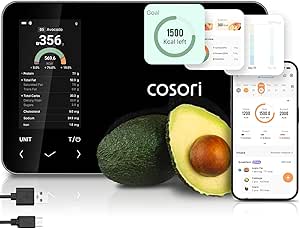 | Best for App-Based Meal Tracking | Capacity: 11 lb / 5,000 g | Measurement range: 3–5,000 g | Readout accuracy: 1 g | VIEW LATEST PRICE | See Our Full Breakdown |
| WARMKEY Smart Nutrition Food Scale with TFT Display & App |  | Best for On-Scale Nutrition Readouts | Capacity: 11 lb / 5 kg | Precision: 1 g / 0.1 oz | Display: Color TFT | VIEW LATEST PRICE | See Our Full Breakdown |
| Amazon Basics Digital Kitchen Scale with LCD Display |  | Best Simple Scale for Portion Control | Model: EK3211 | Capacity: Up to 11 lb / about 5,000 g | Minimum measurement: 2 g | VIEW LATEST PRICE | See Our Full Breakdown |
| DENENTT Smart Food Scale with Nutrition Tracking and Color Display |  | Best for Barcode-Assisted Food Logging | Model: KN2432WB | Capacity: 2 g to 5,000 g / 11 lb | Readout accuracy: 1 g | VIEW LATEST PRICE | See Our Full Breakdown |
| Food Scale with Nutritional Calculator, Digital Display (Lbs, Grams, Ounces) |  | Best Compact Nutrition Calculator | Capacity: 3,000 g | Display: LED | Form factor: Mini | VIEW LATEST PRICE | See Our Full Breakdown |
| healthy meal prep food scale | Readout accuracy | Measurement units | Display | Maximum capacity |
|---|---|---|---|---|
| Smart Food Scale with Nutritio | 1 g | fl oz, oz, ml, g, lb:oz | 2.0-inch TFT backlit display | 11 lb (5,000 g) |
| GGQ Digital Kitchen Food Scale | — | g, kg, lb:oz, oz, ml | — | 33 lb (15 kg) |
| Ultrean Digital Kitchen Food S | 1 g | g, kg, lb, oz, ml, milk ml | Backlit LCD | 11 lb |
| BOMATA Large Kitchen Scale | 0.1 g | — | Backlit LCD | — |
| WARMKEY Smart Nutrition Food S | 1 g | — | LED | 5 kg (11 lb) |
| KUAIVO Food Kitchen Scale with | 1 g | g, ml water, ml milk, oz, lb:oz | LED | 5,000 g (11 lb) |
| Greater Goods Digital Kitchen | 1 g | g, ml, fl oz, oz, lb, lb:oz | — | 22 lb (10 kg) |
| Ultrean Smart Food Kitchen Sca | — | g, kg, oz, lb:oz, fl oz, ml, milk | LCD | 33 lb (15 kg) |
| KitchenTour Smart Food Scale w | 1 g | — | Backlit color TFT | 5,000 g (11 lb) |
| URAMAZ Smart Food Scale with N | 1 g | g, oz, lb:oz, ml, fl oz | LCD | 11 lb (5 kg) |
| Cosori Smart Nutrition Food Sc | 1 g | g, mL (water or milk), oz, fl oz (water or milk), lb:oz | — | — |
| WARMKEY Smart Nutrition Food S | — | — | Color TFT | — |
| Amazon Basics Digital Kitchen | 1 g | Pounds, ounces, grams, fluid ounces, milliliters | — | — |
| DENENTT Smart Food Scale with | 1 g | g, oz, ml (water/milk), lb:oz, fl oz | Color TFT | — |
| Food Scale with Nutritional Ca | — | Pounds, grams, ounces | LED | — |
More Details on Our Top Picks
Smart Food Scale with Nutritional Calculator and 24-Nutrient App
For meal preppers who want more than portion weights, this scale pairs 1 g measurements with the Fitdays+ app, which tracks 24 nutrients, generates reports, and can sync with Apple Health and Fitbit. Barcode scanning and storage for up to 50 custom foods can make logging familiar meals less repetitive. Compared with the WARMKEY Smart Nutrition Food Scale, this model lists more concrete tracking tools and integrations, making it a stronger fit for people who monitor nutrition across apps. Its 11 lb capacity and stainless steel surface also suit everyday batch prep. The tradeoff is that nutrient details and food lookup depend on the companion app, so it is less appealing if you want a scale that works without a phone. Battery-life and replacement details are also unspecified.
Pros:- Tracks 24 nutrients and can generate nutrition reports
- Syncs with Apple Health and Fitbit
- Measures in 1 g increments with five unit options
- Stainless steel surface and backlit display suit regular meal prep
Cons:- Nutrition lookup and tracking rely on the Fitdays+ app
- Battery life and replacement details are not specified
Best for: Meal preppers who track several nutrients and want their food logs connected to Apple Health or Fitbit
Not ideal for: Buyers who want nutrition tracking without a phone app or prefer clearly specified battery details
- Maximum capacity:11 lb (5,000 g)
- Minimum weight:2 g
- Readout accuracy:1 g
- Measurement units:fl oz, oz, ml, g, lb:oz
- Material:Stainless steel
- Display:2.0-inch TFT backlit display
- App:Fitdays+; tracks 24 nutrients and supports barcode scanning
- Custom food storage:Up to 50 foods
Our verdict“Choose this model if detailed nutrient logging and health-app syncing matter more than app-free operation.”
GGQ Digital Kitchen Food Scale, 33 lb, Rechargeable, Black
The GGQ is the practical pick when meal prep means weighing a full mixing bowl or a large batch, not tracking nutrients in an app. Its 33 lb capacity is far higher than the 11 lb limit on the Ultrean Digital Kitchen Food Scale, while both offer 1 g graduation for portioning ingredients. USB-C charging avoids routine battery changes, and the stainless steel platform, tare function, and five units cover common prep tasks. At 250 g, it is also light enough to move or store easily. The main compromise is its two-minute auto shutoff, which can interrupt a slower recipe or repeated weighing session. It has no nutrition database or logging features, so health-focused buyers who want automatic macro tracking should choose an app-connected model instead.
Pros:- 33 lb capacity handles larger bowls and batch quantities
- 1 g graduation supports portioning and recipe measurements
- USB-C rechargeable power
- Tare, five units, non-slip feet, and overload reminder support routine kitchen use
Cons:- Two-minute auto shutoff may interrupt longer weighing sessions
- No nutrition tracking or companion app is listed
Best for: Batch cooks who weigh heavy bowls or large quantities and want a rechargeable scale for everyday prep
Not ideal for: Macro trackers who want nutrient calculations, meal history, or app-based food logging
- Maximum capacity:33 lb (15 kg)
- Measurement range:3 g to 15 kg
- Graduation:1 g
- Measurement units:g, kg, lb:oz, oz, ml
- Platform dimensions:7.5 x 5.5 in
- Material:304 stainless steel
- Power:USB-C rechargeable
- Item weight:250 g
Our verdict“Pick the GGQ for high-capacity, rechargeable weighing, but choose an app-connected scale for nutrition logs.”
Ultrean Digital Kitchen Food Scale, 11 lb Capacity
For buyers who want dependable portion measurements without nutrition apps, the Ultrean keeps the task simple: 1 g accuracy, a tare function, and a backlit LCD. Its six units include milk milliliters, a useful option for recipes that measure liquid dairy by volume. Unlike the Smart Food Scale with Nutritional Calculator and 24-Nutrient App, it does not turn weights into nutrient reports; that makes it easier to use as a basic kitchen tool, but leaves calorie and macro logging to the buyer. It also has a lower 11 lb capacity than the GGQ Digital Kitchen Food Scale, so it is better suited to ordinary portions than heavy batch containers. Batteries are included, though the supplied details do not specify battery life.
Pros:- 1 g readout accuracy for portion control
- Six units include milk milliliters
- Backlit LCD is easy to read
- Batteries are included
Cons:- 11 lb capacity is below the GGQ model’s 33 lb limit
- No nutrition app or nutrient database is listed
Best for: Meal preppers who want clear portion weights and milk-volume conversion without app setup
Not ideal for: People weighing large batches or seeking automatic calorie and nutrient calculations
- Model:UL-KS01
- Maximum capacity:11 lb
- Readout accuracy:1 g
- Measurement units:g, kg, lb, oz, ml, milk ml
- Material:304 stainless steel
- Display:Backlit LCD
- Features:Tare function, automatic shutoff
- Included components:Food scale and batteries
Our verdict“Choose the Ultrean for uncomplicated portion weighing and useful liquid conversions, not automated nutrition tracking.”
BOMATA Large Kitchen Scale, 11 lb, 0.1 g Precision
The BOMATA stands apart from app-led choices like the WARMKEY Smart Nutrition Food Scale by focusing on measurement control rather than nutrient logging. Its 0.1 g readout is finer than the 1 g increments listed for the other scales here, which can help when weighing small additions such as seasonings or supplements alongside meal ingredients. The 7.2-inch square platform gives containers more room than a compact surface, and percentage, counting, hold, and calibration functions add flexibility for precise kitchen tasks. A calibration weight is included. The tradeoff is its 11 lb capacity, well below the GGQ’s 33 lb limit, and it provides no listed nutrition app. Charging also requires removing AAA batteries if they are installed.
Pros:- 0.1 g readout offers finer measurement increments than 1 g models
- 7.2 × 7.2-inch platform accommodates larger containers
- USB-C charging or optional AAA battery operation
- Includes a 100 g calibration weight
Cons:- 11 lb capacity is lower than the GGQ’s 33 lb capacity
- AAA batteries must be removed while charging
- No nutrition tracking app is listed
Best for: Meal preppers who weigh small ingredient amounts, want a roomy platform, and value calibration controls
Not ideal for: Batch cooks using heavy containers or buyers who want app-based calorie and nutrient logging
- Model:B613-3U
- Platform size:7.2 × 7.2 inches
- Weight capacity:11 lb (5 kg)
- Readout accuracy:0.1 g
- Display:Backlit LCD
- Platform material:Stainless steel
- Power:Built-in lithium battery or 2 AAA batteries; USB-C charging
- Functions:Percentage, tare, hold, unit conversion, counting, auto-off, calibration
Our verdict“Choose the BOMATA for fine measurements and a large platform, but not for heavy batches or automatic nutrition tracking.”
WARMKEY Smart Nutrition Food Scale with App, 1 g Precision, 5 kg Capacity
WARMKEY takes a direct route to nutrition-aware meal prep: weigh a portion in 1 g increments, then use the mobile app to log calories, macros, and other nutrients. Meal history helps users revisit earlier entries, while tare supports weighing ingredients in a bowl without including its weight. Compared with the Smart Food Scale with Nutritional Calculator and 24-Nutrient App, this listing offers a simpler stated feature set; it names calories, macros, and meal history but does not specify nutrient count, barcode scanning, or health-platform syncing. Its 5 kg capacity is enough for many individual portions and standard prep tasks, though the GGQ 33 lb scale is a better fit for large vessels. App dependence is the clear tradeoff: nutrition logging requires a phone.
Pros:- Logs calories, macros, and other nutrients through a mobile app
- 1 g readout increments support portion control
- Meal history can help organize repeat meal prep
- Tare function simplifies weighing ingredients in containers
Cons:- Nutrition tracking requires the mobile app
- 5 kg capacity is substantially lower than the GGQ’s 15 kg limit
- The provided details do not specify nutrient count or app integrations
Best for: Portion-conscious meal preppers who want calorie and macro logs with a meal-history feature
Not ideal for: Buyers who need large-batch capacity, app-free nutrition tracking, or documented health-platform syncing
- Maximum capacity:5 kg (11 lb)
- Readout accuracy:1 g
- Display:LED
- Scale type:Digital counter scale
- Color:Champagne
- Connectivity:Mobile app
- Functions:Nutrition logging, meal history, tare
Our verdict“Pick WARMKEY for basic app-based calorie and macro logging, but choose a higher-capacity model for heavy batch prep.”
KUAIVO Food Kitchen Scale with Nutrition Tracking
The KUAIVO pairs everyday weighing with app-based food logging, making it a better fit for meal preppers who want calorie and macro records alongside portion weights than a conventional scale such as the Greater Goods Digital Kitchen and Baking Scale. Its 1 g increments and 5,000 g capacity cover routine ingredient portions, while tare lets you add foods to one container without doing the math yourself. The app tracks 23 nutrients and saves reports over daily, weekly, and monthly periods, which can help users spot patterns across meal-prep routines.
The main compromise is the database: only 50 foods are built in, so varied meals may require regular app lookup or entry. Nutrition reports also depend on using a phone, unlike the Greater Goods model’s straightforward standalone weighing. I’d choose KUAIVO for app-supported tracking, but skip it if you want a broad food library without relying on a companion app.
Pros:- Tracks 23 nutrients through its companion app.
- Saves daily, weekly, and monthly intake reports.
- Measures in 1 g increments with a tare function.
- Supports five measurement units for different ingredients and recipes.
Cons:- The built-in food list is limited to 50 foods.
- Nutrition tracking and reports depend on using the app.
Best for: Meal preppers who want to log calories and macros over time and mostly weigh familiar foods.
Not ideal for: People who want a large built-in food database or prefer to weigh and track meals without using a phone app.
- Maximum capacity:5,000 g (11 lb)
- Readout accuracy:1 g
- Measurement units:g, ml water, ml milk, oz, lb:oz
- Connectivity:Bluetooth
- Built-in food database:50 foods
- Tracked nutrients:23
- Display:LED
- Model:KN2432WB
Our verdict“Choose KUAIVO if you want basic app-based nutrition history with precise portion weighing and can work around its small built-in food list.”
Greater Goods Digital Kitchen and Baking Scale, 22 lb Capacity
For cooking several portions at once, the Greater Goods scale’s standout advantage is its 22 lb capacity, twice that of the 11 lb URAMAZ Smart Food Scale. It still reads in 1 g increments, so the extra headroom suits large bowls and batch ingredients without giving up the precision most home meal prep needs. The stainless steel platform, large LCD, and tare function support practical weighing; the hold function can keep a reading visible for up to five minutes when a container obscures the display.
This is a weighing-first tool, not a nutrition tracker. Unlike URAMAZ, it does not offer app-based macros or food logging, so buyers seeking diet records should choose a connected model instead. It also needs three AAA batteries and is not intended for laboratory or microgram work. I’d rank it for large-volume prep where capacity and simple operation matter more than nutrition insights.
Pros:- High 22 lb capacity accommodates large bowls and batch ingredients.
- Retains 1 g increments for typical recipe and portion weighing.
- Stainless steel platform and tare function simplify routine prep.
- Large LCD and hold function help keep readings visible.
Cons:- Has no nutrition database or app-based food tracking.
- Requires three AAA batteries.
Best for: Batch cooks who weigh large pots, mixing bowls, or multiple meal-prep portions and want a clear, app-free scale.
Not ideal for: Nutrition trackers who want calorie and macro logging, or users who need measurements finer than 1 g.
- Maximum capacity:22 lb (10 kg)
- Readout accuracy:1 g
- Measurement units:g, ml, fl oz, oz, lb, lb:oz
- Platform and body materials:Stainless steel and ABS plastic
- Dimensions:7.7 × 5.6 × 1.3 in
- Power:3 AAA batteries (included)
- Hold function:Up to 5 minutes
- Warranty:5-year limited
Our verdict“Pick Greater Goods for large-batch weighing and skip it if meal prep means tracking nutrients as well as portions.”
Ultrean Smart Food Kitchen Scale with Nutritional Tracking App
The Ultrean stands apart from the 11 lb KUAIVO by combining a 33 lb capacity with 1 g increments, a useful pairing for anyone who weighs large meal-prep batches but still wants fine portion readings. Its app adds more than basic logging: it tracks 20 nutrients and includes barcode scanning, AI food recognition, calorie goals, and intake charts. That combination makes it a stronger fit for users who want help recording a varied diet, while KUAIVO’s smaller built-in list and simpler tracking may suit more routine food choices.
The USB-C rechargeable battery offers an alternative to frequent battery replacement, and AAA power is also supported. The tradeoff is that nutrition tools still rely on the app, and barcode scanning is limited to the US. Its larger capacity may also be unnecessary for people who only weigh individual servings. I’d choose it when batch size and app features both matter, not just for basic weighing.
Pros:- 33 lb capacity handles larger batches than the 11 lb KUAIVO.
- Maintains 1 g increments for portion and ingredient weighing.
- App tracks 20 nutrients and offers AI food recognition and intake charts.
- Supports USB-C charging or AAA batteries.
Cons:- Nutrition features depend on the companion app.
- Barcode scanning is available in the US only.
Best for: Meal preppers who weigh large batches and want app features such as food recognition, nutrient charts, and calorie goals.
Not ideal for: People who only portion individual servings, want nutrition tracking without a phone, or live outside the US and rely on barcode scanning.
- Maximum capacity:33 lb (15 kg)
- Precision:1 g increments
- Measurement units:g, kg, oz, lb:oz, fl oz, ml, milk
- Material:Stainless steel
- Display:LCD
- Power:USB-C rechargeable battery or AAA batteries
- Tracked nutrients:20
- Auto shut-off:120 seconds
Our verdict“Choose Ultrean if you need high-capacity weighing plus app-based nutrition tools, especially for varied meal-prep ingredients.”
KitchenTour Smart Food Scale with Nutrition Calculator, 11 lb Capacity, 1 g Precision
KitchenTour puts visual clarity first: its backlit color TFT display is a more distinctive on-scale readout than the standard LCD on the URAMAZ Smart Food Scale. For meal prep, the one-touch tare makes it easy to weigh successive ingredients in one bowl, and the stainless steel surface is suited to wipe-downs after routine food prep. It also offers nutrition information through 50 built-in foods, with an app that adds a larger database and barcode scanning.
Compared with the KUAIVO, KitchenTour’s color screen gives the scale itself more visual emphasis, while both pair a limited built-in list with app-dependent expansion. The app is required for its broader food options, and the scale performs best on a level, hard, dry surface; that can be inconvenient if counter space is uneven or damp. Its 11 lb ceiling is adequate for ordinary portions but not the large-batch range of the Greater Goods or Ultrean models.
Pros:- Backlit color TFT display is easy to read at a glance.
- One-touch tare supports adding ingredients to the same container.
- 304 stainless steel surface is easy to wipe clean.
- Free app adds a larger food database and barcode scanning.
Cons:- App features require a phone.
- The 11 lb capacity is lower than the Greater Goods and Ultrean options.
- Best accuracy depends on a level, hard, dry surface.
Best for: Meal preppers who want a prominent color display, easy tare operation, and app access to a broader nutrition database.
Not ideal for: People who weigh very large batches, avoid phone-based food logging, or cannot set the scale on a level, dry, hard surface.
- Maximum capacity:5,000 g (11 lb)
- Readout accuracy:1 g
- Material:304 stainless steel and ABS
- Display:Backlit color TFT
- Built-in food database:50 foods
- Power:4 AAA batteries included
- Warranty:1 year
- Model:KN2432LB
Our verdict“Pick KitchenTour if a clear color readout and convenient app-based food lookup matter more than high batch capacity or phone-free tracking.”
URAMAZ Smart Food Scale with Nutritional Tracking App, 11 lb
URAMAZ is the most compelling choice here for meal preppers whose priority is connecting weighed portions to a broader food log. Its app draws on a database of more than 300,000 USDA foods, supports custom recipes, and can sync nutrition data with Apple Health and Fitbit. That gives it a wider tracking reach than KUAIVO’s 50 built-in foods and makes it better suited to varied menus or people already using health platforms. The scale itself remains straightforward, with 1 g accuracy, tare, and water and milk modes for recipe work.
The main limitation is the 11 lb capacity: it handles everyday meal portions, but Greater Goods and Ultrean offer more room for large bowls and batch prep. Nutrition tracking also depends on the companion app, so it is less useful if you want standalone food data on the scale. Its plastic construction is simpler than the stainless steel platforms on KitchenTour and Ultrean. I’d pick URAMAZ for connected logging, not for maximum capacity or a premium-feeling surface.
Pros:- Large database of over 300,000 USDA foods supports varied meal plans.
- Syncs nutrition data with Apple Health and Fitbit.
- Supports custom recipes without a subscription fee.
- Offers 1 g accuracy, tare, and water and milk measurement modes.
Cons:- The 11 lb capacity is lower than the Greater Goods and Ultrean models.
- Nutrition tracking requires the companion app.
- Plastic construction lacks the stainless steel platform offered by KitchenTour and Ultrean.
Best for: Meal preppers who log varied foods, build custom recipes, and want nutrition data to sync with Apple Health or Fitbit.
Not ideal for: Batch cooks weighing more than 11 lb at once or buyers who want on-scale nutrition tracking without a phone.
- Maximum capacity:11 lb (5 kg)
- Readout accuracy:1 g
- Measurement units:g, oz, lb:oz, ml, fl oz
- Connectivity:Bluetooth
- Display:LCD
- Material:Plastic
- Item weight:7.06 oz
- Model:CK10E
Our verdict“Choose URAMAZ if broad food logging and health-platform syncing matter more than high-capacity weighing or a stainless steel surface.”
Cosori Smart Nutrition Food Scale with Nutritional Calculator
For meal preppers who want nutrition totals alongside portion weights, the Cosori Smart Nutrition Food Scale pairs 1 g measurements with VeSync tracking for 19 nutrients, including calories and macros. Food scanning and customizable daily goals can make it easier to log repeat meals, while USB-C recharging avoids routine battery changes. Compared with the WARMKEY Smart Nutrition Food Scale with TFT Display & App, Cosori puts more of the tracking experience in the app rather than offering a color screen for nutrition data at the scale. That suits cooks already comfortable using a phone, but it makes the scale less useful when the phone is away. Nutrition scanning and logging also depend on the app, and some functions may become fee-based. Its glass platform is easy to wipe, though the 725 g body is less lightweight than a basic plastic scale.
Pros:- Tracks 19 nutrients, including calories, protein, carbohydrates, and fat
- Measures in 1 g increments up to 5,000 g for portioning and batch prep
- USB-C rechargeable battery avoids replacing disposable cells
- VeSync supports food scanning, portion tracking, and custom daily goals
Cons:- Nutrition tracking and food scanning depend on the companion app
- Some app functions may become fee-based
- At 725 g, it is heavier than a simple compact kitchen scale
Best for: Meal preppers who log calories and macros in an app and want rechargeable power with customizable daily goals
Not ideal for: Cooks who want nutrition information displayed directly on the scale or prefer not to rely on an app for food data
- Capacity:11 lb / 5,000 g
- Measurement range:3–5,000 g
- Readout accuracy:1 g
- Nutrients tracked:19
- Measurement units:g, mL (water or milk), oz, fl oz (water or milk), lb:oz
- Battery and charging:800 mAh rechargeable Li-ion; USB-C
- Material and dimensions:Glass; 9.2 × 6.0 × 0.8 in
- Warranty:2 years
Our verdict“Choose Cosori if app-based calorie and macro tracking matters more to you than seeing nutrition data on the scale itself.”
WARMKEY Smart Nutrition Food Scale with TFT Display & App
The WARMKEY is the clearest fit for meal preppers who want nutrition details without checking a phone after every weigh-in. Its color TFT display shows data at the scale, and it tracks 24 nutrients with 1 g precision. The free companion app adds food searches and longer-term tracking, while tare helps separate ingredient weight from bowls and containers. Compared with the Cosori Smart Nutrition Food Scale, WARMKEY offers more tracked nutrients and a dedicated color readout, but its on-device library contains only 50 foods. Full database access still calls for a smartphone connection, so the display does not make it fully phone-independent. Its 5 kg capacity handles ordinary meal prep, although buyers who mainly need straightforward weighing can avoid the added app-driven complexity with the Amazon Basics Digital Kitchen Scale.
Pros:- Tracks 24 nutrients, including calories and macros
- Color TFT display provides nutrition data at the scale
- Free companion app supports food searches and longer-term tracking
- 1 g precision and tare support accurate ingredient portioning
Cons:- Only 50 foods are built into the scale itself
- A smartphone connection is needed for full database access
- The connected nutrition features add complexity for buyers who only need weight
Best for: Meal preppers who want to see calorie and nutrient information on the scale and also use a phone app for food logging
Not ideal for: Cooks seeking a basic, phone-free scale or those who expect the full food database to be available without a smartphone
- Capacity:11 lb / 5 kg
- Precision:1 g / 0.1 oz
- Display:Color TFT
- Nutrients tracked:24
- Built-in foods:50
- Connectivity:App-enabled; iOS and Android
- Color:Avocado
- Form factor:Countertop
Our verdict“Pick WARMKEY if you want a richer on-scale nutrition display, and accept that its broader food database still depends on a phone.”
Amazon Basics Digital Kitchen Scale with LCD Display
For healthy meal prep, a scale does not need a nutrient database to help with consistent portions. The Amazon Basics Digital Kitchen Scale keeps things straightforward: it weighs from 2 g to 11 lb, uses 1 g readout increments, and has tare for weighing ingredients in a bowl. Its five units include grams and milliliters, useful when a meal plan mixes dry ingredients and liquids. Compared with the Cosori Smart Nutrition Food Scale or DENENTT Smart Food Scale, this model gives up calorie and macro tracking, barcode scanning, and app logging in exchange for a simpler setup without nutrition software. The stainless steel platform offers a practical prep surface, and two AAA batteries are included. Its 2 g minimum is less suited to tiny quantities than a scale designed for finer low-weight readings, and it will not calculate nutrition for you.
Pros:- 1 g readout accuracy supports repeatable portions
- Tare lets you subtract bowls and containers
- Five measurement units include grams and milliliters
- Stainless steel platform and included AAA batteries make it practical for basic prep
Cons:- No built-in calorie, macro, or nutrient tracking
- Minimum measurement is 2 g, limiting very small ingredient portions
- Requires disposable AAA batteries rather than rechargeable power
Best for: Meal preppers who want dependable portion weighing and tare without an app, food database, or nutrition tracking
Not ideal for: Buyers who want automatic calorie and macro totals or need to weigh ingredients below 2 g
- Model:EK3211
- Capacity:Up to 11 lb / about 5,000 g
- Minimum measurement:2 g
- Readout accuracy:1 g
- Measurement units:Pounds, ounces, grams, fluid ounces, milliliters
- Platform and housing:Stainless steel and BPA-free plastic
- Power:2 AAA batteries included
- Dimensions:8.3 × 7 × 1.3 in
Our verdict“Choose this scale for uncomplicated portion control; choose Cosori or DENENTT if nutrition logging is part of your routine.”
DENENTT Smart Food Scale with Nutrition Tracking and Color Display
The DENENTT combines everyday weighing with several ways to identify food: its companion app offers a database of over 1 million foods, barcode scanning, and 50 built-in entries. For meal prep, that can reduce manual searching when logging packaged ingredients, while the color TFT display and 1 g accuracy support portioning at the counter. Compared with the Amazon Basics Digital Kitchen Scale, DENENTT adds calorie and nutrient tracking; compared with the WARMKEY Smart Nutrition Food Scale with TFT Display & App, it lists 23 nutrients rather than 24 but includes barcode scanning in its feature set. The tradeoff is reliance on the app for broader food logging, plus four AAA batteries instead of Cosori’s rechargeable USB-C setup. This is a more capable choice for app-based tracking, not the simplest option for cooks who only need weights.
Pros:- Tracks 23 nutrients through the companion app
- Barcode scanning and a large food database support packaged-food logging
- 1 g accuracy, tare, and multiple units suit varied prep ingredients
- Color TFT display provides a backlit readout
Cons:- Broader nutrition tracking depends on the app and food database
- Uses four AAA batteries rather than a rechargeable battery
- Only 50 foods are built into the scale
Best for: Meal preppers who regularly log packaged foods and want barcode scanning alongside portion weights
Not ideal for: Cooks who want to avoid companion apps or disposable batteries, or who only need a basic weight readout
- Model:KN2432WB
- Capacity:2 g to 5,000 g / 11 lb
- Readout accuracy:1 g
- Measurement units:g, oz, ml (water/milk), lb:oz, fl oz
- Display:Color TFT
- Nutrition tracking:23 nutrients; app database of over 1 million foods
- Power:4 AAA alkaline batteries
- Warranty:2 years
Our verdict“Choose DENENTT if barcode-based food logging is useful to your meal-prep routine and you are comfortable relying on an app.”
Food Scale with Nutritional Calculator, Digital Display (Lbs, Grams, Ounces)
This mini scale is aimed at meal preppers who want nutrition calculations in a smaller footprint and mostly portion individual ingredients or servings. Its built-in nutritional calculator and ingredient database can provide calorie, protein, carbohydrate, fat, and vitamin information without making a companion app the center of the listed feature set. The tempered-glass design and LED display keep the format compact, while the 3,000 g ceiling is the key limit. Compared with the Cosori Smart Nutrition Food Scale and DENENTT Smart Food Scale, it offers a lower stated capacity and fewer documented weighing details, but a built-in calculator may appeal to buyers who prefer on-scale access to nutrition data. That smaller limit can rule it out for large bowls or batch ingredients, and the product data does not specify an exact accuracy increment.
Pros:- Built-in calculator provides nutrition information for listed nutrients
- Compact mini form fits kitchens with limited counter space
- Tempered-glass construction and LED display
- Measures in pounds, grams, and ounces
Cons:- 3,000 g maximum capacity is lower than the 5,000 g Cosori and DENENTT scales
- Exact measurement accuracy increment is not specified in the product data
- The listed units do not include milliliters or fluid ounces
Best for: Solo meal preppers with limited counter space who want a compact scale with a built-in nutrition calculator for individual portions
Not ideal for: Families or batch cooks who weigh large containers or ingredients above 3,000 g, and precision-focused buyers who need a stated increment
- Capacity:3,000 g
- Display:LED
- Form factor:Mini
- Measurement units:Pounds, grams, ounces
- Material:Tempered glass
- Nutrition calculator:Calories, protein, carbohydrates, fats, vitamins, and more
- Battery:Included
- Color:Black
Our verdict“Pick this compact model for individual portions and built-in nutrition calculations, but choose a 5 kg scale for larger meal-prep batches.”
How We Picked
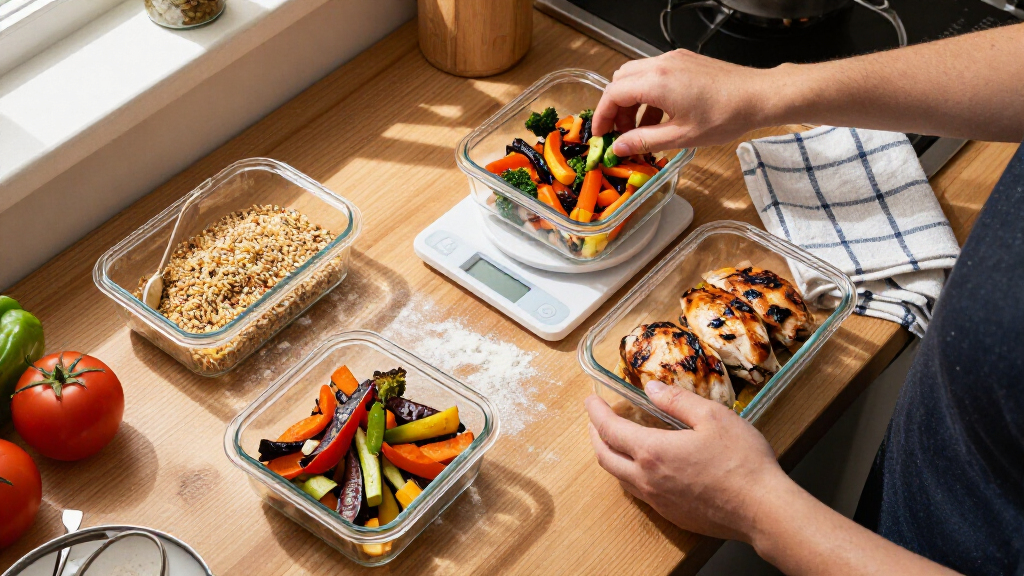
I ranked these scales by how well their stated features support healthy meal prep: repeatable portioning, useful capacity, readable controls, and a practical path from weighing food to logging it. For smart models, I gave weight to the nutrition-tracking proposition and display or app features, while treating app dependence as a tradeoff rather than an automatic advantage. For non-smart models, I focused on whether their capacity, precision, and straightforward operation make everyday weighing easier.
The ranking reflects distinct buyer needs, not a claim that every added feature improves accuracy or nutrition advice. The 24-nutrient scale leads because its stated tracking range most directly serves nutrition-focused prep; other smart scales follow where they offer a narrower or less clearly differentiated feature set. High-capacity and precision-focused scales rank well for specialized tasks, while basic models remain sensible for buyers who only need reliable portion weights. Product details here are based on the supplied names and specifications, so I avoid claims about unprovided battery life, app compatibility, platform support, or verified performance.
Factors to Consider When Choosing Healthy Meal Prep Food Scales
The right scale depends on what you want it to do after the number appears on the display. I’d separate the decision into weighing needs, nutrition-recording habits, and the practical realities of cleaning and storing a kitchen tool.
Choose nutrition tracking only if you will use it
An app can connect ingredient weights with nutrition estimates, which may reduce manual logging when you prepare repeat meals. But a database entry is still an estimate: brands, recipes, cooking methods, and drained or trimmed portions can change the actual nutrition. Before choosing a smart scale, check whether its app contains the foods you buy and whether it lets you enter custom foods or recipes. Think about whether you want to record meals as you cook or prefer to weigh portions and log them elsewhere. If you mainly need consistent serving sizes, a basic digital model can avoid app setup without giving up the core weighing task. Pay extra attention to the role of the app in your routine, not just the number of nutrients advertised.
Match capacity and precision to the foods you portion
Capacity tells you how much weight a scale can handle; precision tells you how small a change it can register. A higher-capacity scale can help with large mixing bowls or batch ingredients, while fine increments are more useful for small additions such as seasonings or supplements. Most meal portions do not need ultra-fine measurement, so a precision claim matters less if you mostly weigh grains, produce, or protein servings. Also account for the container: a heavy bowl uses part of the scale’s available capacity before food goes on it. Check that the unit options and tare function suit your recipes, especially when you switch between grams and ounces. Buying for an unusual task can make daily use less convenient, so prioritize the measurements you actually repeat.
Treat nutrition figures as estimates, not dietary authority
Food-scale apps can make tracking faster, but their figures depend on matching the food entry to what is on your plate. A generic entry may differ from a packaged product’s label, and a cooked ingredient may not match the raw listing. For packaged foods, the label and measured serving weight can be more relevant than a broad database match. If you track for a medical or tightly managed nutrition plan, confirm entries against trusted product information and guidance from a qualified professional. Do not assume a larger nutrient panel means greater accuracy for every food. The scale is most useful as a portioning tool; nutrition data adds convenience, not a guarantee.
Plan for cleanup and counter space
Meal prep can leave a scale exposed to drips, flour, oils, and sticky ingredients, so a smooth surface and easy-to-reach controls can matter as much as advanced functions. Look at the product’s cleaning instructions before using liquids or placing it near a sink; electronics are not automatically water-resistant. A large platform may be easier for wide bowls but takes more room in a drawer or on the counter. A compact model is easier to store, though its weighing surface can feel cramped with larger containers. Decide where the scale will live and whether you need to move it between prep sessions. Simple storage and cleanup habits can make a frequently used scale more practical than an elaborate one.
Check the display and app workflow before choosing smart features
A nutrition scale is only convenient if you can read its measurements while a bowl is on the platform and move through its controls without interrupting prep. A color or TFT display may offer more information at a glance, but it does not by itself make the food data more accurate. App-based models also add questions about phone access, account setup, and whether the tracking process fits the way you cook. If you prefer to keep your phone away from the counter, prioritize a clear on-scale readout and simple weighing controls. If you log meals digitally already, an app connection may save repeated entry. Compare the whole workflow, from placing a bowl to recording a portion, instead of choosing by screen size alone.
Pay for a feature that solves a repeated problem
A higher-capacity model makes sense when you regularly weigh heavy containers or large batches; a precision-focused model has a clearer role for small quantities. App tracking is worth choosing when it removes a task you currently repeat, not merely because it lists more functions. For occasional portion checks, a basic scale may cover the job with fewer steps and less reliance on software. Consider whether a feature is useful several times a week or only for a rare recipe. More functions can bring more setup, cleaning, and decisions about which data entry to use. The strongest purchase is the one that supports your usual prep routine without adding friction.
Frequently Asked Questions
Do I need a smart food scale to track meal-prep nutrition?
No. A smart scale can pair a measured weight with an app’s nutrition estimate, but you can also weigh portions on a basic scale and record them in a separate tracking tool. The smart option is most useful if you log food often and its database matches the ingredients you use. If you mostly want repeatable portions, an app may add steps without changing the weighing task. Compare app convenience with your willingness to maintain food entries and use your phone during prep.
Are nutrition estimates from food-scale apps exact?
No app estimate should be treated as an exact analysis of every prepared meal. Results depend on selecting the right food entry and matching its state, such as raw or cooked, to what you weighed. Brand-specific labels, recipe changes, and preparation details can all affect the numbers. Use measured weights and reliable package information when precision matters, and treat broad database entries as estimates. A scale remains useful for portion consistency even when nutrition figures are approximate.
Is an 11 lb food scale enough for batch meal prep?
For many individual ingredients and meal portions, an 11 lb capacity is sufficient. The container’s weight counts toward the limit, so a heavy bowl can reduce the room left for food. If you routinely weigh large batches in one vessel, a higher-capacity option such as the 22 lb Greater Goods or 33 lb GGQ may be more convenient. For smaller containers and ordinary portions, extra capacity may not improve your daily routine. Consider your heaviest typical bowl and batch before deciding.
Should I choose 0.1 g precision for healthy meal prep?
Usually, not unless your routine includes very small quantities that need fine measurement. Most meal-prep portions are measured in whole grams or larger units, so high capacity and a readable display may matter more. Fine precision can help with small additions, but it does not make nutrition database estimates more accurate. The BOMATA’s stated 0.1 g precision gives it a distinct role for detailed small-quantity weighing. Choose that level because you have a recurring use for it, not simply because the number looks more exact.
What should I check before relying on a scale’s nutrition app?
Check whether the app includes the packaged foods and ingredients you use, and whether it allows custom foods or recipes. Look for a clear way to distinguish raw from cooked entries and to adjust serving weights. Confirm that the app works with your phone and that you are comfortable using it during meal prep. Also consider whether your package labels or existing tracking method would be more dependable for particular foods. An app that does not fit your ingredients or workflow can make a smart scale less useful than a simpler model.
Conclusion
For most nutrition-focused meal preppers, I’d choose the Smart Food Scale with Nutritional Calculator and 24-Nutrient App as the best overall because its stated nutrient tracking most directly matches this roundup’s purpose. The Amazon Basics Digital Kitchen Scale is my best value-style choice for buyers who want straightforward weighing, while the Cosori Smart Nutrition Food Scale is a strong alternative for people who already log meals digitally. Beginners who want to portion food without learning an app should start with a basic digital model such as the Ultrean 11 lb scale. For specific needs, pick the GGQ or Greater Goods when higher capacity matters, and the BOMATA when fine 0.1 g measurement is the priority. Choose the smart model if nutrition logging will become part of your routine; otherwise, the simpler scale is the cleaner fit.
Halloween Picks

Pumpkin Halloween Fog Machine with 12-Color LED Lights, Bluetooth Speaker, and Remote

Halloween Inflatable Haunted House Maze – 20×20 ft with Removable Roof and Blower

Max Fun 10-Foot Halloween Dragon and Pumpkin Inflatable Archway with LED Lights
As an affiliate, we earn on qualifying purchases.