
TL;DR

Get kitchen staples and gadgets delivered free with Prime
- Fast, free delivery on millions of items
- Prime Video, Amazon Music and more included
- Member-only deals all year
Food writer Mackenzie Filson reports in The Kitchn that avoiding groceries sold in plastic cut roughly $40 — about 20% — from her monthly grocery and household spending. The savings claim is based on her personal experience, not a controlled study.
Food writer Mackenzie Filson reports in The Kitchn that cutting plastic-packaged groceries from her shopping routine has trimmed at least $40 from her monthly grocery and household bills — a figure she says represents about 20% of her budget. Her method: treating plastic as off-limits and buying items packaged in glass, aluminum, paper, or no packaging at all.
Filson describes her approach as a game with one rule: no plastic. Since adopting it, she writes, her shopping habits have shifted in several ways. She visits meat and cheese counters more often, requests paper wrapping at the deli and butcher instead of pre-cut plastic-wrapped portions, and pauses before impulse purchases — many of which, she notes, come in plastic.
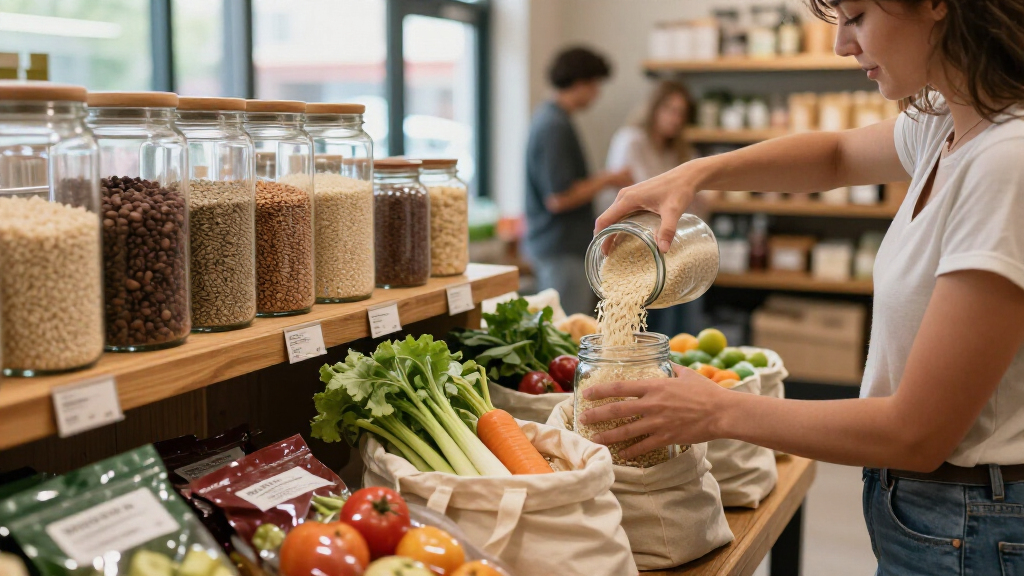
Her substitutions include glass-jarred dairy brands such as Oui, nounos, and Chevoo; glass-jarred spices from Simply Organic, The Spice House, New York Shuk, and Loisa; jarred Better Than Bouillon in place of cartoned broth; and loose or hardy produce like watermelon, squash, corn, lemons, bananas, potatoes, and onions. She shops farmers markets and orders a weekly Misfits Market box, and buys bulk-bin goods at Sprouts Farmers Markets.
She also acknowledges limits. Some items — tubs of hummus and bottled salad dressings among them — she has been unable to find plastic-free, so she makes them herself from canned beans, glass-jarred tahini, and pantry staples. A side benefit, she writes, is that empty glass jars have replaced storage containers, vases, and toiletry holders she previously bought new.
Why Packaging Choices Move the Total
Filson’s core economic argument is that packaging adds cost: single-serve yogurts cost more per ounce than large tubs, and packaged mushrooms sell at a premium over the loose equivalents. Choosing package-free or minimally packaged versions, by her account, compounds into a meaningful monthly reduction — meaningful because it came from a shopper who described herself as already stretched on her grocery budget.
The reported environmental upside is a secondary motivation. Filson says the approach reduced what she calls “wish-cycling” of hard-to-recycle items and cut her potential exposure to microplastics in food packaging. Readers facing similar grocery inflation may find the tactic actionable, though the $40 figure reflects one household’s spending.
How the Experiment Started
Filson, a Florida-based food and beverage writer whose work has appeared in PUNCH, Eater, The Kitchn, and TASTE, says she began the plastic-free shopping rule as a way to keep grocery spending in check without further budget-cutting elsewhere. She frames budgeting itself as tedious and says she had reached her limit on penny-pinching before turning the task into a game she compares to “the floor is lava,” with plastic as the lava.
Her strategy leans on grocery formats that already exist in many stores — full-service butcher and cheese counters, bulk bins, bakery loaves in paper sleeves, and canned or jarred produce — rather than specialty zero-waste shops.
“Opting for aluminum, paper, glass, or ideally package-free items instead has helped me shave at least $40 off my grocery and household bills each month (that’s 20% of my budget!).”
— Mackenzie Filson, The Kitchn
What the Savings Claim Doesn’t Show
The $40 per month figure is self-reported and drawn from one shopper’s experience in her local market, with no published baseline spending, itemized receipts, or comparison period. It is not clear how much of the saving comes from reduced packaging costs versus behavioral changes the rule encouraged — such as fewer impulse buys, buying from bulk bins, or cooking items like hummus and dressing from scratch, all of which would lower bills regardless of packaging material.
Filson’s microplastics reference is framed as reducing potential exposure, not a measured health outcome. Availability of plastic-free options also varies by store and region; items she found in glass or paper may only be available in plastic elsewhere, and bulk-bin and full-service counters are not present in all communities. The report does not address whether her substitutions changed nutrition or food waste.
Testing the Approach in Your Own Cart
Readers wanting to test the method can start with the swaps Filson identifies as easiest: switching from single-serve to large-format dairy, buying loose instead of packaged produce, requesting paper at the deli and butcher counter, and using bulk bins for pantry staples. The Kitchn piece invites readers to share their own grocery-habit changes, which may surface additional plastic-free finds and price comparisons over time. Whether the roughly 20% savings replicate for other households will depend on local store formats, brand availability, and existing shopping habits.
Key Questions
How much did avoiding plastic packaging reportedly save?
Filson estimates at least $40 per month, which she says is about 20% of her grocery and household budget. The figure is self-reported and based on one household.
What packaging does she buy instead of plastic?
She opts for glass, aluminum, paper, or package-free items, including glass-jarred dairy and spices, paper-wrapped deli items, and loose produce.
Which items could she not find plastic-free?
She names tubs of hummus and many salad dressings. She makes those at home using canned beans, glass-jarred tahini, and pantry staples.
Is the $40 savings guaranteed for other shoppers?
No. The result reflects one shopper’s habits, local store availability, and possibly reduced impulse buying. Savings elsewhere will vary and are unverified beyond her account.
Which stores does she recommend for plastic-free shopping?
She cites Sprouts Farmers Markets bulk bins, local farmers markets, Misfits Market produce boxes, and any store with full-service butcher and cheese counters.
Source: rss
Halloween Picks
halloween
As an affiliate, we earn on qualifying purchases.