
TL;DR

Get kitchen staples and gadgets delivered free with Prime
- Fast, free delivery on millions of items
- Prime Video, Amazon Music and more included
- Member-only deals all year
Healthy Halloween treats can mean less added sugar, smaller portions, more nourishing ingredients, allergy-aware choices, or non-food surprises. Try easy options like pumpkin clementines, yogurt with fruit, individually packaged pretzels, and age-appropriate stickers, while checking ingredients and following choking-safety guidance for young children.
You have ten minutes before the school Halloween party, one clementine, and a marker. Draw a jack-o’-lantern face on the fruit, and suddenly a regular snack looks like it came dressed for the occasion. That small trick captures the best kind of healthy Halloween treat: simple, festive, and easy to enjoy.
“Healthy” can mean different things for different families. You might want less added sugar, a smaller serving, an option that works around an allergy, or a non-food surprise. This article gives you quick ideas for home, parties, and trick-or-treat bags, plus practical ways to handle labels, little-kid safety, and candy without turning Halloween into a food lecture.
You do not need to replace every piece of candy or make a complicated recipe. Think of your Halloween spread as a costume rack: fruit, savory bites, packaged snacks, and small toys each offer another way to join the fun.
Define “healthy” by your real priority: less added sugar, portion size, allergy needs, convenience, or non-food options.
Make easy festive snacks with clementines, apples, yogurt, or small homemade portions, and remember that no-added-sugar foods may still contain natural sugars.
For trick-or-treating, check event rules and keep packaged treats in their original wrappers so families can review ingredients.
Avoid popcorn, whole nuts, hard candy, and round, firm foods for children under four; match treats and toys to the child’s age.
Offer candy without making children earn it or compensate for it with exercise.
What makes a Halloween treat feel healthy without taking the fun away?
A healthy Halloween treat is an option that fits your priorities—such as less added sugar, a modest portion, useful ingredients, or allergy-aware packaging—while still feeling like a treat. There is no single definition, and Halloween does not need a strict divide between “good” food and “bad” food. The practical goal is to offer appealing choices, not to make children feel they have to earn candy.
For one family, a bowl of apple slices with seed butter might be a welcome snack before trick-or-treating. Another may choose sealed pretzels because they are quick to hand out and easy to check against a child’s allergy plan. Both choices can make sense. A fruit snack is not automatically sugar-free, and a packaged snack is not automatically less nourishing; ingredients, serving size, and the child’s needs all matter.
Look at the whole evening, not one label. If your child enjoys a few pieces of candy after dinner, you can serve a familiar meal or snack as usual rather than asking them to exercise to “make up for it.” According to the supplied guidance, a relaxed, neutral approach can help keep food from becoming a source of shame or conflict. A warm bowl of soup, a sandwich, and some Halloween candy can all belong at the same table.
Use a short checklist instead of searching for a perfect treat:
- What matters today? Lower added sugar, convenience, allergy needs, or less mess?
- Who will eat it? Consider the child’s age and chewing ability.
- Where will it be served? A classroom party may have rules that your kitchen does not.
healthy Halloween fruit snack packs
As an affiliate, we earn on qualifying purchases.
As an affiliate, we earn on qualifying purchases.
Which easy fruit and homemade treats can you make in minutes?
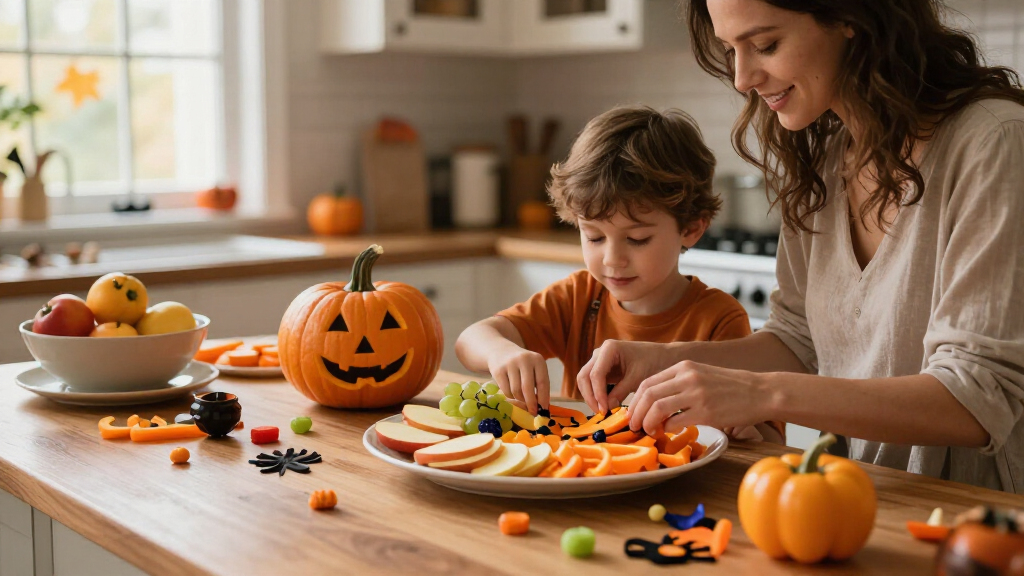
Healthy Halloween treat ideas work best when you can make them with ordinary groceries and a little decoration. Draw pumpkin faces on whole clementines, turn peeled bananas into ghosts with small edible details, or serve apple slices with a dip made from an ingredient your group can safely eat. These options look playful without asking you to pipe frosting into tiny bat wings at midnight.
For a party table, put out plain yogurt with fruit and let children add berries or sliced banana themselves. A few hours ahead, bake apple halves with cinnamon until soft and fragrant; keep portions small so guests can try one alongside other snacks. Dates stuffed with seed butter offer a chewy, sweet bite, but they can be sticky and concentrated in sugar. They are not automatically the right choice for very young children.
Homemade snacks give you control over portions, though they take some prep and may be harder for other families to assess. Try pumpkin-oat mini muffins or small oat bites, then check how much sweetener the recipe uses. “No added sugar” means no sugar was added during preparation; it does not mean the food contains no sugar. Fruit, dried fruit, and some dairy foods have naturally occurring sugars.
A simple prep plan keeps the decorations quick:
- Pick one base: clementines, apples, yogurt, or muffin batter.
- Add one Halloween cue: a marker face on the peel, a paper ghost wrapper, or a pumpkin-shaped cutter for suitable soft food.
- Check the eater: confirm allergies and age-appropriate texture before serving.
- Chill perishable foods: keep yogurt and cut fruit cold until snack time.
For example, if a party starts at 3 p.m., prep clementine pumpkins in the morning and keep yogurt cups refrigerated until guests arrive. You get color on the table without a last-minute kitchen scramble.
allergy-friendly Halloween treat bags
As an affiliate, we earn on qualifying purchases.
As an affiliate, we earn on qualifying purchases.
How do packaged, homemade, and non-food treats compare?
Packaged treats are usually the simplest choice for trick-or-treating, while homemade snacks suit settings where the host can explain ingredients and handling. Non-food surprises give children another way to join in and can work well for allergies or dietary needs. The right pick depends on event rules, the recipient, and how much information you can provide.
Before buying a big bag, read the ingredient list and compare the serving size with what you plan to hand out. Check for common allergens, including peanuts, tree nuts, milk, eggs, wheat, soy, sesame, fish, and shellfish, along with any relevant cross-contact statements. Labels help you make an informed choice, but packaging cannot promise safety for every allergy. Ask a caregiver when you are unsure instead of guessing from the wrapper or the treat’s appearance.
| Option | Why it works | What to check |
|---|---|---|
| Sealed pretzels or snack packs | Easy to hand out and portion | Wheat, sodium, serving size, and other ingredients |
| Applesauce pouch | Portable and quick to serve | Added sugar, packaging, and event rules |
| Homemade muffin | You can choose the recipe and portion | Allergens, storage, and whether homemade food is allowed |
| Sticker or pencil | Offers a non-food choice | Age range, small parts, and safe use |
Local events may require individually wrapped, commercially packaged treats, since labels and handling are easier to check. Ask the organizer before preparing a tray of homemade pumpkin muffins. A teal pumpkin can signal that your home offers a non-food option through the Teal Pumpkin Project; a small bowl of stickers or pencils makes that signal useful in practice.
age-appropriate Halloween toys and stickers
As an affiliate, we earn on qualifying purchases.
As an affiliate, we earn on qualifying purchases.
What Halloween snacks are safer for toddlers and preschoolers?
For children under four, avoid common choking hazards such as whole nuts, hard candy, popcorn, and round, firm foods, and supervise children while they eat. A snack’s festive shape does not make its texture safer. Choose an option that fits the child’s age and chewing skills, and follow guidance from the child’s caregiver or health professional when you are uncertain.
This matters because Halloween often puts bowls of tempting little foods within reach: grapes, hard sweets, nuts, and popcorn may look like easy party snacks, but some can pose a choking risk for very young children. For a toddler at a family gathering, a soft banana piece or a suitable yogurt snack may be a better fit than popcorn from the big bowl. Cut suitable foods into age-appropriate shapes and keep a watchful adult nearby.
Small toys need the same thoughtful check. Stickers and larger pencils can be handy non-food surprises, but tiny parts may not suit toddlers. Read the age guidance on toy packaging, keep small items out of reach, and avoid handing a little child a glow accessory unless its packaging and use are appropriate for that age.
Simple safety rule: Match the food’s texture and the toy’s size to the child, not just to the Halloween theme.
If you are handing treats to a group with a wide range of ages, set aside a separate bowl of options intended for older children and ask caregivers before offering snacks to the youngest guests. For example, serve popcorn to adults and older children at the movie table, while keeping a soft, age-appropriate snack available for preschoolers. Supervision and a quick age check matter more than a clever label.
As an affiliate, we earn on qualifying purchases.
How can you offer allergy-aware treats without guessing?
The safest allergy-aware choice is one that follows the child’s caregiver’s instructions, not an assumption based on a treat’s name or appearance. If you do not know whether a packaged snack is safe, offer a non-food option or let the caregiver decide. Ingredients and cross-contact statements are useful clues, but they cannot guarantee that every product suits every person with an allergy.
Common food allergens include peanuts, tree nuts, milk, eggs, wheat, soy, sesame, fish, and shellfish. A chocolate-covered snack may look simple but contain milk, soy, or nut warnings; a “fruit” snack may be made in a facility that handles allergens. Keep the package so families can read the label rather than transferring everything into an unmarked bowl.
At a neighborhood handout table, you might set out sealed pretzels in their original packages and a separate basket of stickers. The non-food choice helps children who cannot eat the snacks, as well as those who simply prefer a small toy. The Teal Pumpkin Project uses a teal pumpkin to tell visitors that a home has a non-food option; it complements, rather than replaces, clear communication.
For a school party, send a short message to the organizer before you shop. Ask whether homemade food is permitted, which allergies families have reported, and whether packages need to stay sealed. If a caregiver says a food is not safe, do not offer it “just this once.” Choose a different option without making the child explain their allergy to the whole group. Privacy, clear labels, and caregiver guidance make the party friendlier for everyone.
How do you make candy part of Halloween without a food fight?
You can offer nourishing snacks and still let Halloween candy be part of the evening. A neutral plan works better than calling candy a reward or asking children to exercise it off. Decide what fits your household routine, explain it simply, and keep the conversation focused on choices rather than guilt.
For example, a family might eat dinner before trick-or-treating, bring water on the walk, and make a plan for when the collected candy gets enjoyed. Another family may sort candy together after returning home and save some for later. There is no universal amount that suits every child or household. Age, appetite, routine, and family preferences all shape the plan.
Try saying, “We’ll have a few pieces after dinner, and you can choose some to save for another day,” instead of “You have to earn your candy.” That small wording change keeps candy from becoming a prize for good behavior or a reason for shame. You also do not need a “healthy” treat to cancel out a sweet one. A clementine pumpkin can be fun on its own; it does not have to compete with chocolate.
Keep the evening practical: offer a familiar meal or snack, make water available, and store leftover candy somewhere your family agrees on. If a child is excited to compare wrappers with a neighbor, let the moment be about the costumes and the fun. More choice, less pressure is a useful Halloween goal—whether your table has fruit, pretzels, candy, or all three.
Frequently Asked Questions
What counts as a healthy Halloween treat?
There is no single definition. You might prioritize less added sugar, a smaller portion, ingredients that suit your family, or an allergy-aware or non-food option. A festive treat can fit into Halloween without labeling other foods as bad.
What are easy healthy treats to hand out?
Individually packaged options such as pretzels or applesauce pouches are convenient, while stickers and pencils offer a non-food choice. Check ingredients, allergens, serving size, and local event rules before buying a large pack.
Can I give a child with food allergies a packaged treat?
Only follow the child’s caregiver’s guidance; do not assume a snack is safe based on its appearance. Keep the original package available for ingredient and cross-contact information, or offer a non-food surprise instead.
Are fruit and dried fruit better than candy?
They offer different ingredients and textures, so the best choice depends on the child and the occasion. Dried fruit can be concentrated in sugar and sticky, while fresh fruit provides a different snack experience. For young children, check texture and choking risk before serving.
Are homemade treats okay for trick-or-treating?
Rules vary by event and neighborhood. Many hosts prefer factory-sealed treats because families can review the ingredients and handling more easily. Ask the organizer before making homemade snacks for a group.
What Halloween treats should I avoid giving toddlers?
For children under four, avoid common choking hazards such as whole nuts, hard candy, popcorn, and round, firm foods. Choose age-appropriate textures, supervise eating, and check toy packaging for small parts.
Conclusion
Choose one or two treats that fit your real Halloween priorities, then keep the rest easy. A bowl of pumpkin clementines, a sealed snack with a readable label, or a handful of stickers can all add to the celebration without turning it into a project.
Let the treat be simple and the fun be big: one marker-drawn pumpkin face can brighten a table faster than a whole afternoon of complicated cooking.
NFL season / tailgating Picks
team gear
As an affiliate, we earn on qualifying purchases.