TL;DR

Get kitchen staples and gadgets delivered free with Prime
- Fast, free delivery on millions of items
- Prime Video, Amazon Music and more included
- Member-only deals all year
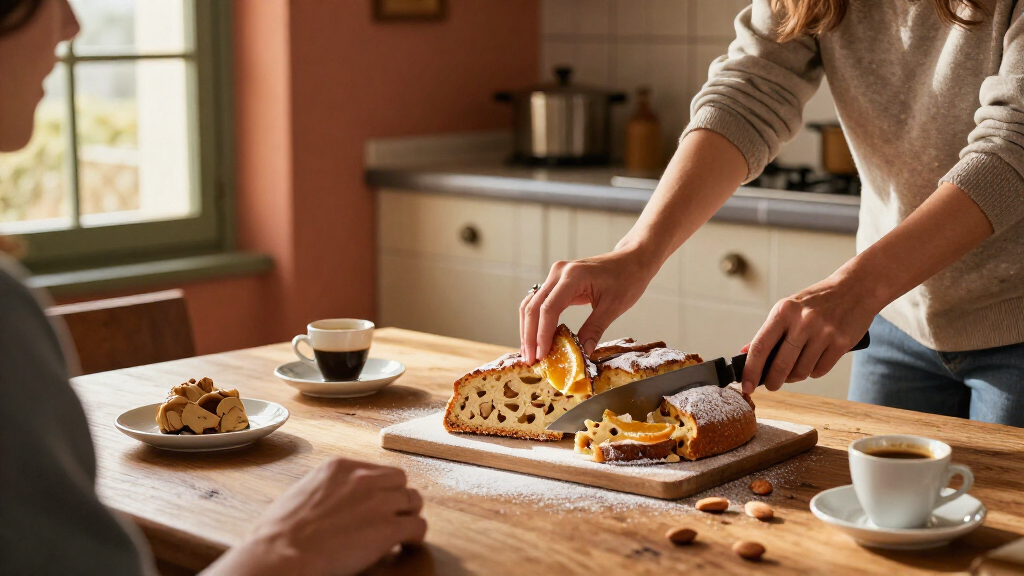
Siena panforte is a traditional dessert associated with Christmas and the city of Siena. La Cucina Italiana traces its origins to the Middle Ages, notes the 1879 creation of the powdered-sugar-topped Panforte Margherita, and reports that Siena Panforte received PGI certification in 2013.
Siena panforte, a traditional Christmas dessert made with almonds, candied citrus, honey, sugar and spices, is the subject of a La Cucina Italiana report covering its history and preparation. The report traces the sweet to the Middle Ages, identifies a powdered-sugar version made for Queen Margherita’s 1879 visit to Siena, and says the product received PGI certification in 2013.
According to La Cucina Italiana, panforte’s early history is tied to the expense of its ingredients. Almonds and spices were costly in the Middle Ages, and the report says the dessert was then reserved for nobles and clergy. It describes panforte as a traditional Christmas sweet from Siena, though it does not give a specific date for when the dessert first appeared or details about how its recipe developed in its earliest period.
The report says the recipe remained unchanged until 1879, when Queen Margherita visited Siena. A panforte made for the occasion was topped with vanilla sugar, giving it a white coating; that version became known as Panforte Margherita. The article does not provide further details about the visit or identify who prepared the dessert.
The listed ingredients include flour, sugar, almonds, candied citron and orange, honey and spices. The cake is placed on wafer paper and finished with powdered sugar. In the preparation described by the source, sugar is dissolved in water and honey, then combined with candied fruit. After the mixture is taken off the heat, flour and spices are stirred in, followed by almonds. The mixture is put into molds, covered with wafer paper and baked; powdered sugar is added after it cools. The report does not specify quantities, oven temperature or baking time.
Siena’s Sweet Gains Protected Status
The account connects an identifiable local food tradition with a formal designation: La Cucina Italiana says Siena Panforte received PGI certification in 2013. PGI, or Protected Geographical Indication, is a European Union designation linking a food product to a specific geographical area through production, processing or preparation requirements. The source names the certification but does not describe its detailed rules, so the precise conditions attached to this product cannot be established from the report alone.
For readers, the combination of a place-linked designation and a recipe offers useful context when encountering panforte in shops or at holiday tables. The article identifies ingredients and a broad method, but does not say that every version sold today follows the same formula. The historical account also shows how one variation—the white, vanilla-sugar topping associated with the 1879 royal visit—became a named version in its own right.
Products Worth Considering

KitchenAid Artisan 5-Quart Tilt-Head Stand Mixer, Almond Cream

Cuisinart Stainless Steel Bread Maker, 16 Programs, 2 lb Capacity

Le Creuset Enamemed Cast Iron Oval Dutch Oven, 5 qt., White/Crucible
As an affiliate, we earn on qualifying purchases.
From Medieval Tables to Margherita
The report presents panforte’s history in three broad stages: its medieval association with expensive ingredients, the 1879 preparation made for Queen Margherita, and the 2013 PGI certification. These dates are useful markers, but the source does not provide documentary detail about the dessert’s earliest form or the changes that may have occurred between the Middle Ages and the nineteenth century. Its statement that the recipe remained unchanged until 1879 is the source’s historical account, rather than a claim supported in the supplied material by citations to archival records.
The two versions described share the identity of panforte, while the Margherita version is distinguished by its white vanilla-sugar coating. The recipe ingredients listed by La Cucina Italiana include both candied citron and orange, alongside almonds and spices. The method relies on combining a warm honey-and-sugar mixture with fruit, flour, spices and almonds before baking. The source also points readers to other Siena-area foods, including Siena Cavallucci, Ricciarelli and pici with Cinta Senese ragù; those are related recommendations, not details about panforte’s certification or recipe.
Recipe and Certification Details
The supplied report does not give ingredient quantities, baking temperature, baking duration, pan size or storage guidance. Its method is therefore a summary rather than a complete, tested recipe; readers seeking to bake the dessert would need a full recipe with measurements and food-handling instructions. The source also does not specify which spices are used, despite listing spices as an ingredient category.
Further details about the 2013 PGI certification are absent, including the product specification, geographic boundaries and any required production steps. The source’s historical account provides no supporting documents or named historians, and it does not establish whether all present-day panforte recipes follow the same tradition. These details remain outside what can be confirmed from the material provided.
Checking the Full Recipe and Rules
The source report offers a general sequence for making panforte but no further publication date, event or upcoming milestone. Readers wanting to prepare it should consult a full recipe that supplies exact quantities, oven settings and baking time, rather than treating the abbreviated method as a complete set of instructions. For the product designation, the next useful source would be the official PGI specification, which could clarify the requirements that apply to Siena Panforte.
Until those details are available in the material cited here, the confirmed account remains limited to the reported ingredients, method outline and historical milestones. No new announcement or change to the certification is described.
Key Questions
What is Siena panforte?
Siena panforte is a traditional sweet associated with Christmas in Siena. La Cucina Italiana lists flour, sugar, almonds, candied citron and orange, honey and spices among its ingredients.
What is Panforte Margherita?
According to the report, a panforte topped with vanilla sugar was made for Queen Margherita’s 1879 visit to Siena. The white-coated version became known as Panforte Margherita.
When did Siena Panforte receive PGI certification?
La Cucina Italiana reports that Siena Panforte received PGI certification in 2013. The supplied material does not give the certification’s detailed product specification.
How is panforte prepared?
The reported method dissolves sugar in water and honey, adds candied fruit, then stirs in flour and spices before adding almonds. The mixture is molded, covered with wafer paper and baked; powdered sugar is added after cooling. Exact measurements and baking instructions are not included.
Source: lacucinaitaliana.it