
🔍 Read the full analysis: Ribollita, For Real This Time: The Full Two-Day Method on Mad Tasting

Get kitchen staples and gadgets delivered free with Prime
- Fast, free delivery on millions of items
- Prime Video, Amazon Music and more included
- Member-only deals all year
TL;DR
Mad Tasting has published a practical guide to making ribollita over two days: cook the Tuscan bread, bean and vegetable soup on day one, chill it promptly, then reheat it on day two. The guide says the rest lets the bread absorb broth and the soup thicken; it offers ingredient swaps and advises adjusting liquid as needed.
Mad Tasting has published a two-day method for ribollita, the Tuscan soup made with bread, beans, vegetables and greens, directing cooks to prepare the pot on day one, chill it promptly and reheat it on day two. The guide says that resting period lets the bread absorb the broth and helps produce the dish’s characteristic thick, spoonable texture.
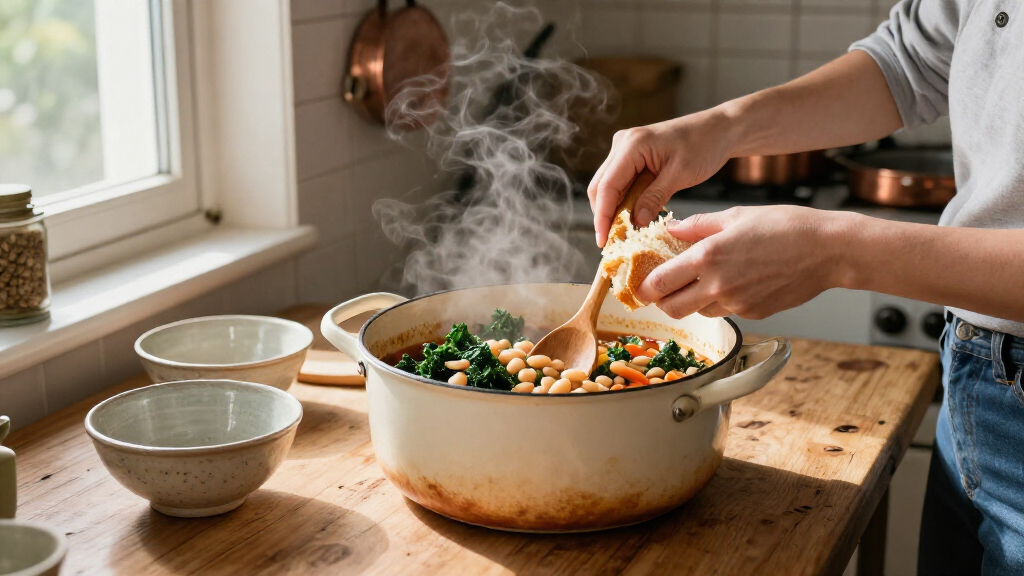
The guide describes ribollita as a bread-and-vegetable soup traditionally made with beans, often cannellini, and leafy greens such as cavolo nero. Its name means “reboiled,” a reference to heating the prepared soup again. The method presented stirs bread into the cooked soup before chilling, rather than layering bread and broth in the serving dish.
Mad Tasting recommends sturdy, day-old bread, such as a rustic country loaf, and cautions against soft sandwich bread, which may break down too quickly. Fresh bread can be cut or torn and dried in a low oven until firm, the guide says. It also advises tasting before adding much salt if using sourdough or seasoned stock.
For beans, the guide offers a choice between dried beans and drained, rinsed canned cannellini. Cavolo nero is the preferred green, with kale, Swiss chard and savoy cabbage suggested as alternatives. Because these greens cook at different rates, chard should be added later, according to the guide. On reheating day, cooks can add a little water or stock if the soup has become too thick.
A Two-Day Soup Built to Rest
Mad Tasting’s method cooks ribollita on day one, then chills and reheats it the next day. The rest lets bread absorb broth and gives the soup a thick, spoonable texture.
Day One: Build the Pot
Stir sturdy bread into the cooked soup before chilling it promptly.
Use day-old rustic bread; dry fresh bread in a low oven until firm.
Use dried beans or rinsed canned cannellini. Cavolo nero is preferred; kale and savoy cabbage are alternatives.
Let the bread take up broth as the soup rests overnight.
Day Two: Reheat and Adjust
Warm the chilled soup gently, stirring as the ingredients come together.
- Bread absorbs the broth.
- The soup thickens.
- Add a little water or stock if too thick.
- Add chard later because it cooks faster.
A Flexible Tuscan Dish
Ribollita means “reboiled”; the name refers to heating the prepared soup again.
Keep it firm
Soft sandwich bread may break down too quickly.
Choose your format
Dried beans or drained, rinsed canned cannellini both fit the guide.
Adapt to what’s available
Kale, Swiss chard and savoy cabbage can stand in for cavolo nero.
What the Guide Leaves Open
The supplied material does not provide measured quantities or exact cooking instructions.
- Use a full recipe or your own proportions.
- Adjust liquid to suit the bread and greens.
- Follow established food-safety guidance for cooling and reheating.
Why the Overnight Rest Changes Texture
The guide’s main point is that the second day is part of the cooking method, not just a convenient way to serve leftovers. As the soup rests, the bread takes up broth; gentle reheating then brings bread, beans, greens and liquid together into a thicker meal. A first-day pot that still looks like vegetable soup with separate bread pieces may change as it chills, the guide says.
That makes the method useful for cooks who want to plan ahead and for anyone trying to use stale bread and available vegetables in a filling meal. The proposed substitutions also make the recipe less dependent on finding specific Tuscan ingredients. But the source does not provide a complete ingredient list or measured quantities, so readers will need a separate recipe or their own proportions to reproduce a specific version.
Products Worth Considering

Le Creuset Enameled Cast Iron Round Wide Dutch Oven, 3.5 qt, Sea Salt

Le Creuset Signature Deep Round Enameled Cast Iron Dutch Oven, 6.5 qt, Sea Salt

Le Creuset Enamemed Cast Iron Oval Dutch Oven, 5 qt., White/Crucible
As an affiliate, we earn on qualifying purchases.
Tuscan Roots and Recipe Variations
Mad Tasting places ribollita within cucina povera, a Tuscan tradition of making substantial food from modest, available ingredients. Day-old bread, beans and seasonal vegetables are central to that practical approach. The guide characterizes the ingredients as flexible while noting that bread and greens affect the soup’s liquid needs, flavor and cooking time.
There is no single method described as universal. The source says some cooks simmer bread directly in the soup, while others layer bread with vegetables and broth. Mad Tasting’s version uses the first approach: stir the bread into the pot, chill the soup and reheat it the next day. The source presents this as a straightforward home-stove method, not as the sole traditional preparation.
““The name means ‘reboiled.’””
— Mad Tasting
Missing Quantities and Cooling Details
The supplied source material does not include measured ingredient amounts, the full first-day cooking instructions, or a publication date. It therefore does not establish exact cooking times, yields or a fixed ratio of bread to broth. The guide says to chill the soup promptly and reheat it gently, but the supplied text gives no specific cooling, storage or reheating temperatures. Cooks should follow established food-safety guidance for cooling and reheating leftovers.
The source also does not report testing results comparing bread types, beans or greens. Its texture and flavor descriptions are guidance from the recipe publisher, not quantified findings. The final consistency will depend on the loaf, the amount of bread and the liquid used.
Reheat Gently and Adjust the Pot
The next step in the method is to take the chilled soup from day one and reheat it gently on day two, stirring and adding a small amount of water or stock if needed. The guide’s stated target is a moist, thick soup in which the bread and broth have come together, rather than thin liquid with separate bread cubes.
Because the supplied material omits the complete recipe and measurements, it remains unclear whether Mad Tasting’s published version includes further steps or exact quantities beyond the guidance provided here. For home cooks, the practical next move is to choose a sturdy loaf and suitable greens, prepare the soup using a full recipe, and adjust its moisture while reheating.
Key Questions
What does ribollita mean?
Ribollita means “reboiled.” Mad Tasting says the name refers to reheating the soup on the day after it is cooked.
Why does this method take two days?
The overnight rest gives the bread time to absorb broth. The guide says reheating helps the bread, beans, vegetables and liquid form a thick, cohesive soup.
Can I use canned beans or different greens?
Yes. The guide suggests drained and rinsed canned cannellini as an option, and kale, Swiss chard or savoy cabbage in place of cavolo nero. It advises adding chard later because it wilts faster.
What bread works best for ribollita?
Mad Tasting recommends sturdy, day-old rustic bread. It warns that soft sandwich bread can collapse too quickly; fresh bread can be dried in a low oven until firm.
How should I handle the soup safely?
The guide says to chill the soup promptly and reheat it gently the next day, but the supplied text gives no temperatures or storage limits. Follow reliable food-safety guidance for cooling, refrigerating and reheating leftovers.
Source: Mad Tasting