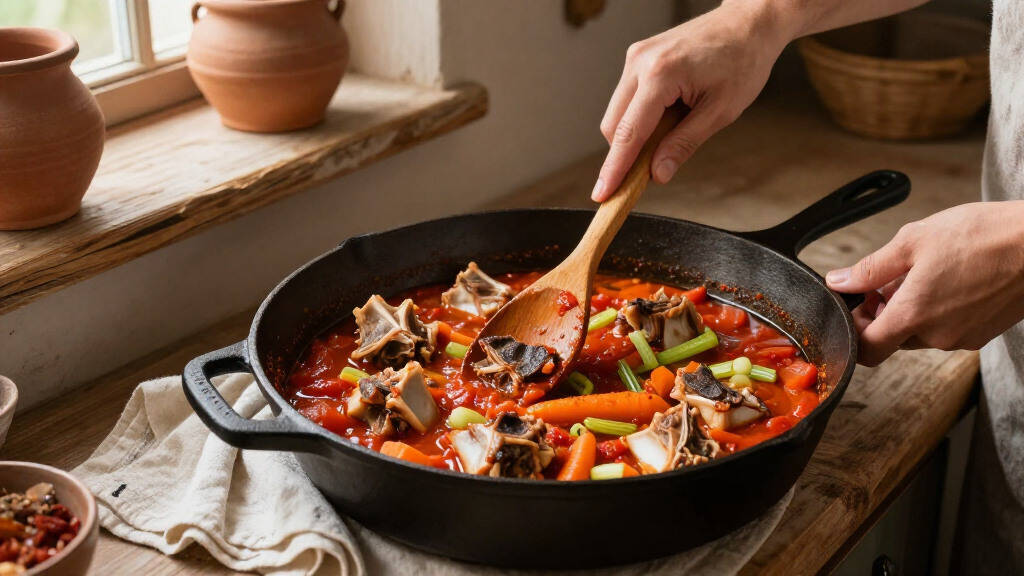

🔍 Read the full analysis: Ossobuco: The Braise That Deserves Your First Cool Evening on Mad Tasting

Get kitchen staples and gadgets delivered free with Prime
- Fast, free delivery on millions of items
- Prime Video, Amazon Music and more included
- Member-only deals all year
TL;DR
Ossobuco is a traditional Milanese braise made from cross-cut veal shanks, slow-cooked for two to three hours. It’s best enjoyed on the first cool evening of the season, paired with saffron risotto and gremolata. This dish combines rich flavors with simple, time-honored techniques.
The arrival of the first cool evening signals the perfect time to prepare ossobuco, a classic Milanese dish that transforms a humble veal shank into a rich, flavorful meal. This slow braise, which takes two to three hours, is gaining renewed popularity among home cooks seeking comforting, hearty dishes as temperatures drop.
Ossobuco is a dish centered around a specific cut of meat: cross-cut veal shanks with marrow intact. The key to its success lies in slow braising, which dissolves connective tissue into gelatin, creating a luxurious sauce. Traditionally, the shanks are browned, then gently simmered in wine, stock, and vegetables for two to three hours. The dish is typically finished with gremolata—lemon zest, parsley, and garlic—sprinkled over the top just before serving.
Serving ossobuco over saffron risotto or polenta is customary, as these starches absorb the rich sauce and balance the dish’s intensity. While veal is traditional, beef shank offers a deeper flavor and is a common substitute. The dish’s origins trace back to Lombardy, where it was historically a way to elevate inexpensive cuts through patient cooking. The pairing with saffron rice and gremolata reflects regional flavors and economic history, emphasizing simplicity, patience, and care in preparation.
Milanese Classic · Slow Braise · Seasonal Cooking
Ossobuco: The Braise That Deserves Your First Cool Evening
A traditional Milanese braise of cross-cut veal shanks, slow-cooked for two to three hours until the marrow and collagen melt into a luxurious sauce — best paired with saffron risotto and a scatter of fresh gremolata.
01 — Why It Matters
Why Ossobuco Is the Ideal First Cool Evening Dish
Warmth by Design
Slow-cooked richness and deep marrow flavors make ossobuco the definitive comfort food as temperatures drop — a dish that warms both body and spirit.
Humble Cut, Patient Method
Braising dissolves connective tissue into gelatin, transforming an inexpensive veal shank into a feast. Patience and gentle heat do the heavy lifting.
Regional Identity on a Plate
The pairing with saffron risotto and gremolata reflects Lombard trade routes and rice paddies — simplicity, patience, and care preserved in a single plate.
02 — The Method
From Shank to Table: The Braise in Five Steps
Source the Cut
Cross-cut veal shanks, 1½–2 inches thick, marrow intact. Beef shank works as a deeper-flavored substitute.
Brown Hard
Sear the shanks in a hot pan to build a deep, caramelized crust — the foundation of the sauce.
Braise Low
Simmer gently in wine, stock, and vegetables for two to three hours until fork-tender.
Finish Bright
Sprinkle gremolata — lemon zest, parsley, garlic — over the top just before serving.
Serve on Starch
Rest over saffron risotto or polenta to absorb the rich, gelatinous sauce.
Collagen becomes gelatin, and gelatin becomes luxury. Time — not technique — is the true ingredient in ossobuco.
03 — Choices & Variations
Traditional vs. Modern Ossobuco
| Aspect | Traditional Milanese | Modern Adaptation | Notes for Home Cooks |
|---|---|---|---|
| Meat Cut | ✓ Veal shank | ~ Beef shank | Beef offers deeper flavor; may need slightly longer cooking |
| Tomato | ✗ Usually omitted | ~ Often included | Tomato adds brightness and acidity; not essential for authenticity |
| Flavor Base | ✓ Wine + marrow | ~ Wine + tomato | Traditional version emphasizes wine and marrow depth |
| Accompaniment | ✓ Saffron risotto | ~ Polenta, mash | Any absorbing starch balances the dish’s intensity |
| Cooking Method | ✓ Slow braise 2–3 hrs | ✗ Speed shortcuts | Purists question whether quick methods replicate slow-braised depth |
04 — At a Glance
The Dish, Measured
05 — Traceability
From Lombard Fields to the Modern Table
06 — Key Questions
Everything Home Cooks Ask
What cut of meat is best?
Veal shank sliced 1½–2 inches thick with marrow in the bone. If unavailable, beef shank is a suitable alternative, often needing slightly longer cooking.
Can I make it without tomato?
Yes. Traditional Milanese ossobuco often omits tomato, emphasizing wine and marrow. Tomato is a modern variation adding brightness — not essential.
What should I serve with it?
The classic pairing is saffron risotto. Alternatively, polenta or mashed potatoes work well to absorb the rich sauce.
How long does it take to cook?
Two to three hours at low temperature for tender, falling-off-the-bone meat and a rich, glossy sauce.
Is it beginner-friendly?
Yes. After browning and seasoning, the process is mostly hands-off — a forgiving dish that rewards careful timing and gentle heat.
Why pair it with saffron risotto?
The starch absorbs the intense sauce while saffron echoes Lombardy’s agricultural and trade history, balancing richness with regional aroma.
Why Ossobuco Is the Ideal First Cool Evening Dish
Ossobuco’s slow-cooking process and rich flavors make it an ideal comfort food for cooler weather. It exemplifies how traditional techniques can turn modest ingredients into a feast, encouraging home cooks to embrace patience and care in their culinary routines. Its pairing with saffron risotto and gremolata highlights regional culinary identity and offers a balanced, satisfying meal that warms both body and spirit. As seasonal cooking gains popularity, rediscovering dishes like ossobuco helps preserve regional heritage and inspires mindful, slow food practices.As an affiliate, we earn on qualifying purchases.
Historical and Regional Roots of Ossobuco
Ossobuco originates from Lombardy, particularly Milan, where it has been a staple for centuries. The dish emerged as a way to transform affordable cuts of veal into a luxurious meal through slow braising, a technique that leverages collagen-rich cuts. The pairing with saffron risotto reflects regional trade routes and agricultural abundance, with saffron arriving via trade and rice being cultivated in nearby paddies. Traditionally, the dish was simple, with minimal tomato, emphasizing wine and marrow flavors. Modern adaptations may include tomato, but the essence remains rooted in patience and regional ingredients.As an affiliate, we earn on qualifying purchases.
Uncertainties About Modern Variations and Serving Styles
It is not yet clear how widespread the adoption of modern variations—such as using beef shank or adding tomato—will be among home cooks. There is also ongoing debate about the best accompaniments and whether to stick strictly to traditional pairings like saffron risotto and gremolata or experiment with new side dishes. Additionally, some purists question whether quicker cooking methods can truly replicate the depth of flavor achieved through slow braising.As an affiliate, we earn on qualifying purchases.
Next Steps for Home Cooks and Culinary Enthusiasts
As cooler evenings become more frequent, more home cooks are expected to try making ossobuco, possibly experimenting with different cuts or regional variations. Cooking classes, recipe sharing, and culinary media will likely promote the dish’s traditional methods and suggest accessible shortcuts. Food markets and butchers may also see increased demand for veal and beef shanks, encouraging the preservation of regional ingredients. In the coming weeks, culinary outlets may publish updated recipes and tips for perfecting this classic braise, emphasizing patience and regional authenticity.As an affiliate, we earn on qualifying purchases.
Key Questions
What cut of meat is best for ossobuco?
The traditional cut is veal shank sliced about 1½ to 2 inches thick with marrow in the bone. If veal isn’t available, beef shank is a suitable alternative, often requiring a slightly longer cooking time.
Can I make ossobuco without tomato?
Yes. Traditional Milanese ossobuco often omits tomato, emphasizing wine and marrow flavors. Including tomato is a modern variation that adds brightness and acidity but is not essential for authentic flavor.
What should I serve with ossobuco?
The classic pairing is saffron risotto, which balances the richness of the braise. Alternatively, polenta or mashed potatoes work well to absorb the sauce.
How long does it take to cook ossobuco?
The braising process typically takes two to three hours at low temperature to achieve tender, falling-off-the-bone meat and a rich sauce.
Is ossobuco suitable for a beginner cook?
Yes. While it requires patience and some attention to detail, the process is mostly hands-off once the initial browning and seasoning are done. It’s a forgiving dish that rewards careful timing and gentle heat.
Source: Mad Tasting
Halloween Picks
halloween
As an affiliate, we earn on qualifying purchases.