
This checklist is for anyone who wants to make smoothies at home with less prep friction and a setup that suits their routine. It covers blending, measuring, storing ingredients, and a few helpful accessories.

Get kitchen staples and gadgets delivered free with Prime
- Fast, free delivery on millions of items
- Prime Video, Amazon Music and more included
- Member-only deals all year
The sections follow the path from preparing ingredients to blending and taking a smoothie along. Picks are included where provided; the tumbler, straws, and wash basin sections offer shopping guidance without naming a specific product.
Use the list to identify what would make your own routine easier, then check each item’s dimensions, care instructions, and compatibility with your kitchen and blender. You can build the setup one useful item at a time.
Personal Blender
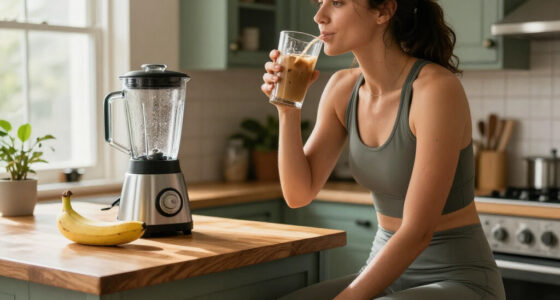
A personal blender can make a single smoothie feel like a straightforward routine: add ingredients, blend, and use a compatible cup for serving if the model supports it. The listed pick is the Ninja BlendBOSS Personal Blender 26oz Tumbler, 1200W, Cyberspace. Before choosing it, think about where you will store the blender, how much you typically make, and whether you want to blend directly in a travel container.
A common buying mistake is focusing on the motor specification while overlooking cup capacity and fit. Check the product details for included components, whether the tumbler is intended for blending or drinking, and how the lid and blade assembly are handled. Confirm the blender’s footprint fits your counter or cabinet, and review care instructions for the pitcher, cup, lid, and blade assembly. Do not assume every part is dishwasher-safe or that other cups will attach.
For a one-person routine, compare usable capacity with the amount you plan to prepare, leaving room for ingredients to move while blending. If you share smoothies or make larger batches, consider whether a personal format suits that use. Choose based on your actual portions, storage space, and cleanup preferences.
What to look for:
- Cup capacity suited to your usual portion
- Included cups, lids, and blending components
- Clear care instructions for each removable part
- Footprint that fits your counter and storage space
- Compatibility details for any intended travel cup
Ninja BlendBOSS Personal Blender 26oz Tumbler, 1200W, Cyberspace

The Ninja BlendBOSS Personal Blender features a 1200-watt motor capable of crushing ice and blending ingredients for smoothies, frozen drinks, and purees. It includes a leakproof flip cap, integrated chug spout, detachable straw, and a space-saving design with auto IQ programs for easy blending.
Pros:
- Powerful 1200W motor for efficient crushing and blending
- Leakproof flip cap and integrated straw for on-the-go convenience
- Auto IQ programs simplify blending with preset modes
- Compact and space-saving design
Cons:
- May be loud during operation
- Limited to single-serve capacity
- Requires dishwasher cleaning for maintenance
Best for: People who want a personal-size blending setup
Not ideal for: Households that routinely blend large batches
Bottom line: Check the included parts, capacity, and care instructions against your smoothie routine before choosing this blender.
Insulated Tumbler
An insulated tumbler can make it easier to take a smoothie along and keep the drink contained during a commute, walk, or busy morning. The right choice depends on how you plan to carry and sip it, so start with your everyday routine: where it will travel, how it will be stored, and whether you prefer a straw or a sipping lid.
A frequent mistake is choosing a tumbler by appearance without checking its opening, lid design, or dimensions. Look for a wide enough opening for your intended smoothie texture and a lid that closes securely for the way you carry it. Check the manufacturer’s care guidance and whether the lid has removable pieces that may need separate cleaning. If you want to use it with a personal blender, confirm cup and lid compatibility rather than assuming a travel tumbler can attach to the blender.
Capacity should match your usual serving while leaving room to close the lid without crowding it. Also consider whether the tumbler fits your bag pocket, car holder, or refrigerator shelf, if those details matter to you. Prioritize easy cleaning and dependable closure alongside insulation claims, and read the product’s own care and use instructions before buying.
What to look for:
- Capacity that matches your typical smoothie serving
- Secure lid suited to how you carry it
- Opening that works with your preferred way to drink
- Dimensions that fit your bag or storage spot
- Care instructions for the tumbler and lid components
Reusable Smoothie Straws
Reusable smoothie straws are an optional accessory for people who prefer sipping a thicker drink through a straw. The useful choice depends on the smoothie’s texture, the cup opening, and how much cleaning you are willing to do. Start with straw diameter and length, since a straw that feels comfortable in one tumbler may be awkward or incompatible in another.
A common mistake is buying a set without checking whether it includes a cleaning brush or whether the straws can be taken apart, if applicable. Smoothie residue can be harder to clear from narrow interiors, so review the maker’s cleaning instructions and consider how you will clean the full length after each use. Check the material information and care guidance, including whether the straw is suitable for your preferred washing method. Avoid assuming every reusable straw fits every lid; measure or check the tumbler’s opening and any lid slot.
Think about where the straws will be stored and carried, too. A rigid straw may need a protective case for travel, while a flexible option may suit different cup shapes; verify those details in the product description. If several people will use them, consider having a distinct straw for each person and cleaning it promptly. Choose an option that makes cleanup simple enough to repeat, rather than one that adds a chore to smoothie prep.
What to look for:
- Diameter that suits your smoothie texture
- Length that fits the tumbler you use
- Compatibility with the lid opening or straw slot
- Cleaning brush or clear cleaning instructions
- Storage or carrying case if you need one
Digital Kitchen Scale
A digital kitchen scale can help you measure smoothie ingredients by weight, which is useful when you want to repeat a combination or follow a recipe closely. The listed pick is the OXO Good Grips 11 Pound Stainless Steel Food Scale with Pull-Out Displ. Check the full product listing for its display and included features, since the supplied name is truncated. A scale earns its place when consistent measuring matters to your prep routine.
One buying mistake is overlooking the display position and whether a bowl or blender jar will block the readout. This pick’s name mentions a pull-out display; confirm how it extends and whether that arrangement suits the containers you use. Check the platform dimensions, maximum capacity, unit options, and tare function in the product details. Consider whether the surface is easy to wipe and whether the scale can be stored within reach of your prep area.
For smoothie ingredients, compare the platform with the bowl, plate, or container you plan to weigh in. Make sure the total weight of container plus ingredients stays within the stated capacity, and confirm that the scale offers the units your recipes use. Review battery or power requirements and care guidance before purchase. Prioritize a stable surface and a readable display so measuring feels quick and repeatable, rather than an extra step you avoid.
What to look for:
- Capacity that covers container plus ingredients
- Platform size suited to your prep bowls
- Readable display when a container is on the scale
- Tare and unit options described in the listing
- Clear cleaning and power instructions
OXO Good Grips 11 Pound Stainless Steel Food Scale with Pull-Out Display

This stainless steel food scale features a pull-out display, tare function, and unit conversion, making it ideal for meal prep. It has a maximum capacity of 11 pounds with easy-to-read digital numbers and a smudge-resistant finish for convenient cleaning.
Pros:
- Large, easy-to-read digital display
- Pull-out display prevents shadowing from large bowls or plates
- Stainless steel smudge-resistant finish for easy cleaning
- Includes tare and unit conversion functions
Cons:
- Limited to a maximum weight of 11 lbs
- No rechargeable battery or backlit display
- Only available in black color
Best for: People who weigh ingredients for consistent recipes
Not ideal for: Anyone who prefers measuring by volume
Bottom line: Verify the full listing’s display, capacity, units, and care details before selecting this scale.
Freezer Containers
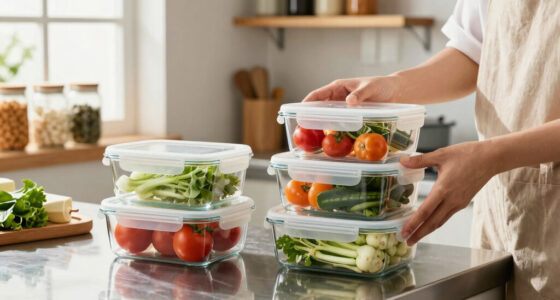
Freezer containers can help organize prepared smoothie ingredients or store other foods you plan to freeze. The listed pick is Freezer Containers for Food Storage 26pcs – Soup with Lids, Safe, Twis. Because the product name is truncated, review the full listing to confirm what the set contains and what the descriptive terms mean. For smoothie prep, the key is whether the container sizes suit your portions.
A common mistake is assuming every container in a set is the same size or that lids are interchangeable. Check the dimensions and capacity of each piece, the number of containers and lids, and the maker’s instructions for freezer use. If you plan to thaw or reheat contents, verify whether those uses are allowed; freezer-safe does not automatically mean microwave-safe. Look for clear labeling and care guidance covering temperature limits, cleaning, and handling.
Decide what you want to freeze before choosing a set: individual ingredients, pre-portioned smoothie packs, or finished drinks may call for different shapes and capacities. Check that containers stack or fit your freezer shelves, and leave appropriate room if filling them with liquid, following the product’s guidance. Confirm the closure style and whether it is suited to your storage needs. A useful set should make portions easy to identify, access, and clean, with sizes that match your plan.
What to look for:
- Container capacities and dimensions for each piece
- Accurate count of containers and matching lids
- Manufacturer guidance for freezer use and temperature limits
- Stackable shapes suited to your freezer space
- Cleaning and reheating instructions, if relevant
Freezer Containers for Food Storage 26pcs – Soup with Lids, Safe, Twist Release,

This set of 26 freezer containers is designed for safe food storage, including hot soups and cooked meals, with lids that prevent leaks and odors. The flexible, bendable material allows for easy release of frozen contents, and the removable divider system aids in meal prep and portioning.
Pros:
- Flexible, bendable design for easy food release
- Suitable for hot and cold foods, including liquids
- Airtight lids reduce leaks and odors
- Removable divider system for portion control
Cons:
- May be less rigid for stacking or storage
- Limited information on dishwasher safety
- Some users might prefer larger or smaller sizes
Best for: People who prepare smoothie ingredients ahead
Not ideal for: Anyone with limited freezer storage space
Bottom line: Check the full set contents, sizes, and temperature guidance before storing smoothie ingredients in it.
Produce Wash Basin
A dedicated produce wash basin can give fruits and vegetables a place to rinse before you prep a smoothie. Since no specific product is listed here, choose based on your sink and produce volume. Some shoppers may prefer a basin that sits inside the sink; others may want a separate bowl they can carry to the counter. Consider where it will dry and where it will be stored between uses.
A common mistake is buying a basin that is awkward to lift when full or too bulky for the sink. Measure the available sink space and check the basin’s dimensions and capacity before selecting it. Think about the produce you usually wash: a small amount of berries needs a different working area from a larger batch of fruit. Look for a smooth interior and easy-to-clean construction, and confirm the care instructions for the material.
Drainage features, handles, or a colander insert can be useful depending on how you wash and transfer produce, but check whether they are actually included and how they fit together. Make sure any insert is easy to remove and clean, and consider whether the basin nests with other kitchen items for storage. Choose the simplest shape that supports your routine and fits your kitchen, with comfortable handling when wet and enough room to rinse produce without crowding it.
What to look for:
- Dimensions that fit your sink or counter
- Capacity suited to the produce you rinse
- Smooth surfaces and straightforward cleaning guidance
- Drainage or insert features clearly described
- Storage shape and comfortable handles, if needed
Build the setup in a budget-first order: start with the item that removes the biggest daily obstacle, such as a blender if you lack one or containers if advance prep is your priority. Add measuring tools and carry accessories when they solve a specific routine problem. Compare dimensions and care requirements before buying so each addition earns its storage space.
You do not need every item to make a smoothie routine work. Begin with the essentials that fit your kitchen, learn what you reach for, and add the extras that make prep easier to repeat. A small, well-chosen setup can support a practical start to the day.
Fall Picks
fall essentials
As an affiliate, we earn on qualifying purchases.