
🔍 Read the full analysis: Frittata Di Pasta: Naples' Genius Answer To Leftover Spaghetti on Mad Tasting
TL;DR
Mad Tasting describes frittata di pasta as a Neapolitan skillet dish that turns cooked pasta into a sliceable pie using eggs and grated cheese. It outlines bianca and rossa styles, basic cooking tips and prompt refrigeration for leftovers; the source is a food guide, not a report of a new event.
Mad Tasting has published a guide to frittata di pasta, a Neapolitan skillet dish that binds cooked pasta with eggs and grated cheese and cooks it into a firm, browned pie. The guide explains the tomato-free bianca and tomato-based rossa styles, while emphasizing that excess sauce and flipping before the base sets can make the dish difficult to handle.
The dish is built around leftover pasta, not a large quantity of eggs. Beaten eggs act as a binder, helping noodles hold together in a round that can be cut into wedges. That makes it different in texture from a conventional egg frittata, where eggs typically form the main body around other ingredients. The guide says the pasta should remain prominent in each bite.
There are two broad approaches. Bianca leaves out tomato, relying on pasta, egg and cheese for flavor; rossa incorporates tomato sauce and tends to suit noodles already dressed with it. The source presents these as flexible styles rather than strict formulas. Grated hard cheese is a suggested addition, and small amounts of other ingredients can be used when available.
Cooking technique matters because the mixture must set before it can be turned or removed intact. Mad Tasting advises cooking slowly and waiting until the base has set before flipping. Too much wet tomato sauce can leave the middle soft, while turning the pie too early can cause the pasta to break apart. The guide suggests judging the mixture by whether the noodles are coated without liquid pooling at the bottom, rather than following a fixed egg count.
Naples • Leftover craft • Skillet guide
Frittata Di Pasta: Naples’ Genius Answer to Leftover Spaghetti
Cooked pasta becomes a browned, sliceable pie when eggs bind the strands and grated cheese adds flavor. The idea is simple: let pasta lead, then give the base time to set.
Leftover noodles set the character.
Enough to coat and hold together.
Wait before turning the pie.
Refrigerate remaining portions.
01 / Two flexible styles
One skillet, two directions
Choose a style based on the pasta you have. The guide presents bianca and rossa as adaptable approaches, not rigid formulas.
Bianca
Plain or lightly seasoned noodles meet beaten egg and grated hard cheese. The pasta stays prominent, with no tomato sauce in the mix.
Rossa
Tomato sauce brings color and flavor, especially when the leftover pasta is already dressed. Spoon off excess sauce to keep the center from staying soft.
A pasta pie, not an egg-led frittata
Here, pasta supplies most of the bulk and structure. Eggs act as a binder, helping the noodles hold in a round that can be cut into wedges. Spaghetti makes tangled strands; other cooked shapes can work for chunkier slices.
02 / From leftovers to wedges
A steady path to a set pie
Use the texture of the mixture and the set of the base as cues. The source gives no universal ratio, timing, or pan size.
Choose
Use plain noodles for bianca or tomato-dressed pasta for rossa.
Manage moisture
Drain or spoon away extra sauce. Avoid liquid pooling in the bowl.
Coat and cook
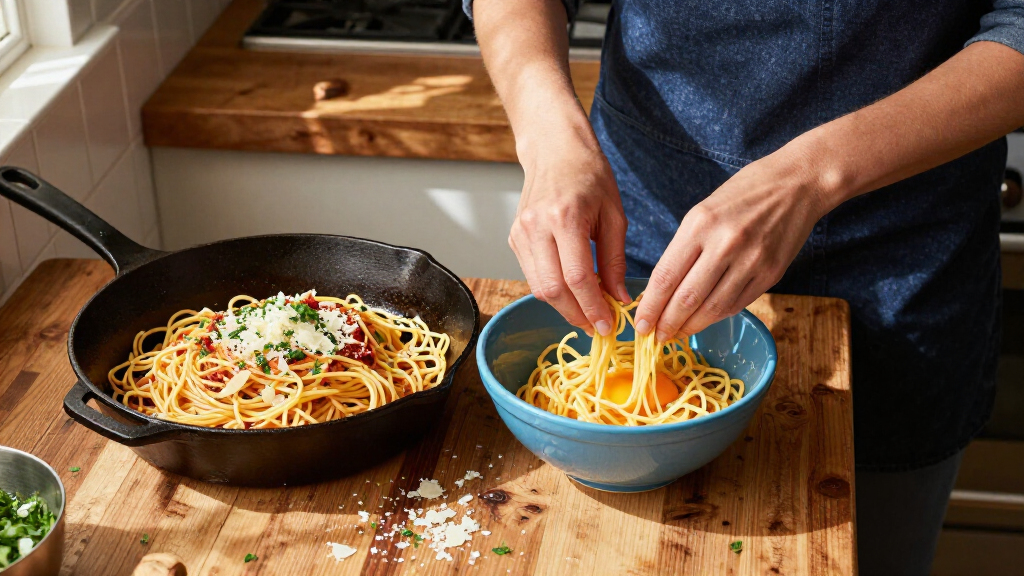
Mix in beaten egg and grated cheese, then cook slowly in a skillet.
Wait, then turn
Let the base set before flipping. Serve warm, at room temperature, or cold.
03 / The cook’s visual cue
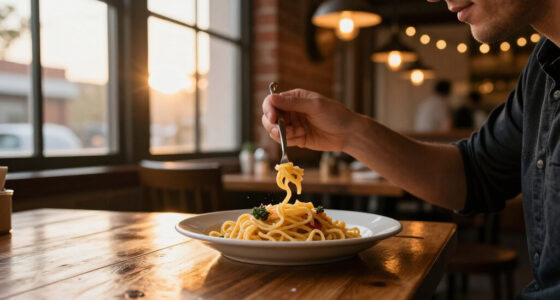
Coated, not swimming
Let the mixture guide the binder
The guide does not set a fixed pasta-to-egg ratio. Judge the batch by whether the noodles are evenly coated and hold together, rather than by a number that may not suit your pasta quantity or moisture.
Look for an even coating. If liquid gathers at the bottom, reduce excess sauce before cooking.
04 / What helps it hold
Three small details matter
A cohesive pie comes from moisture control, gentle cooking, and patience at the turning point.
Remove the excess
Too much wet tomato sauce can leave the middle soft. Drain or spoon off extra liquid first.
Cook slowly
Give the mixture time to firm up and brown without rushing the base.
Wait for the set
Turning too early can break the pasta pie apart. Use a set base as your cue.
05 / Quick questions
Before you cook
The source is a practical food guide. It does not report a new event or provide a tested universal recipe.
Can I use pasta besides spaghetti?
Yes. Other cooked shapes can work if the egg mixture coats and binds them. Long strands make a tangled pie; short shapes create a chunkier slice.
What can I add?
Grated hard cheese is suggested. Small amounts of vegetables or cured meat can be used when available, while keeping the mixture manageable.
How is it served?
The guide says it can be eaten warm, at room temperature, or cold, in wedges. It also describes it as handy for outings and travel.
How should leftovers be stored?
Refrigerate promptly because the dish contains cooked pasta and eggs. The source gives no storage duration or refrigerator temperature; follow current food-safety guidance.
A Practical Use for Cooked Pasta
The dish offers a way to turn a container of leftover noodles into a meal that is easier to portion and carry than loose pasta. Mad Tasting describes frittata di pasta as both a practical home-cooking tradition in Naples and a filling option for outings such as picnics, beach days or travel. Those uses are part of the guide’s account; it does not provide historical documentation or quantify how widely the dish is made.
For home cooks, the useful point is that the method can adapt to what is already in the refrigerator. Pasta with tomato sauce can form the basis of a rossa pie, while plain noodles allow for a bianca version. The result can be served warm, at room temperature or cold, according to the source. That flexibility makes it suitable for more than one meal setting, while the need to control moisture and let the base set remains the same.
The article also gives readers a clear distinction between a pasta pie and an egg-led frittata. In this dish, pasta supplies most of the structure and flavor; eggs are there to bind it. That distinction helps explain why the amount of leftover pasta and how wet it is affect the result.
As an affiliate, we earn on qualifying purchases.
Two Styles, One Leftover Dish
The supplied Mad Tasting material frames frittata di pasta as a Neapolitan leftover dish made by cooking pasta, eggs and cheese together in a skillet. The account focuses on practical preparation rather than a documented origin story, and provides no dates or named historical sources for the tradition.
Its bianca and rossa labels offer a simple way to think about the dish: one excludes tomato, while the other includes tomato sauce. The pasta shape can vary, too. Spaghetti is described as the familiar choice, but the guide says other cooked shapes can work if the egg mixture coats and binds them. Long strands tangle into a cohesive pie; short shapes can make a chunkier slice.
Small additions may include cheese, vegetables or cured meat, but the source advises keeping the mixture manageable and watching for excess moisture. It does not provide a tested universal ratio of pasta to eggs, so cooks should not treat one quantity as suitable for every batch.
““Pasta forms the bulk; eggs hold the strands together rather than acting as the main event.””
— Mad Tasting
As an affiliate, we earn on qualifying purchases.
Recipe Ratios And Origins Unspecified
The supplied source does not give a fixed pasta-to-egg ratio, cooking temperature, cooking time or pan size. It says the egg count depends on the quantity and moisture of the pasta, leaving cooks to judge whether the noodles are evenly coated. The material also offers no documented timeline or cited historical evidence for the dish’s origins, and its publication date is not included.
The guide’s storage direction is to refrigerate leftovers promptly because the dish contains cooked pasta and eggs. It does not specify a refrigerator temperature or a storage deadline. Readers should follow current food-safety guidance for prompt chilling and refrigerated storage rather than infer a shelf life from this source.
As an affiliate, we earn on qualifying purchases.
From Leftovers To A Set Pie
The next step for a cook is to assess the leftovers: choose bianca for plain or lightly seasoned noodles, or rossa for pasta already coated in tomato sauce. Remove excess liquid, mix in beaten eggs and grated cheese until the pasta is coated, then cook slowly in a skillet. The guide’s main turning cue is to wait until the base has set; it does not provide a precise time or temperature.
Once cooked, the pie can be served in wedges warm, at room temperature or cold. Refrigerate remaining portions promptly. No further publication, recipe testing or other follow-up is identified in the supplied material.
food storage containers for leftovers
As an affiliate, we earn on qualifying purchases.
As an affiliate, we earn on qualifying purchases.
Key Questions
What is frittata di pasta?
It is a Neapolitan skillet dish in which cooked pasta is bound with eggs and grated cheese, then cooked into a firm pie that can be sliced.
What is the difference between bianca and rossa?
Bianca is made without tomato, while rossa includes tomato sauce. The guide treats the names as flexible styles, not rigid recipes.
Can it be made with pasta other than spaghetti?
Yes. Mad Tasting says other cooked pasta shapes can work if the egg mixture coats and binds them. Spaghetti gives long, tangled strands; short pasta can make a chunkier slice.
How can I keep the pie from falling apart?
Cook it slowly and wait until the base has set before flipping. The guide also recommends avoiding excess wet sauce and checking that the pasta is coated without liquid pooling in the bowl.
How should leftover frittata di pasta be stored?
Refrigerate leftovers promptly, since the dish contains cooked pasta and eggs. The supplied guide does not give a storage duration or refrigerator temperature; follow current food-safety guidance.
Source: Mad Tasting