

The best zinc supplement for most people is Thorne Zinc Picolinate 15 mg, thanks to its highly absorbable picolinate form, modest well-tolerated dose, and clean formulation free of unnecessary additives. If budget is the deciding factor, Nature’s Bounty Zinc 50 mg delivers the lowest cost per serving on this list, while Thorne Zinc Picolinate 30 mg, 180 Capsules makes the most sense for anyone committed to long-term daily use. The main tradeoff in this category comes down to form and dose versus price: cheap zinc oxide-heavy tablets often cost less but absorb poorly, while premium chelated forms like picolinate and bisglycinate are gentler on the stomach and better utilized — at a higher price per capsule. Dose matters too, since 50 mg tablets exceed what most adults need daily and can interfere with copper absorption over time. Read on for the full breakdown of all 15 options and which one fits your needs.

Get kitchen staples and gadgets delivered free with Prime
- Fast, free delivery on millions of items
- Prime Video, Amazon Music and more included
- Member-only deals all year
Key Takeaways
- Thorne Zinc Picolinate 15 mg earned the top spot because picolinate absorption combined with a conservative dose fits the widest range of adults without copper-interference risk.
- The lineup splits cleanly into three tiers: clinical-grade chelated brands (Thorne, Pure Encapsulations, Designs for Health), mid-range whole-food and combination formulas (Garden of Life, Dr. Berg, Standard Process), and high-volume value bottles (Nature’s Bounty, Nature Made, Horbäach).
- Doses above 30 mg — including both Nature’s Bounty 50 mg entries and Horbäach 100 mg — are better suited to short-term immune support than continuous daily use, and Horbäach’s 100 mg is the only pick I’d flag as one to approach with caution.
- Liquid formats (Organic Liquid Zinc Drops and the Liposomal Zinc blend) trade capsule convenience for flexible dosing and faster absorption, which matters for people who dislike swallowing pills or want to micro-dose.
- Bottle size drove value rankings more than brand prestige: the same formula in a 60-capsule versus 180-capsule bottle (Thorne and Pure Encapsulations both offer both) changed the cost-per-month math enough to justify separate rankings.
| Thorne Zinc Picolinate 15 mg, 60 Capsules |  | Best Overall | Form: Capsules | Zinc per Capsule: 15 mg | Zinc Form: Zinc Picolinate | VIEW LATEST PRICE | See Our Full Breakdown |
| Nature’s Bounty Zinc 50mg Caplets, Immune Support, 250 Count |  | Best Value for High-Dose Zinc | Brand: Nature’s Bounty | Dosage: 50 mg per caplet | Count: 250 caplets | VIEW LATEST PRICE | See Our Full Breakdown |
| Nature Made Zinc 30 mg, 100 Tablets |  | Best Mid-Dose Staple | Brand: Nature Made | Form: Tablets | Zinc per Tablet: 30 mg | VIEW LATEST PRICE | See Our Full Breakdown |
| Pure Encapsulations Zinc 30 mg, 60 Capsules |  | Best for Sensitive Systems | Brand: Pure Encapsulations | Form: Capsule | Zinc Type: Zinc Picolinate | VIEW LATEST PRICE | See Our Full Breakdown |
| Organic Liquid Zinc Drops with Chelated Picolinate and Bisglycinate |  | Best Liquid Format | Zinc Forms: Zinc picolinate and zinc bisglycinate | Zinc per Bottle: 338 mg total | Form: Liquid drops | VIEW LATEST PRICE | See Our Full Breakdown |
| Standard Process Zinc Complex, 90 Tablets |  | Best Whole-Food Mineral Complex | Form: Tablets | Quantity: 90 tablets | Key minerals: Zinc, copper, and iron | VIEW LATEST PRICE | See Our Full Breakdown |
| Thorne Zinc Picolinate, 30 mg, 60 Capsules |  | Best Third-Party Tested Pick | Zinc per serving: 30 mg | Form: Zinc picolinate | Count: 60 capsules | VIEW LATEST PRICE | See Our Full Breakdown |
| Garden of Life Vitamin Code Raw Zinc, 30 mg, 60 Vegan Capsules |  | Best Whole-Food Vegan Pick | Serving size: 2 capsules | Servings per bottle: 30 | Zinc per serving: 30 mg | VIEW LATEST PRICE | See Our Full Breakdown |
| Nature’s Bounty Zinc 50 mg Caplets, 100 Count |  | Best Budget High-Dose Pick | Brand: Nature’s Bounty | Zinc per caplet: 50 mg | Form: Caplets | VIEW LATEST PRICE | See Our Full Breakdown |
| Dr. Berg Zinc 30 mg, 7-in-1 Chelated Immune Formula | 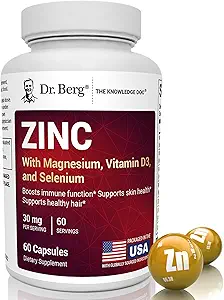 | Best Premium Blended Formula | Brand: Dr. Berg | Dosage: 30 mg zinc per serving | Count: 60 capsules | VIEW LATEST PRICE | See Our Full Breakdown |
| Designs for Health Zinc Supreme – Zinc Bisglycinate Chelate, 90 Capsules |  | Best Cofactor Formula | Brand: Designs for Health | Form: Capsules | Count: 90 capsules | VIEW LATEST PRICE | See Our Full Breakdown |
| Horbäach Chelated Zinc Supplement 100mg, 250 Tablets |  | Best Bulk High-Potency Option | Brand: Horbäach | Dosage: 100 mg per serving | Quantity: 250 tablets | VIEW LATEST PRICE | See Our Full Breakdown |
| Thorne Zinc Picolinate 30 mg, 180 Capsules |  | Best Trusted Long-Term Supply | Form: Zinc picolinate | Zinc per capsule: 30 mg | Count: 180 capsules | VIEW LATEST PRICE | See Our Full Breakdown |
| Liposomal Zinc, Copper, and Selenium Liquid Drops with Vitamin C and D3, Blueberry Flavor |  | Best Liquid Multinutrient Blend | Zinc: 50 mg zinc picolinate | Vitamin C: 200 mg | Vitamin D3: 1000 IU | VIEW LATEST PRICE | See Our Full Breakdown |
| Pure Encapsulations Zinc 30 mg, 180 Capsules |  | Best for Sensitive Buyers | Brand: Pure Encapsulations | Form: Capsule | Zinc per serving: 30 mg | VIEW LATEST PRICE | See Our Full Breakdown |
| zinc supplement | Form | Count | Brand |
|---|---|---|---|
| Thorne Zinc Picolinate 15 mg | Capsules | 60 capsules | Thorne |
| Nature’s Bounty Zinc 50mg Capl | Caplets | 250 caplets | Nature’s Bounty |
| Nature Made Zinc 30 mg | Tablets | 100 tablets | Nature Made |
| Pure Encapsulations Zinc 30 mg | Capsule | 60 capsules | Pure Encapsulations |
| Organic Liquid Zinc Drops with | Liquid drops | — | — |
| Standard Process Zinc Complex | Tablets | — | — |
| Thorne Zinc Picolinate | Zinc picolinate | 60 capsules | — |
| Garden of Life Vitamin Code Ra | Vegan capsules | — | — |
| Nature’s Bounty Zinc 50 mg Cap | Caplets | 100 caplets | Nature’s Bounty |
| Dr. Berg Zinc 30 mg | Capsule | 60 capsules | Dr. Berg |
| Designs for Health Zinc Suprem | Capsules | 90 capsules | Designs for Health |
| Horbäach Chelated Zinc Supplem | Tablet | — | Horbäach |
| Thorne Zinc Picolinate 30 mg | Zinc picolinate | 180 capsules | — |
| Liposomal Zinc | — | — | — |
| Pure Encapsulations Zinc 30 mg | Capsule | 180 capsules | Pure Encapsulations |
More Details on Our Top Picks
Thorne Zinc Picolinate 15 mg, 60 Capsules
Thorne Zinc Picolinate 15 mg earns the top spot because it balances quality, trustworthiness, and a sensible daily dose. The picolinate form is among the most absorbable options available, so a modest 15 mg still delivers meaningful support for immune function, skin, and hormone health. Compared with Nature Made Zinc 30 mg, which uses zinc gluconate, Thorne’s picolinate is generally considered easier for the body to absorb, and the third-party contents certification adds a layer of label accuracy most budget brands can’t match. The tradeoff is clear: at 15 mg per capsule, anyone targeting a higher intake — say, after a deficiency diagnosis — would need multiple capsules, which makes it pricier per milligram than Nature’s Bounty or Nature Made.
Pros:- Highly absorbable zinc picolinate form
- Third-party tested to verify label accuracy
- Trusted by 100+ professional sports teams
- Supports immune, skin, and hormone health
Cons:- Lower 15 mg dose may be insufficient for those needing higher zinc intake
- Premium brand pricing adds up when multiple capsules are needed
Best for: Buyers who prioritize verified purity and absorbability over raw potency, including athletes and health-conscious daily users
Not ideal for: Anyone prescribed a higher zinc dose by a doctor — the 15 mg strength means taking several capsules daily
- Form:Capsules
- Zinc per Capsule:15 mg
- Zinc Form:Zinc Picolinate
- Count:60 capsules
- Certification:Third-party contents certified
- Brand:Thorne
Our verdict“The pick for buyers who want a clinically trusted, highly absorbable zinc at a moderate dose rather than maximum potency.”
Nature’s Bounty Zinc 50mg Caplets, Immune Support, 250 Count
For sheer potency per penny, Nature’s Bounty Zinc 50 mg is hard to beat. The 250-caplet bottle lasts most of a year at one per day, dwarfing the 60-count runs from Thorne and Pure Encapsulations that need replacing every two months. That said, this is a high-potency product: 50 mg sits well above typical daily needs, so it makes the most sense for buyers intentionally dosing high, whether for immune support during cold season or as directed by a practitioner. The formula is gluten free, sugar free, and vegetarian, though it lacks the third-party certification and premium picolinate form of the Thorne picks — a real tradeoff for purity-focused shoppers.
Pros:- High potency 50 mg dose for targeted immune support
- Gluten free, sugar free, and suitable for vegetarians
- Large 250-count bottle offers a long-lasting supply
- No artificial flavors or sweeteners
Cons:- 50 mg may exceed safe long-term daily intake without medical guidance
- No third-party certification listed for label verification
- Zinc form is less premium than picolinate alternatives
Best for: Budget-minded buyers who want a long-lasting, high-dose zinc supply for aggressive immune support
Not ideal for: Daily low-dose users — 50 mg exceeds standard needs and long-term high intake can interfere with copper absorption
- Brand:Nature’s Bounty
- Dosage:50 mg per caplet
- Count:250 caplets
- Serving Size:1 caplet daily, preferably with a meal
- Dietary Info:Gluten free, sugar free, no artificial flavors or sweeteners, vegetarian
- Form:Caplets
Our verdict“The go-to choice if you specifically need a high daily dose and don’t want to reorder every couple of months.”
Nature Made Zinc 30 mg, 100 Tablets
Nature Made Zinc 30 mg lands in the sweet spot between Thorne’s gentle 15 mg and Nature’s Bounty’s aggressive 50 mg, making it a natural everyday maintenance dose for most adults. What separates it from cheaper rivals is the USP Verified mark — an independent certification confirming identity, strength, and purity that few mainstream zinc products carry. The 100-tablet bottle runs longer than the 60-capsule bottles from Pure Encapsulations, though the gluconate form is less absorbable than the picolinate used in those pricier picks. Tablets also can’t be split or adjusted as easily as the liquid drops later in this list, so it’s strictly a one-per-day affair.
Pros:- USP Verified for identity, strength, and purity
- Balanced 30 mg dose suits most adults
- 100-tablet bottle supplies 100 daily servings
- Gluten free with no artificial colors, flavors, or preservatives
Cons:- Zinc gluconate is less absorbable than picolinate forms
- Must be taken with a meal, which is easy to forget
Best for: First-time zinc buyers who want a verified, middle-of-road 30 mg dose from a widely available drugstore brand
Not ideal for: Absorption-focused buyers — zinc gluconate and the tablet format lag behind picolinate capsules for bioavailability
- Brand:Nature Made
- Form:Tablets
- Zinc per Tablet:30 mg
- Count:100 tablets
- Servings per Container:100
- Suggested Use:1 tablet daily with water and a meal
- Verification:USP Verified
- Dietary Features:Gluten free; no added color, artificial flavors, or preservatives
Our verdict“A dependable, certified 30 mg daily zinc for general wellness when you don’t need clinical-grade absorption.”
Pure Encapsulations Zinc 30 mg, 60 Capsules
Where Pure Encapsulations justifies its premium price is ingredient purity: this pick is free from common allergens, GMOs, and artificial additives, a claim few competitors in this lineup can make. It pairs that clean formulation with zinc picolinate at 30 mg, doubling the dose of Thorne’s 15 mg version while keeping the same well-absorbed form — a strong option for anyone with sensitivities who also wants clinical-grade potency. The obvious drawback is the 60-capsule bottle, which forces a repurchase every two months; the 180-capsule Pure Encapsulations version solves that if you commit long-term. Compared with Nature Made’s USP-verified tablets, this is the better fit for reactive systems, though you pay for the privilege.
Pros:- Highly absorbable zinc picolinate at a full 30 mg dose
- Free from common allergens, artificial ingredients, and GMOs
- Supports immune function and nutrient metabolism
- Well suited to sensitive individuals
Cons:- Only 60 capsules per bottle, requiring frequent repurchase
- Premium pricing per milligram of zinc
Best for: People with allergies, food sensitivities, or clean-label priorities who need a full 30 mg of absorbable zinc
Not ideal for: Budget buyers — the small bottle and premium brand make it one of the most expensive ways to get 30 mg daily
- Brand:Pure Encapsulations
- Form:Capsule
- Zinc Type:Zinc Picolinate
- Dosage:30 mg
- Count:60 capsules
- Dietary Features:Free from common allergens, artificial ingredients, and GMOs
Our verdict“The clear choice for sensitive buyers who refuse to compromise on either purity or picolinate absorption.”
Organic Liquid Zinc Drops with Chelated Picolinate and Bisglycinate
Liquid zinc drops solve a problem capsules can’t: adjustable dosing. Whether you’re scaling servings for a child, tapering your own intake, or avoiding swallowing pills entirely, the marked dropper puts you in control — something fixed-dose options like Nature Made’s 30 mg tablets simply can’t offer. The formula combines two chelated forms, picolinate and bisglycinate, in an organic glycerin base, with USDA organic certification and third-party batch testing on top. The flip side is math: 338 mg of total zinc per bottle means the whole container holds roughly a couple weeks of adult-level servings, so cost per serving runs high compared with Nature’s Bounty’s 250-caplet marathon bottle. Taste-sensitive users may also notice the glycerin texture.
Pros:- Two chelated zinc forms for strong absorption
- Liquid format allows flexible, adjustable serving sizes
- USDA certified organic and vegan
- Third-party batch tested and free of major allergens
Cons:- Low total zinc per bottle relative to capsule products
- Children require a different serving size, adding dosing complexity
- Liquid texture and dropper routine won’t suit everyone
Best for: Families, pill-averse adults, and anyone who needs flexible, adjustable zinc servings
Not ideal for: High-dose daily users — the small total zinc content per bottle means fast depletion and frequent reorders
- Zinc Forms:Zinc picolinate and zinc bisglycinate
- Zinc per Bottle:338 mg total
- Form:Liquid drops
- Base:Organic glycerin
- Certifications:USDA certified organic; GMP-certified facility
- Dietary Features:Vegan; free of sugar, artificial colors, and GMOs
- Allergen Info:Free of peanut, soy, gluten, dairy, and wheat
- Packaging:Glass bottle with marked dropper
Our verdict“Pick this if flexibility or pill-swallowing trouble matters more than cost per milligram.”
Standard Process Zinc Complex, 90 Tablets
Standard Process Zinc Complex takes a different philosophy than most picks here: instead of an isolated mineral, it delivers zinc paired with copper and iron in a whole food-based tablet. That combination matters because long-term zinc supplementation can deplete copper, and this formula addresses that from the start — something single-mineral options like Thorne Zinc Picolinate leave for the buyer to manage separately. It also supports red blood cell formation and cellular energy production, making it broader in scope than a pure immune pick. The tradeoff is opacity: the label doesn’t state exact zinc milligrams per tablet, so anyone targeting a specific dose — say, the 30 mg used in Garden of Life Vitamin Code Raw Zinc — will find it hard to calibrate. This pick makes the most sense for buyers who prioritize food-based sourcing over precise dosing.
Pros:- Combines zinc with copper and iron for mineral balance
- Whole food-based formulation
- Supports immune function, enzyme activity, and red blood cell formation
- Gluten-free, dairy-free, and soy-free
Cons:- No per-tablet zinc dosage disclosed, making precise dosing difficult
- Harder to verify value without stated potency
Best for: Buyers who want a food-based zinc with built-in copper and iron balance rather than an isolated mineral
Not ideal for: Anyone dosing to a specific milligram target, since exact zinc content per tablet isn’t disclosed
- Form:Tablets
- Quantity:90 tablets
- Key minerals:Zinc, copper, and iron
- Formulation approach:Whole food-based
- Dietary attributes:Gluten-free, dairy-free, and soy-free
- Support areas:Enzyme function, red blood cell formation, cellular energy, immune function
Our verdict“A sensible choice for whole-food supplement devotees who value mineral cofactors over exact dosing.”
Thorne Zinc Picolinate, 30 mg, 60 Capsules
Thorne Zinc Picolinate 30 mg stands out for verification discipline: it’s third-party tested and certified to confirm label accuracy and screen for contaminants, a level of accountability that budget options like Nature’s Bounty Zinc 50 mg don’t advertise. The picolinate form is chosen for absorbability, which matters for buyers who felt let down by cheaper zinc oxide products. Compared with the Thorne 15 mg version elsewhere in this roundup, this 30 mg strength suits adults wanting a full daily therapeutic dose in one capsule rather than juggling multiples. The main tradeoff is what the label doesn’t spell out here — clear serving guidance — so new users will want to confirm timing (zinc is best taken away from iron and calcium) with a healthcare provider. It’s a clean, single-purpose formula with no cofactor bells and whistles.
Pros:- 30 mg of well-absorbed zinc picolinate per capsule
- Third-party tested and certified for content and contaminants
- Supports immune, skin, connective tissue, and eye health
- Trusted clinical-brand pedigree
Cons:- No cofactors like copper or vitamin D in the formula
- Serving instructions not clearly stated on supplied labeling
Best for: Buyers who prioritize certified purity and label accuracy in a single-ingredient, absorbable zinc
Not ideal for: Anyone wanting a blended formula with vitamin D or selenium — this is zinc only
- Zinc per serving:30 mg
- Form:Zinc picolinate
- Count:60 capsules
- Third-party certified:Yes
- Support areas:Immune function, skin, connective tissue, eye health
- Capsules per dose:1
Our verdict“The pick for buyers who want verified purity and a single, absorbable form of zinc with nothing else.”
Garden of Life Vitamin Code Raw Zinc, 30 mg, 60 Vegan Capsules
Garden of Life Vitamin Code Raw Zinc splits the difference between the food-based approach of Standard Process Zinc Complex and the precise dosing of Thorne Zinc Picolinate: you get a labeled 30 mg of zinc plus 60 mg of vitamin C, delivered with probiotics, enzymes, and a raw fruit and vegetable blend. That pairing of zinc and vitamin C is a genuine plus for immune-focused buyers, and the Non-GMO Project Verified, NSF Gluten Free, and Kosher certifications stack up well against less-scrutinized brands. The flexibility to open capsules into water or juice helps anyone who struggles with pills. The cost of all this is convenience — you must take two capsules daily, and the bottle lasts only 30 servings. It’s also adult-only, unlike simpler single-caplet options such as Nature’s Bounty.
Pros:- Labeled 30 mg zinc plus 60 mg vitamin C per serving
- Includes probiotics, enzymes, and a fruit and vegetable blend
- Vegan, Non-GMO Verified, gluten-free, and Kosher certified
- Capsules can be opened and mixed into drinks
Cons:- Requires 2 capsules daily for a full serving
- Only 30 servings per bottle
- Adult formulation, not suitable for children
Best for: Vegan and allergen-sensitive adults who want certified, whole-food zinc with complementary vitamin C
Not ideal for: People who dislike multi-capsule routines or want a long-lasting single-capsule bottle
- Serving size:2 capsules
- Servings per bottle:30
- Zinc per serving:30 mg
- Vitamin C per serving:60 mg
- Form:Vegan capsules
- Certifications:Non-GMO Project Verified, NSF Gluten Free, Star K Kosher
- Dietary features:Vegan; free from gluten, dairy, and soy
- Directions:Adults take 2 capsules daily, with or without food
Our verdict“A strong pick for buyers who want certified vegan credentials and cofactor nutrition — as long as two capsules a day doesn’t bother them.”
Nature’s Bounty Zinc 50 mg Caplets, 100 Count
Nature’s Bounty Zinc 50 mg is the straightforward, no-frills option in this lineup: one caplet daily, 50 mg of zinc, and a 100-count bottle that simply outlasts the 60-capsule runs from Thorne or Dr. Berg. For budget-minded buyers treating zinc as a commodity, that per-day economics is the whole story, and the non-GMO, sugar-free, gluten-free profile covers the basics. But the dose deserves a caution flag: 50 mg exceeds typical daily requirements, and sustained high intake can interfere with copper absorption — something Standard Process Zinc Complex deliberately counters by including copper. Unlike Thorne, there’s no advertised third-party certification, so purity claims rest on the brand’s own controls. This option makes the most sense for short-term, high-dose immune support rather than indefinite daily use.
Pros:- High 50 mg zinc dose per single caplet
- 100-count bottle offers strong longevity
- Supports immune, antioxidant, skin, and bone health
- Non-GMO, sugar-free, and gluten-free
Cons:- 50 mg per day exceeds stated daily requirements with regular use
- No third-party certification advertised
Best for: Budget-conscious adults wanting a long-lasting, high-dose zinc caplet for short-term immune support
Not ideal for: Daily long-term users — 50 mg exceeds standard daily requirements and may crowd out copper over time
- Brand:Nature’s Bounty
- Zinc per caplet:50 mg
- Form:Caplets
- Count:100 caplets
- Suggested use:Adults: take one caplet daily, preferably with a meal
- Dietary attributes:Non-GMO, sugar-free, gluten-free
Our verdict“The value play for short-term high-dose zinc — just not a forever-daily dose without medical guidance.”
Dr. Berg Zinc 30 mg, 7-in-1 Chelated Immune Formula
Dr. Berg Zinc 30 mg is the most ambitious formula in this batch: amino acid-chelated zinc combined with vitamin D, selenium, magnesium, and vitamin B6 in a 7-in-1 immune and hair-support blend. Where Thorne Zinc Picolinate keeps things minimal, this pick targets buyers who’d rather replace several bottles with one — the cofactors here are ones frequently paired with zinc in immune protocols. Quality control is a genuine differentiator, with 4X lab testing including third-party screens for heavy metals, purity, and microbial safety, plus US cGMP manufacturing and a no-filler formula. The tradeoffs are real, though: premium pricing typical of the brand, and the label’s nutrient spread may mean more than one capsule daily for the full dose. Buyers wanting only zinc, or exact control over cofactor amounts, should stay with a single-ingredient option.
Pros:- Chelated zinc designed for absorption and digestive comfort
- 7-in-1 formula adds vitamin D, selenium, magnesium, and B6
- 4X lab tested including third-party heavy metal and purity screens
- No fillers or unnecessary additives; made in USA cGMP facilities
Cons:- Premium price point typical of high-end supplement brands
- Full dose may require more than one capsule daily
- Fixed cofactor amounts limit dosing flexibility
Best for: Buyers who want a premium all-in-one immune formula and prefer consolidating multiple supplements into one capsule
Not ideal for: Minimalists and budget buyers who want plain zinc without cofactors or premium pricing
- Brand:Dr. Berg
- Dosage:30 mg zinc per serving
- Count:60 capsules
- Form:Capsule
- Zinc type:Amino acid-chelated
- Additional nutrients:Vitamin D, selenium, magnesium, vitamin B6
- Fillers:None
- Testing:4X lab tested (third-party heavy metals, purity, authenticity, microbial safety)
- Manufacturing:Made in USA, cGMP-certified facilities
Our verdict“The pick for buyers happy to pay a premium for a heavily tested, multi-nutrient zinc formula in a single product.”
Designs for Health Zinc Supreme – Zinc Bisglycinate Chelate, 90 Capsules
Most zinc supplements on this list deliver the mineral and nothing else, but Designs for Health Zinc Supreme takes a different approach by pairing 30 mg of zinc bisglycinate chelate with vitamin B6, B2, and molybdenum glycinate. That matters because zinc and B6 work together in many enzymatic pathways, so buyers who want a more complete mineral-support formula get more value per capsule than with a single-ingredient option like Pure Encapsulations Zinc 30 mg. The bisglycinate form is also gentler on the stomach than zinc oxide-based products.
The tradeoff is cost and count: 90 capsules is half the supply of the 180-count Thorne and Pure Encapsulations bottles, and this professional-grade brand typically carries a premium price.
Pros:- Chelated bisglycinate form offers strong absorption and gentleness
- Includes B6, B2, and molybdenum cofactors for added support
- Vegan, non-GMO, and free of gluten, soy, and dairy
- Long-standing professional-grade brand
Cons:- 30 mg may exceed what some users need for daily maintenance
- Smaller bottle count and premium pricing compared to basic zinc options
Best for: Buyers who want zinc plus synergistic cofactors in one capsule, especially those following a practitioner’s protocol
Not ideal for: Budget-conscious shoppers who only need plain zinc and would be paying extra for cofactors they may already take separately
- Brand:Designs for Health
- Form:Capsules
- Count:90 capsules
- Zinc per serving:30 mg
- Zinc form:Zinc bisglycinate chelate
- Additional nutrients:Vitamin B6, Vitamin B2, Molybdenum glycinate
- Dietary:Vegan, Non-GMO, Gluten-free, Soy-free, Dairy-free
Our verdict“This pick makes the most sense for buyers who want a practitioner-style zinc formula with cofactors rather than a bare-bones mineral capsule.”
Horbäach Chelated Zinc Supplement 100mg, 250 Tablets
If sheer supply and potency are the goal, Horbäach Chelated Zinc is hard to beat: 250 tablets of 100 mg chelated zinc at a budget-tier price point. Compared with Nature Made Zinc 30 mg or Nature’s Bounty 50 mg caplets, this dose sits well above typical daily needs, which positions it for short-term high-dose protocols rather than everyday maintenance.
The chelated form helps absorption, and the tablets skip gluten, wheat, yeast, lactose, soy, and artificial additives, with laboratory testing behind them. The real drawback is the dose itself — long-term use of 100 mg daily can interfere with copper absorption, so buyers should treat this as an occasional or directed-use supplement, not a forever pill.
Pros:- Very high 100 mg chelated dose per serving
- Large 250-tablet supply
- Free of common allergens and artificial additives
- Laboratory tested for quality
Cons:- Dose is well above typical daily zinc needs and unsuitable for long-term unsupervised use
- Tablet form can be harder to swallow than capsules or liquids
Best for: Buyers following a short-term high-dose zinc protocol who want maximum supply per dollar
Not ideal for: Daily maintenance users — 100 mg far exceeds standard zinc requirements and risks copper imbalance over time
- Brand:Horbäach
- Dosage:100 mg per serving
- Quantity:250 tablets
- Form:Tablet
- Zinc type:Chelated
- Dietary info:Gluten-free, wheat-free, yeast-free, lactose-free, soy-free, non-GMO, no artificial color or flavor
Our verdict“Choose this only if you specifically need a high-dose zinc protocol with a long-lasting supply — otherwise a 30 mg option is the safer daily choice.”
Thorne Zinc Picolinate 30 mg, 180 Capsules
Thorne Zinc Picolinate 30 mg earns its place through verification and supply: it is third-party tested and certified for label accuracy and contaminants, a claim few competitors on this list can make so explicitly. Compared with the smaller Thorne Zinc Picolinate 15 mg (60 capsules), this version doubles the dose and triples the bottle count, making it the better fit for adults supplementing ongoing.
The picolinate form is well regarded for absorption, and 30 mg hits a sensible middle ground between maintenance doses like Nature Made’s 30 mg and the excessive 100 mg in Horbäach’s tablets. On the flip side, there are no cofactors here — unlike Designs for Health Zinc Supreme — and buyers sensitive to formulation extras may find Pure Encapsulations offers a similar purity story at a comparable tier.
Pros:- Third-party tested and certified for label accuracy
- 30 mg dose suits long-term daily use
- Well-absorbed zinc picolinate form
- Large 180-capsule supply
Cons:- Single-ingredient formula with no synergistic cofactors
- Premium brand pricing compared to mass-market zinc tablets
Best for: Adults who want a verified, absorbable 30 mg zinc for consistent daily use over months
Not ideal for: Buyers who want a multi-nutrient formula, since this is a single-ingredient supplement with no cofactors
- Form:Zinc picolinate
- Zinc per capsule:30 mg
- Count:180 capsules
- Certification:Third-party tested and certified
Our verdict“This is the dependable daily driver for buyers who prioritize third-party verification and a long-lasting 30 mg supply.”
Liposomal Zinc, Copper, and Selenium Liquid Drops with Vitamin C and D3, Blueberry Flavor
This liquid option stands out mostly for format and breadth: zinc picolinate, copper, selenium, vitamin C, and vitamin D3 in one blueberry-flavored drop, with separate adult and child serving guidance. That inclusion of copper is smart — long-term zinc supplementation can deplete copper, a problem single-mineral picks like Thorne Zinc Picolinate ignore entirely. For households where both adults and kids need supplementation, or for anyone who can’t swallow capsules, the liquid format is a genuine advantage.
Two honest caveats: the exact amounts of copper and selenium aren’t stated on the listing, and the liposomal absorption claims aren’t substantiated in the provided information. Compared with Pure Encapsulations’ rigorous label transparency, that vagueness is a real weakness for detail-oriented buyers.
Pros:- Balances zinc with copper and selenium, addressing a common long-term supplementation concern
- Liquid format with adult and child servings
- Blueberry flavor without artificial colors or preservatives
- Vegan and gluten-free
Cons:- Copper and selenium amounts are not disclosed on the listing
- Liposomal absorption claims lack substantiation in the product information
Best for: Families and pill-averse users who want zinc balanced with copper, selenium, and vitamins D3/C in an easy liquid
Not ideal for: Buyers who need fully disclosed dosages of every nutrient, since copper and selenium amounts are unspecified
- Zinc:50 mg zinc picolinate
- Vitamin C:200 mg
- Vitamin D3:1000 IU
- Other minerals:Copper bisglycinate and selenium
- Flavor:Blueberry
- Serving size:2 mL adults; 1 mL children 4+
- Dietary attributes:Vegan, gluten-free
- Quality claims:GMP-certified and third-party lab tested
Our verdict“A convenient family-friendly liquid for those who value format and nutrient balance over fully transparent labeling.”
Pure Encapsulations Zinc 30 mg, 180 Capsules
For shoppers whose priority is ingredient purity above all else, Pure Encapsulations Zinc 30 mg is the strongest argument on this list: highly absorbable zinc picolinate with no common allergens, artificial additives, or unnecessary fillers. Compared with Thorne Zinc Picolinate 30 mg, the two are close rivals in form and count, but Pure Encapsulations leans harder into the hypoallergenic positioning, which matters for people who react to excipients in mass-market tablets like Nature’s Bounty or Nature Made.
It also covers broader wellness territory — wound healing, B vitamin absorption, and even normal fetal development — making it relevant for pregnant buyers (with physician guidance). The drawbacks are straightforward: it’s a plain single-nutrient formula, and the premium price per capsule is higher than basic drugstore zinc.
Pros:- Highly absorbable zinc picolinate form
- Free from common allergens, artificial ingredients, and GMOs
- Supports immune function, wound healing, and B vitamin absorption
- Large 180-capsule supply
Cons:- No synergistic cofactors — a single-ingredient formula
- Premium pricing compared with mass-market zinc tablets
Best for: Buyers with allergies or sensitivities who need an ultra-clean, filler-free zinc picolinate
Not ideal for: Value-focused shoppers who just want inexpensive zinc and don’t react to standard tablet fillers
- Brand:Pure Encapsulations
- Form:Capsule
- Zinc per serving:30 mg
- Count:180 capsules
- Zinc type:Zinc picolinate
- Allergen-free:Yes
- GMO-free:Yes
Our verdict“This is the pick for sensitive buyers who will pay a little more for a rigorously clean, no-filler zinc picolinate.”

How We Picked
I evaluated each product against four buyer-relevant criteria. Chemical form came first: picolinate and bisglycinate chelates absorb more reliably than zinc gluconate or oxide, so products using premium forms ranked higher at comparable doses. Dose appropriateness came second — the typical adult needs 8–11 mg of elemental zinc daily from all sources, so I favored products near 15–30 mg and treated 50 mg+ entries as situational picks rather than daily-driver recommendations. Third, formulation cleanliness: fewer fillers, artificial colors, and allergens pushed products up, which is why practitioner brands like Thorne and Pure Encapsulations dominate the top of the list. Fourth, value over time: I compared cost-per-serving logic by weighing bottle size and capsule count, which is why the larger 180-count versions of winning formulas appear as separate picks.
The ranking order also reflects who each product serves best. Products with flexible, gentle doses sit at the top for general use; high-dose and combination formulas are positioned for immune-season or targeted needs; and bulk bottles are ranked for their pure value proposition rather than refinement. No product was ranked on brand reputation alone — several household names landed lower because of less absorbable forms or doses that exceed everyday needs.
Factors to Consider When Choosing Best Zinc Supplements
Before settling on a specific bottle, it helps to understand what actually separates a good zinc supplement from an ineffective one. These are the factors I weighed during this comparison, along with the mistakes buyers make most often.Zinc Form Determines How Much You Actually Absorb
The label tells you the milligrams, but the chemical form tells you how many of those milligrams your body can use. Picolinate and bisglycinate are chelated forms bound to amino acids, which improves solubility and reduces the stomach irritation zinc is known for. Gluconate and citrate sit in the middle — decent absorption at a lower cost — while zinc oxide absorbs poorly and is mostly worth avoiding despite its low price. This is the single biggest reason two products with identical doses can perform very differently. A 15 mg picolinate capsule can deliver more usable zinc than a 50 mg oxide tablet for many people. If a label doesn’t clearly state the form, treat that as a warning sign rather than a neutral detail.
More Milligrams Is Not Better — Match Dose to Purpose
The most common buying mistake in this category is assuming a 50 mg tablet is an upgrade over a 15 or 30 mg capsule. Adults need roughly 8–11 mg of zinc per day from all sources, and the tolerable upper limit sits around 40 mg. Taking 50–100 mg daily for extended periods can suppress copper absorption and, ironically, impair the immune function people take zinc to support. High doses have a legitimate place — short immune-support stints, addressing a confirmed deficiency under medical guidance — but they are not everyday maintenance doses. A moderate 15–30 mg product taken consistently beats a mega-dose taken carelessly. When in doubt, the lower dose with a better absorption form is the safer purchase.
Copper Balance and Long-Term Use
Zinc and copper compete for the same absorption pathways, and sustained high zinc intake without copper can create a deficiency over months. Some formulas — like the Dr. Berg combination and the liposomal zinc-copper-selenium blend in this roundup — include copper or complementary nutrients specifically to address this. If you plan to take zinc year-round at 30 mg or more, choosing a balanced formula or a dedicated copper supplement is a reasonable safeguard. At 15 mg daily, the risk is low enough that a standalone zinc is generally fine. This factor matters more the longer your intended use, so let your timeframe shape whether a simple or combination product makes sense.
Capsule, Tablet, or Liquid — Format Affects Compliance
The best supplement is the one you actually take consistently. Capsules are easy to swallow and typically contain fewer binders. Tablets cost less to manufacture — which is why the bulk value bottles in this category are tablets — but can be large and may include more excipients. Liquid drops allow precise, adjustable dosing and skip digestion barriers, which suits people who hate pills, have swallowing difficulties, or want to give smaller doses to family members (with pediatrician approval). Liquids do require measuring each dose and often have a metallic taste, though the blueberry-flavored liposomal option in this lineup softens that. Choose the format you’ll reliably use, not the one with the best specs on paper.
Third-Party Testing and Brand Transparency
Zinc supplements are lightly regulated, and label accuracy varies more than most buyers expect. NSF Certified for Sport, Informed Choice, or cGMP-verified production signals that what’s on the label matches what’s in the bottle. Practitioner brands like Thorne, Pure Encapsulations, and Designs for Health build their reputations on this transparency, which is part of why they command higher prices. Budget brands aren’t necessarily dishonest, but if you’re taking zinc for a specific health reason, verified accuracy is worth paying for. Check the brand’s website for certificates of analysis before committing to a bulk bottle. This is also where cheap mega-dose products carry the most risk — an inaccurate 100 mg tablet is a bigger problem than an inaccurate 15 mg one.
When to Pay More — and When It’s Wasted Money
Premium pricing is justified when you’re paying for a superior chemical form, cleaner excipients, or verified potency — all of which directly affect results. It’s harder to justify when you’re paying for marketing around whole-food processing or proprietary blends without disclosed amounts. A practical rule: spend more if you have a sensitive stomach, take zinc long-term, or use it for a targeted health goal; spend less if you want basic maintenance coverage and tolerate supplements well. Also do the per-serving math before assuming the cheap bottle wins — a 250-count budget bottle at 50 mg may still be more total zinc than you’ll ever responsibly use, while a 180-count premium bottle at 30 mg covers six months of daily use. The most expensive purchase is the bottle you abandon or that delivers zinc you can’t absorb.
Frequently Asked Questions
Is 50 mg of zinc per day too much?
For most adults, yes — 50 mg exceeds the tolerable upper intake level of 40 mg per day set for total zinc from all sources, including diet. Occasional short-term use at that level during immune challenges is generally tolerated, but daily long-term use raises the risk of copper deficiency, nausea, and reduced immune function over time. The 50 mg products in this roundup, like Nature’s Bounty’s caplets, make sense as situational immune support rather than year-round maintenance. If you believe you need 50 mg+ continuously, that’s a conversation to have with a doctor based on bloodwork, not a self-directed dosing decision. For everyday use, a 15–30 mg product covers typical needs with a comfortable safety margin.
What’s the difference between zinc picolinate, bisglycinate, and gluconate?
These are all delivery forms — zinc bound to different carrier compounds — and the carrier affects how well the mineral dissolves and absorbs. Picolinate (used by Thorne) is prized for high bioavailability and gentle digestion. Bisglycinate (used by Designs for Health and in several liquids here) is bound to the amino acid glycine, making it among the most stomach-friendly options, which matters if zinc usually makes you queasy. Gluconate is a middle-ground form common in budget products — reasonably absorbed, inexpensive, but more likely to cause mild stomach upset at higher doses. If you’ve had digestive issues with zinc before, switching to a chelated bisglycinate or picolinate form often resolves them without changing your dose.
Should I take zinc with food or on an empty stomach?
With food, in most cases. Zinc on an empty stomach absorbs somewhat faster but is a well-known cause of nausea and stomach cramping, especially at doses of 30 mg and above. Taking it with a meal dramatically reduces that risk with only a modest absorption tradeoff — one most people should accept for the sake of consistency. One caution: avoid pairing zinc with high-phytate foods, coffee, calcium supplements, or iron supplements at the same meal, as these compete for absorption and can meaningfully cut how much zinc you retain. If your breakfast includes cereal and milk, an evening dose with dinner often works better. Chelated forms like bisglycinate are the exception — they’re gentle enough that timing matters less.
Do I need a zinc supplement that includes copper?
It depends on your dose and duration. At a modest 15 mg per day from a product like Thorne’s entry-level pick, copper interference is minimal and a standalone zinc is fine for most people. Once you’re taking 30 mg or more continuously for months, zinc starts competing with copper for absorption, and adding copper becomes a reasonable safeguard. This is why combination products like Dr. Berg’s formula and the liposomal zinc-copper-selenium drops exist — they bundle the balancing nutrients so you don’t have to manage two bottles. People who eat copper-rich foods regularly (shellfish, nuts, seeds, organ meats) have less need for the bundled version. If you’re unsure, a lower standalone dose is the simpler path than juggling multiple minerals.
Are liquid zinc drops better than capsules?
Neither is universally better — it comes down to how you’ll use them. Liquids offer adjustable dosing, faster absorption, and a practical option for people who can’t swallow capsules, but they require measuring, have shorter shelf lives once opened, and often carry a metallic taste the blueberry-flavored liposomal option attempts to mask. Capsules win on convenience, portability, precise pre-measured doses, and typically longer shelf life, which is why they dominate this roundup’s top picks. For daily consistent use at a fixed dose, capsules make more sense. For flexibility — splitting doses, adjusting for a child with pediatrician approval, or tapering intake — the liquid format earns its place.
Conclusion
After comparing all 15 products, the right choice depends less on brand and more on your dose needs, format preference, and how long you plan to supplement. For the best overall pick, Thorne Zinc Picolinate 15 mg balances absorbability, safety, and clean formulation in a way that suits nearly everyone. For best value, Nature Made Zinc 30 mg offers a sensible dose at a mainstream price, while the Nature’s Bounty 250-count bottle wins for pure cost-per-serving if you need 50 mg immune support on hand. For a premium choice, Designs for Health Zinc Supreme and the 180-count Thorne and Pure Encapsulations bottles deliver practitioner-grade quality with better long-term economics. For beginners, starting with the 15 mg Thorne dose keeps things simple and forgiving. For specific needs: the liquid drops suit anyone avoiding capsules, the Dr. Berg and liposomal blends cover zinc plus complementary nutrients in one bottle, and Garden of Life’s raw formula fits buyers who prioritize whole-food sourcing. Whatever you choose, match the dose to your actual needs — in this category, more is rarely better, and the right form beats the biggest number on the label.
NFL season / tailgating Picks
team gear
As an affiliate, we earn on qualifying purchases.